
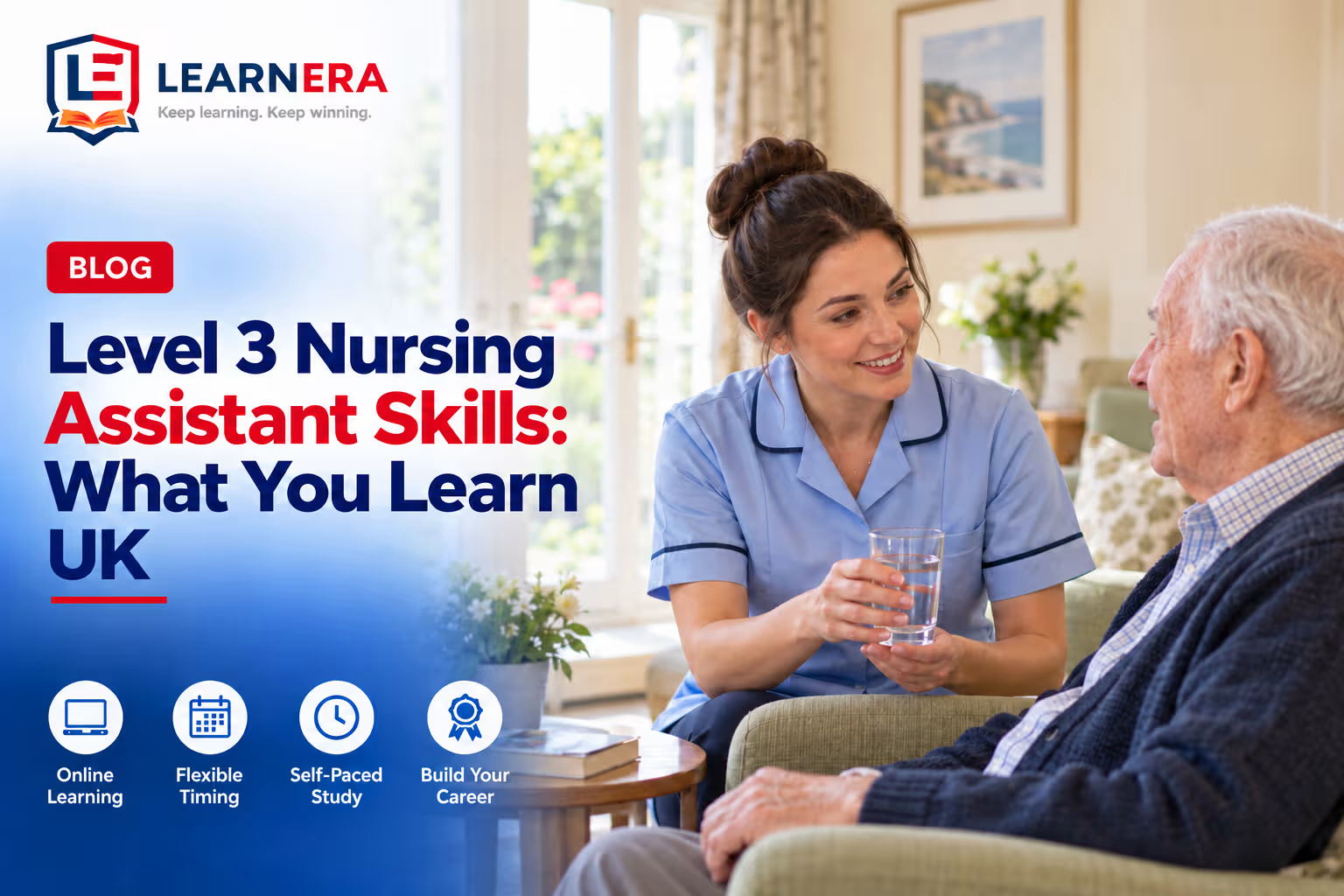

Level 3 Nursing Assistant Skills What You Learn Uk

Level 3 Nursing Assistant Skills: What You Learn UK

Choosing a nursing assistant course starts with understanding what its lessons actually teach. Similar diploma titles can describe different learning routes and assessment methods. Explore the patient care topics covered, from personal hygiene to communication and safeguarding. You’ll also learn how online CPD knowledge connects with supervised practice and which skills need assessment at work.

A Level 3 nursing assistant course can cover personal care, infection prevention, communication and safeguarding. The exact skills depend on its curriculum and whether practical assessment forms part of the programme. For online CPD study, the focus is understanding care principles rather than demonstrating hands-on competence.

For structured study across these topics, Learnera’s Nursing Assistant Level 3 Diploma offers self-paced online CPD learning. Its curriculum includes nutrition, mobility and medication awareness alongside anatomy and dementia care. This supports knowledge development, with practical skills developed through supervised workplace learning and competence assessment.

Key Points

  • Review the curriculum to identify which patient care topics the course actually covers.
  • Distinguish understanding a procedure from demonstrating that you can perform it safely.
  • Check assessment arrangements and certificate status before relying on a “Level 3” course title.

What Patient Care Skills Does The Course Cover?

The course covers principles of personal hygiene, mobility support and meeting everyday needs while preserving dignity. You explore how nutrition and hydration connect with wellbeing, alongside toileting support and rest. These topics help explain the reasons behind everyday care rather than presenting tasks as a fixed routine.

Person-centred care means considering someone’s preferences and abilities when planning support. For example, someone needing help with washing might still manage parts of their routine independently. Understanding this encourages you to consider what assistance someone needs while respecting what they can do themselves.

Anatomy and physiology introduce how the body works, providing context for the care topics. Learning about dementia and diabetes adds understanding of different support needs. Pain and sleep topics also encourage attention to comfort. Together, these subjects connect everyday assistance with the person receiving it.

How Does The Course Develop Communication And Safeguarding Awareness?

The course introduces effective communication and safeguarding principles, including recognising abuse and understanding responsibilities for reporting concerns. These subjects connect because listening carefully helps you understand what someone needs or wants to share. Communication also involves explaining support clearly and respecting how each person expresses themselves.

Consider a hypothetical situation where someone becomes anxious before receiving personal care. Rather than assuming they refuse all help, you could ask what worries them and listen without rushing. This illustrates how respectful conversation can reveal preferences that a task list alone cannot explain.

Safeguarding learning examines abuse and neglect alongside the responsibilities of people working in care. Legal and ethical topics provide context for confidentiality, patient rights and professional boundaries. In practice, concerns follow the reporting arrangements for your setting. Learning should help you recognise when to seek guidance rather than investigate concerns yourself.

What Will You Learn About Infection Prevention And Safety?

You’ll learn about personal hygiene, infection control and asepsis, alongside health and safety responsibilities in care environments. Asepsis means preventing contamination by harmful microorganisms. Understanding these ideas helps you see why different care activities require different precautions.

These topics work together rather than standing apart as separate tasks. For example, helping someone with personal care involves considering hygiene alongside their comfort and surroundings. When reviewing a lesson, ask which risks it addresses and how those risks relate to the activity.

Does Studying Medication And Oxygenation Qualify You To Perform Clinical Tasks?

No, studying medication or oxygenation does not itself authorise you to administer medicines or provide oxygen therapy. These modules introduce relevant knowledge, while your workplace role determines which activities you undertake. A clinical topic appearing in a curriculum should not be read as permission to perform that procedure.

Medication learning covers medicine handling and administration principles. For adult social care in England, CQC guidance on medicines training and competence explains the need for relevant training and assessment. This connects the subject you study with the responsibilities your employer assigns.

Oxygenation explores how the body receives oxygen, adding context to anatomy and patient needs. Similarly, pain management learning develops understanding of discomfort rather than authority to choose treatment. Read these modules as opportunities to understand care and recognise the boundaries surrounding clinical decisions.

How Can You Check What The Course Assessment Demonstrates?

Check whether assessment tests your knowledge or includes observing you performing care activities. An online multiple-choice assessment reviews your understanding of the material. It cannot show how you respond to someone’s needs during personal care or use equipment safely. Those abilities need assessment through practical performance.

The supplied course information describes online knowledge assessment. For someone exploring healthcare support, this provides a way to review their learning. An existing care worker can use the results to identify subjects needing further study. Neither purpose requires presenting the certificate as evidence of every workplace skill.

Also distinguish the assessment method from the certificate’s status. A “Level 3” title alone does not establish that a course provides a regulated qualification. Where a job requests a particular award, compare its full name and awarding organisation with the course documents.

Choose One Patient Support Topic To Explore Further

Start by choosing one care topic you want to understand better. Read its learning outcomes and consider which questions the lessons should help you answer. For mobility support, that could mean understanding how someone’s abilities affect the assistance they need.

Use that question to guide your study and note anything requiring further explanation. When workplace practice becomes relevant, discuss the learning with your supervisor before attempting unfamiliar tasks.

Recent Blogs

Online Teaching Assistant Courses You Can Start Today UK

Online Teaching Assistant Courses You Can Start Today UK

Online teaching assistant courses can help you begin learning without waiting for a classroom start date. However, not every programme offers immediate access or the same type of certificate. Some focus on flexible CPD learning, while others involve practical assessment. Explore your options, understand the differences and discover what to check before enrolling in a suitable course.

Read More
Level 3 DSL Training Prices UK Cost Comparison

Level 3 DSL Training Prices: UK Cost Comparison

Comparing safeguarding lead training prices becomes easier when you understand what each fee covers. Similar course titles can hide differences in delivery, support and certificate charges. The cheapest option deserves the same careful checks as a higher-priced programme. Explore online and live training costs, understand CPD terminology and learn what to confirm before booking your place.

Read More
Teaching Assistant Courses With No Experience UK

Teaching Assistant Courses With No Experience UK

Starting teaching assistant training can feel difficult when course descriptions seem written for people already working in schools. However, some courses welcome beginners and let you build knowledge before gaining classroom experience. Others require practical access during your studies. Explore how to compare entry requirements, understand certificate types and choose learning that suits your starting point.

Read More