Teaching Assistant Courses With No Experience UK

Teaching Assistant Courses With No Experience UK

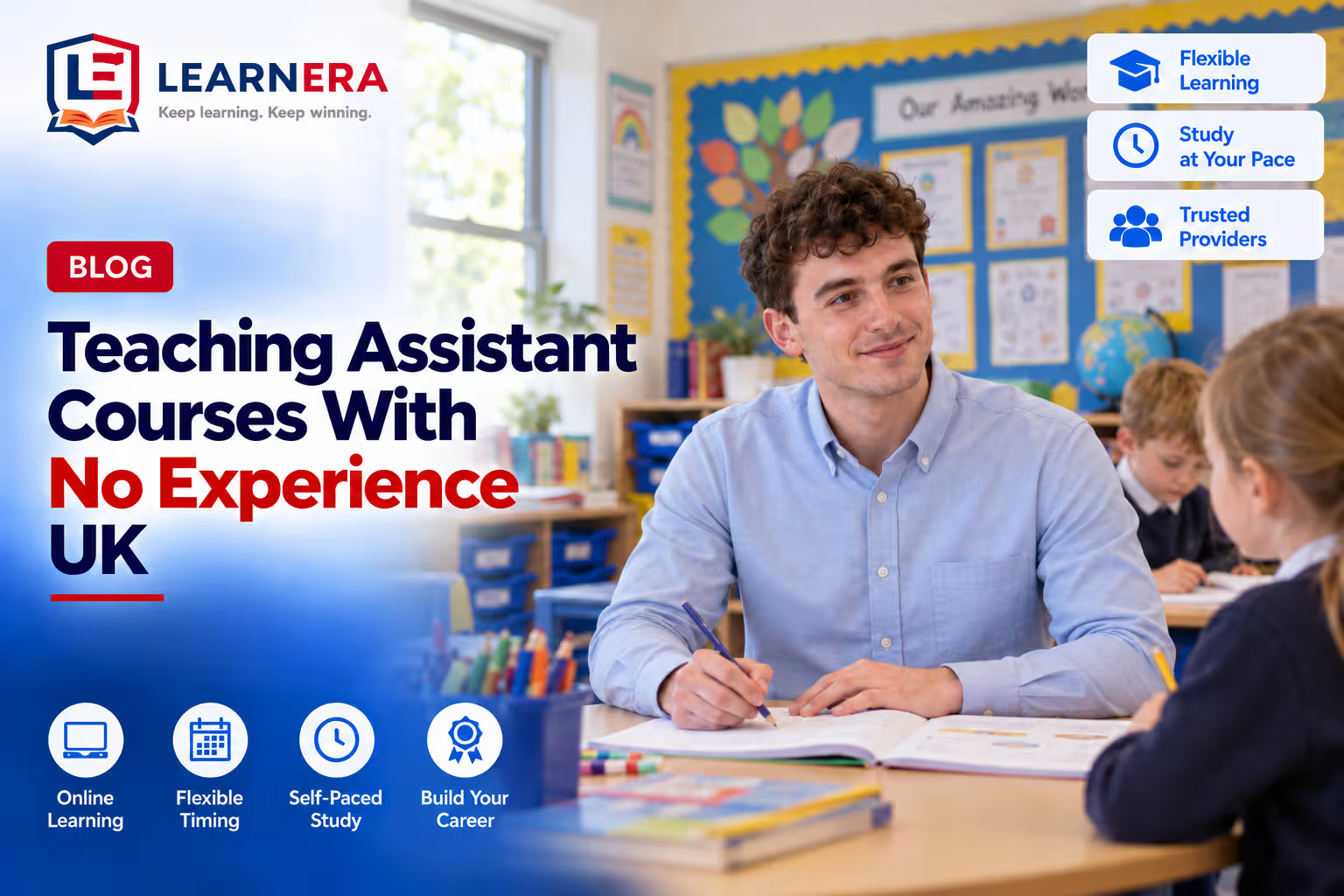
Starting teaching assistant training can feel difficult when course descriptions seem written for people already working in schools. However, some courses welcome beginners and let you build knowledge before gaining classroom experience. Others require practical access during your studies. Explore how to compare entry requirements, understand certificate types and choose learning that suits your starting point.

You can find teaching assistant courses without prior experience through online providers and local colleges. Look for beginner entry requirements and check whether school placements form part of the course. Starting study and meeting a school’s recruitment requirements are separate steps.

Explore Teaching Assistant Level 1, 2 & 3 + Early Years, SEN, Primary Teaching & Child Care. Learnera’s self-paced CPD learning welcomes beginners and covers classroom support alongside child development and safeguarding. It supports introductory knowledge, while regulated qualifications and supervised classroom practice serve different purposes.

Key Points

  • Check previous experience requirements separately from any placement needed during your studies.
  • Compare the certificate awarded and assessment methods before choosing by course level.
  • Match your starting point to the learning route and the school responsibilities you want to explore.

Where Can You Find Teaching Assistant Courses For Beginners?

Start with online course providers and local college websites that explicitly welcome learners without school experience. Search for introductory teaching assistant courses rather than assuming every Level 2 programme suits beginners. Read the entry requirements before comparing prices or advertised completion times.

Look for explanations of classroom responsibilities and how children learn. Useful introductory topics include safeguarding and supporting pupils with special educational needs and disabilities, known as SEND. The outline should help you understand what you will study beyond the certificate title. Check sample materials where available to judge whether the explanations suit your starting knowledge.

You can also search England’s National Careers Service course finder for local or online options. Contact the provider when a listing leaves previous experience requirements unclear. Explain that you have never worked in a school and ask which programme suits that starting point.

Does No Previous Experience Mean No School Placement?

No. Some courses accept beginners but still require a school placement during their studies. Entry criteria describe your starting point; placement requirements explain how you develop and demonstrate skills during study. A course can welcome beginners while still requiring access to pupils for assessment.

For example, the NCFE CACHE Level 2 Award in Support Work in Schools and Colleges is knowledge-only. Learners do not need employment or a practical placement to take it. The Level 2 Certificate in Supporting Teaching and Learning requires work or placement access to demonstrate competence. Those similar names therefore describe different commitments.

Can You Start A Level 3 Teaching Assistant Course Without Level 2?

Some courses welcome beginners directly but the specific programme’s entry criteria determine whether you can start at Level 3. Do not assume you must complete every lower level first. Equally, a higher number does not establish that a course suits your current knowledge.

Check whether the title describes CPD learning or a regulated qualification with a named awarding organisation. CPD means continuing professional development and supports your learning about a subject. A regulated qualification follows defined requirements for assessment and certification. Search the Register of Regulated Qualifications to check qualifications in England and Northern Ireland.

For a practical qualification, ask how the provider assesses your readiness and what school access you need. Explain your existing education and any relevant responsibilities outside school. This helps the provider assess your starting point without treating unrelated employment as classroom experience.

What Should You Check About Costs And Study Arrangements?

Check the total cost and weekly commitment alongside the advertised course fee. A course that welcomes beginners still needs to fit your budget and available study time. Compare the learning arrangements before deciding that the cheapest or shortest option suits you.

Free options also need checking because free learning does not always include a free certificate. Government-funded places have separate eligibility conditions and depend on the programme available. In England, contact the college or training provider to confirm funding and admission criteria. Keep those details alongside the timetable so you can compare the full commitment.

Can A Beginner Course Help You Apply For Teaching Assistant Jobs?

A beginner course gives you learning to discuss but completing it does not guarantee a teaching assistant job. Employers assess applicants against the requirements of each vacancy. Read the person specification to understand which qualifications and experience you need.

In England, schools set their own teaching assistant entry requirements. The National Careers Service says applicants usually need GCSE English and maths at grades 9–4 or equivalent. These employment expectations differ from the admission criteria for an introductory course.

Keep study and experience separate when describing your preparation. Explain what you learned without suggesting you have performed classroom duties. Before school work or volunteering begins, ask the setting about safeguarding checks and induction. Follow the arrangements relevant to your UK nation.

Choose A Course That Fits Your Starting Point

Choose one shortlisted course and ask the provider to confirm that it accepts someone with your background. Include any limits on your availability for school placements. A clear response helps you decide whether the programme fits before committing your time and money.

Then identify one topic you want to understand through that learning. Use it to review the course outline and decide whether the content answers your question.

Recent Blogs

Is The SMSTS Exam Open Book What You Can Use And When (UK)

Is The SMSTS Exam Open Book? What You Can Use And When (UK)

The words ‘open book’ can leave you wondering what to memorise for the SMSTS exam. You’ll work from memory for the first 20 minutes of the full CITB paper. That leaves 15 minutes to check details in two course books. Learn which books to have ready and how to practise using them against the clock.

Read More
SMSTS Certificate Expiry In The UK When And Why

SMSTS Certificate Expiry In The UK | When And Why

When a new project asks for your SMSTS certificate, check how much time you have left. The certificate lasts five years and the refresher covers current site safety guidance. Once the deadline passes, you’ll need the full course to regain certification. Learn how to verify your expiry date and work out which course you need.

Read More
SMSTS vs SSSTS Which Course Do You Need in the UK

SMSTS vs SSSTS: Which Course Do You Need in the UK?

If you’re stepping into a new site role, the right safety course depends on your responsibilities. SMSTS and SSSTS cover different duties, so your job title may only tell part of the story. Compare both courses and learn what to verify about delivery, certificates and employer requirements before booking.

Read More