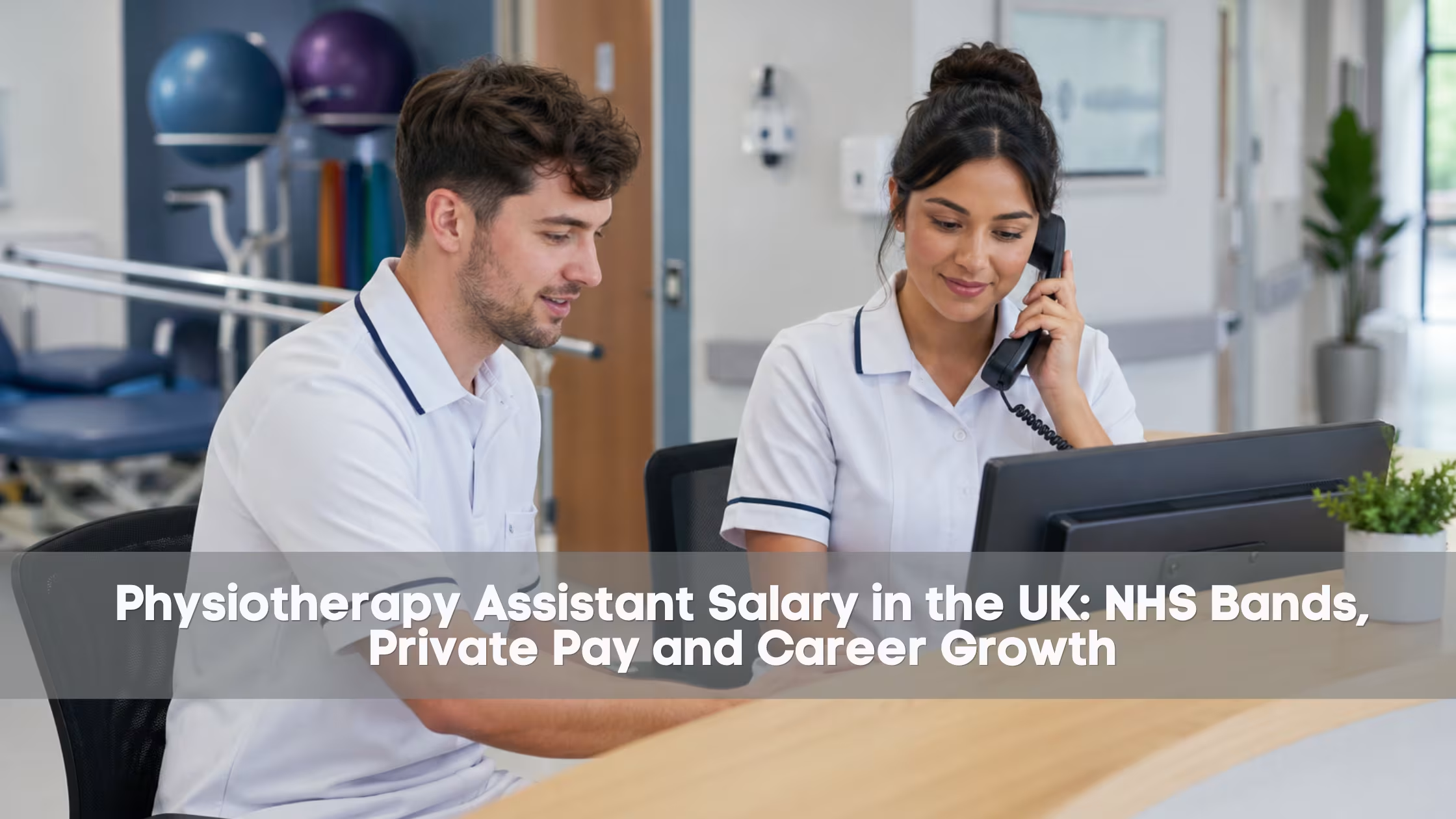
Salary answers for physiotherapy assistants can look confusing online. This guide explains NHS bands, private pay, and career growth in a clear UK context, with simple language, honest caveats, and practical insight into how these roles develop over time.
The ECDL has been rebranded as ICDL in the UK, but it remains one of the most widely recognised digital skills qualifications in the world. This guide explains what it covers, the different types available at each level, why employers value it, and how to access it wherever you are in your career.
Once a patient’s leg exercise has been done four times already and still is not quite right, the assistant just quietly resets and starts again. No frustration, no rush. That kind of steadiness, repeated across a full shift, is what …
Physiotherapy assistant jobs are more accessible than most people expect but the job market has its own rules. This guide explains what employers actually look for, how NHS pay bands work, where to search beyond NHS Jobs, and what realistic career progression looks like for support workers in the UK.
Reflective practice is how care professionals learn from real experience, not just formal training. This guide covers what it means, why it matters, the most useful models including Gibbs’ Cycle and Rolfe’s Framework, and how to build reflection into everyday practice to improve care and support your CPD.
Equality, diversity and inclusion are not policies on a shelf. They are what person-centred care actually looks like in practice. This guide covers what equality, diversity and inclusion mean in UK health and social care, why they matter, how to promote them day to day, and what the Equality Act 2010 requires, with real examples across every care setting.
Physiotherapy assistant work is not just about guiding exercises. It is built on ten practical skills that shape whether care is safe, consistent, and genuinely supportive. This guide covers every one of them, from communication and observation to manual handling, documentation, and knowing when to escalate, with real examples of what each skill looks like in a UK rehab setting.
A learner wants to move into data, improve job prospects, or gain a stronger qualification without putting work or family life on hold. Another wants shorter lessons, clearer structure, and study that leads to a real outcome. This is why …
In a world where technology is shaping how we work, communicate, and grow, learning has changed too. Traditional classroom training is no longer the only option for students, employees, and professionals who want to build new skills. Today, one of …
In today’s fast-changing professional world, learning cannot stop after school, university, or even after landing a job. Every industry is evolving. New tools emerge, regulations change, customer expectations shift, and employers increasingly value people who stay current, adaptable, and committed …