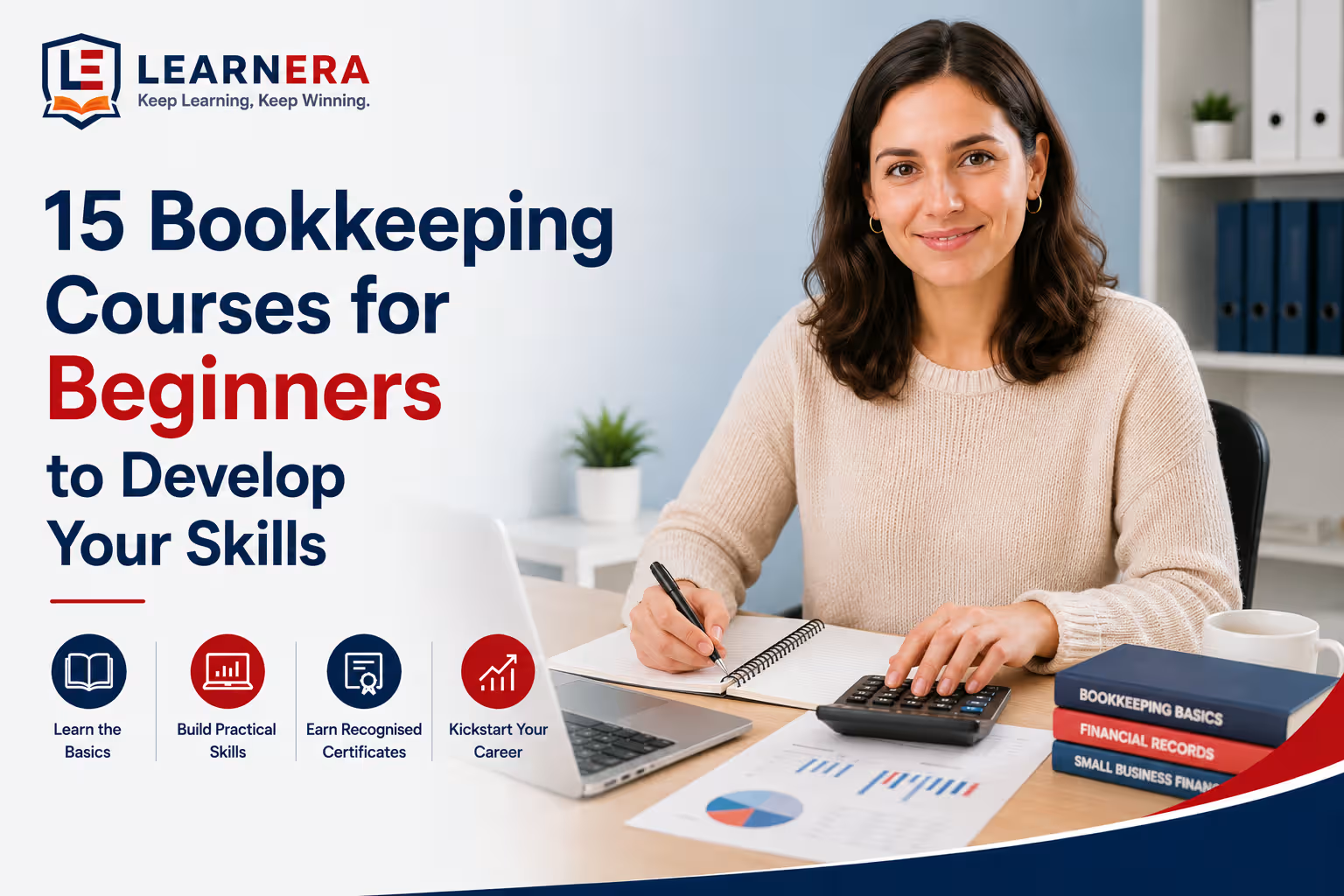
Most people who want to learn bookkeeping do not struggle with the subject itself. They struggle with knowing where to start. Search for bookkeeping courses online and you will find hundreds of options, free platforms, paid certificates, software training, accredited qualifications, and everything in between. It is a lot to sort through when you are not yet sure what any of it means.
This guide cuts through that. It covers fifteen beginner bookkeeping courses available in the UK, including free options, paid qualifications, and software-specific training. More importantly, it explains what each type of course actually is, what it can and cannot offer you, and how to work out which one suits your situation.
Whether you are managing your own business finances, upskilling in an administrative role, or making a career change, there is a starting point here for you.
TL;DR: Key Takeaways
- Bookkeeping courses in the UK range from free introductory options to Ofqual-regulated qualifications
- AAT, ICB, and IAB are the three main recognised awarding bodies in the UK, not just AAT
- Free courses can be genuinely useful but some require payment to access the certificate at the end
- Adults over 19 in England may be eligible for a fully funded Level 3 qualification through Free Courses for Jobs
- Software training in Xero, Sage, or QuickBooks matters as much as theoretical knowledge in most UK roles
- There is no legal requirement to hold a bookkeeping qualification in the UK
- AML supervision registration is a legal requirement only for those offering bookkeeping services commercially
What Is Bookkeeping and Who Are These Courses For?
Bookkeeping is the recording of day-to-day financial transactions. That means logging sales, purchases, payments, and receipts in an accurate and organised way. It is the foundation that everything else in business finance sits on top of, and it is a skill that almost every organisation needs, from sole traders to NHS trusts.
It is not the same as accounting, and that distinction matters more than most beginners expect. Bookkeeping is about recording what happens financially. Accounting takes that recorded data and uses it to analyse, interpret, and report on the financial health of a business. In practice, this often looks like a business owner handling their own bookkeeping day to day while an accountant prepares their annual accounts from those records.
These courses are for anyone starting from scratch. That includes people who want to manage their own business finances without relying entirely on an accountant, career changers moving into finance or administrative roles, administrative and support staff in healthcare or care settings who handle budgets or financial records, and people returning to work who want a marketable and practical skill.
Understanding Your Options: Accredited, CPD, and Free Courses
This is where most beginners get confused, and it is not their fault. The words accredited, certified, CPD-approved, and free get used interchangeably across course listings, but they mean very different things in practice. Getting clear on the distinction before you choose a course saves a lot of wasted time and money.
An Ofqual-regulated qualification is the most formally recognised type. These are assessed, quality-assured, and carry genuine weight with UK employers. AAT, ICB, and IAB qualifications all sit in this category. A CPD certificate shows that you have completed a recognised learning activity. It is valued for professional development and demonstrates initiative, but it is not the same as a regulated qualification in the eyes of most employers. A free course gives you genuine foundational knowledge and is absolutely worth doing, but most charge separately for a certificate at the end.
One thing worth knowing before you enrol on anything presented as free: always read the full terms first. Some platforms offer the course content at no cost but charge for the certificate or the assessment. The National Careers Service specifically flags this as something learners should check. The knowledge you gain from a free course is real and useful regardless, but it helps to go in with clear expectations.
Free Introductory
Builds genuine foundational knowledge at no cost. Best for testing the water before committing to a qualification. Certificate usually charged separately.
CPD Certificate
It is recognised for professional development and valued by employers as a signal of initiative. Not equivalent to an Ofqual-regulated qualification.
Accredited Qualification
Formally assessed and nationally recognised. Carries the strongest weight with UK employers. AAT, ICB, and IAB qualifications all sit here.
Always check the full terms before enrolling on any course presented as free. Some platforms charge separately for the certificate even when the course content itself costs nothing.
AAT, ICB, and IAB: The Three Main Awarding Bodies Explained
Most guides focus on AAT and leave it there. That is understandable because AAT is the most widely recognised name in UK bookkeeping, but it is not the only respected route and for some beginners it is not even the best starting point.
AAT Bookkeeping Qualifications
AAT stands for the Association of Accounting Technicians. It is the most widely recognised bookkeeping and accounting qualification body in the UK, and its certificates carry strong employer recognition across most industries. The Level 1 Award in Bookkeeping suits absolute beginners with no prior knowledge. The Level 2 Certificate in Bookkeeping is the core entry-level qualification that most employers recognise for junior finance and accounts roles. The Level 3 Certificate in Bookkeeping builds on that foundation for those moving toward more senior or independent positions.
ICB Bookkeeping Qualifications
ICB stands for the Institute of Certified Bookkeepers. One thing that sets ICB apart for beginners is that there are no entry requirements to register as a student and take the qualifications. You do not need prior experience or existing qualifications to start. ICB has a strong practical focus and is particularly well suited to those who want to work in small businesses or set up their own bookkeeping practice. Over time it becomes clear that ICB qualifications are especially valued in self-employment contexts, where practical competence and professional membership matter most.
IAB Bookkeeping Qualifications
IAB stands for the International Association of Bookkeepers. It is Ofqual-regulated and employer-recognised, making it a fully valid alternative to AAT and ICB. It tends to receive less coverage in online guides despite being a legitimate and respected route. If your chosen training provider offers IAB qualifications, they are worth taking seriously alongside the other two options.
AAT — Association of Accounting Technicians
ICB — Institute of Certified Bookkeepers
IAB — International Association of Bookkeepers
Can You Access Free or Funded Bookkeeping Training in the UK?
Yes, free and funded bookkeeping training exists in the UK, and more people are eligible than realise it. The most significant route for adults in England is Free Courses for Jobs. If you are over 19, you may be eligible for a fully funded Level 3 qualification at no cost. Eligibility depends on employment status and earnings, so check the current criteria on GOV.UK directly. Bookkeeping qualifications are included in the eligible course list, meaning an AAT or ICB Level 3 Certificate could potentially cost you nothing.
Skills Bootcamps are another option worth checking. These are fully or partially funded short programmes available in some areas of England, with availability varying by region. If you are employed, it is also worth asking whether a training or CPD budget exists at your workplace. In NHS and care settings this is more common than many staff realise. Always read the full terms before enrolling on anything presented as free. Some platforms charge separately for the certificate even when the course itself costs nothing.
15 Bookkeeping Courses for Beginners: The Full List
The courses below are organised by type rather than ranked in order of quality. The right starting point depends on your goal, your budget, and how much structure you need. Use the categories to navigate to what suits your situation.
Accredited UK Bookkeeping Qualifications
These are Ofqual-regulated qualifications that carry formal employer recognition across the UK. They involve assessed learning and lead to a nationally recognised certificate. If your goal is employment in a bookkeeping or finance role, this category is the most directly relevant.
- AAT Level 1 Award in Bookkeeping Designed for absolute beginners with no prior knowledge of finance or bookkeeping. Covers the basics of bookkeeping transactions, documents, and financial records. A gentle entry point into the AAT qualification pathway for those who want to build confidence before moving to Level 2.
- AAT Level 2 Certificate in Bookkeeping The core entry-level bookkeeping qualification most widely recognised by UK employers. Covers double-entry bookkeeping, ledger accounts, trial balances, and basic controls. The standard starting point for anyone targeting a junior accounts or finance role.
- AAT Level 3 Certificate in Bookkeeping Builds on Level 2 for those with some existing bookkeeping knowledge. Covers advanced bookkeeping, final accounts preparation, and indirect tax. Suited to those moving toward more independent or senior bookkeeping positions.
- ICB Level 2 Certificate in Bookkeeping An Ofqual-regulated qualification with no entry requirements to register and start. Practical in focus and particularly well suited to those who want to work in small businesses or move toward self-employment. A strong alternative to AAT Level 2 for beginners without prior qualifications.
- ICB Level 3 Certificate in Bookkeeping and Accounts Builds on ICB Level 2 and covers more advanced transactions including accruals, prepayments, and extended trial balances. Suited to those developing toward a professional bookkeeping role or building toward ICB membership.
- IAB Level 2 Award in Bookkeeping An Ofqual-regulated qualification from the International Association of Bookkeepers. Covers the foundations of double-entry bookkeeping and financial records. A valid and recognised alternative to AAT and ICB at entry level that receives less coverage than it deserves.
CPD and Short Courses
These courses build real knowledge and are valued for professional development. They do not carry the same formal weight as Ofqual-regulated qualifications for employment purposes, but they are a practical and often low-cost way to develop skills and demonstrate initiative.
- Learnera Diploma in QuickBooks Bookkeeping A CPD-accredited diploma covering practical QuickBooks bookkeeping skills for UK learners. Covers invoices, expenses, VAT, payroll basics, bank reconciliation, and financial reporting from setup through to everyday workflows. Designed for beginners, small business owners, and those moving into finance support roles. Fully online and self-paced with a CPD-accredited digital certificate on completion. Ten CPD points awarded. A strong practical starting point for anyone wanting job-ready QuickBooks skills in a UK business context.
- Learnera Diploma in Xero Accounting and Bookkeeping A CPD-accredited diploma covering everyday bookkeeping tasks using Xero, one of the most widely used cloud accounting platforms in the UK. Covers sales transactions, purchase records, bank reconciliation, VAT preparation, payroll basics, and financial reporting. Beginner-friendly with no prior experience required. Fully online and self-paced with a CPD-accredited digital certificate on completion. Ten CPD points awarded. Particularly relevant for learners targeting roles in small businesses, finance administration, or self-employed bookkeeping work.
- Oxford Home Study Centre — Free Bookkeeping Short Course A free twenty-hour introductory course covering bookkeeping terminology, cash and accrual methods, ledgers, and trial balances. CPD-approved. Certificate available for a fee on completion. A solid free foundation for beginners testing the water before committing to a paid qualification.
- Alison Diploma in Effective Bookkeeping and Payroll A free CPD-accredited course covering bookkeeping fundamentals alongside payroll administration, budgeting, and subsidiary ledgers. Approximately ten to fifteen hours of learning. Certificate charged separately. One of the more comprehensive free CPD options available to UK beginners.
- AccountingCoach A US-based platform offering extensive free study materials covering bookkeeping and accounting fundamentals. The content is universally applicable to bookkeeping foundations despite its US origin. A paid upgrade unlocks video tutorials, flashcards, and a certificate of completion. Widely recommended for self-paced foundational learning.
- ACCA Introduction to Bookkeeping via edX A six-week course developed by the Association of Chartered Certified Accountants and delivered through edX. Covers business transactions, double-entry bookkeeping, payroll, ledgers, and reconciliations. No prior knowledge required. Prepares learners for the ACCA FA1 exam. Free to access with a fee for a verified certificate.
Free Introductory Courses
These courses are genuinely useful starting points for complete beginners. They build foundational knowledge and help you decide whether bookkeeping is the right direction before committing financially to a qualification.
- OpenLearn Introduction to Bookkeeping and Accounting A free eight-hour course from The Open University covering the accounting equation, double-entry bookkeeping, and financial statement preparation. A free statement of participation is available on completion. One of the most reliable and academically grounded free options available to UK beginners.
- Coursera Bookkeeping Basics by Intuit A beginner-level sixteen-hour course developed by Intuit, the company behind QuickBooks. Covers accounting concepts, the accounting cycle, and bookkeeping principles. US-focused in some of its practical examples but the foundational content is broadly applicable. Free certificate available on completion of all materials.
Software-Specific Training
These courses develop the practical digital skills that most UK employers now expect alongside theoretical bookkeeping knowledge. They are best taken alongside or after a foundational course rather than as a standalone starting point.
- Sage Training A range of online courses covering Sage 50 and Sage Accounting at foundational and intermediate levels. Sage remains one of the most widely used platforms in UK organisations including NHS and public sector settings. Course costs and formats vary. A practical choice for anyone targeting roles in larger organisations or healthcare administration.
Do You Need a Qualification to Work as a Bookkeeper?
No. There is no legal requirement to hold a bookkeeping qualification to work as a bookkeeper in the UK. That is worth stating clearly because it is one of the most common misunderstandings beginners carry into their research. Qualifications significantly improve your employability and give employers a reliable signal of your competence, but the law does not mandate them.
The one legal requirement worth understanding accurately is AML supervision. This applies specifically to anyone offering bookkeeping services commercially to paying clients. If you set up your own bookkeeping practice and charge clients for your services, you are legally required to register with an approved AML supervisor. ICB can act as AML supervisor for its members, which is one practical reason why ICB membership matters for those planning self-employment. This requirement does not apply to employed bookkeepers or to learners completing a qualification.
In practice, most advertised bookkeeper roles at entry level in the UK list AAT or ICB as desirable rather than essential. Over time it becomes clear that qualifications open doors and remove friction from the hiring process, even where they are not formally required. In NHS and care settings, person specifications sometimes reference AAT or equivalent as a desirable criterion. Starting without a qualification is possible, but investing in one early gives you a clearer and more direct route into the roles you are aiming for.
How to Choose the Right Course for Your Situation
The right course depends entirely on what you are actually trying to achieve. That sounds obvious, but it is the step most beginners skip, which is why so many people end up on courses that do not serve their real goal. Three situations come up more often than any others.
If your goal is to get a bookkeeping job: AAT Level 2 Certificate in Bookkeeping is the most widely recognised entry-level qualification for employment in the UK. ICB Level 2 is a strong alternative, particularly if you have no prior qualifications and want a route with no entry requirements. Combining either with Xero or Sage training strengthens your application meaningfully. Most entry-level job listings in bookkeeping and accounts administration treat software familiarity as an expectation rather than a bonus.
If your goal is to manage your own business finances: A free introductory course from OpenLearn or FutureLearn gives you the foundations quickly and at no cost. Software training in Xero or QuickBooks is likely more immediately useful than a formal qualification for day-to-day business management. If you later want to offer bookkeeping services to other businesses commercially, ICB membership and AML supervision registration become relevant considerations at that point.
If your goal is to upskill in your current role: A CPD course from Oxford Home Study Centre or Alison is a practical and low-cost starting point. Check whether your employer offers a training budget before paying out of pocket. In NHS and care settings a training budget is more common than many staff realise. If you are eligible for Free Courses for Jobs, a fully funded Level 3 qualification may be available to you at no cost.
If you are completely new and want to test the water first: Start with OpenLearn or FutureLearn before committing to a paid qualification. AccountingCoach is a reliable self-paced resource for building foundational knowledge. Completing a free course does not count toward an accredited qualification, but it helps you decide whether bookkeeping is the right direction before investing time and money.
I want to get a bookkeeping job
Accredited Qualification
Start with AAT Level 2 or ICB Level 2. Add Xero or Sage training alongside to strengthen your application.
I want to manage my own business finances
Free Course + Software
Start with OpenLearn then move into Xero or QuickBooks training. ICB membership becomes relevant if you plan to offer services commercially.
I want to upskill in my current role
CPD or Funded Training
Check your employer training budget first. Free Courses for Jobs may cover a full Level 3 at no cost if you are eligible.
I am new and want to test the water
Free Introductory Course
Start with OpenLearn or AccountingCoach before committing to anything paid. No financial risk involved.
Accredited Qualification
Start with AAT Level 2 or ICB Level 2. Both are Ofqual-regulated and widely recognised by UK employers. Add Xero or Sage training alongside to strengthen your application.
Free Course + Software Training
Start with OpenLearn then move into Xero or QuickBooks training. ICB membership becomes relevant if you plan to offer services commercially.
CPD or Funded Training
Check your employer training budget first. Free Courses for Jobs may cover a full Level 3 qualification at no cost if you are eligible.
Free Introductory Course
Start with OpenLearn or AccountingCoach before committing to anything paid. No financial risk involved.
Summary
Bookkeeping is one of the most practical skills you can develop, and the range of courses available in the UK means there is a genuine starting point for almost every situation and budget. The key is knowing which type of course suits your actual goal rather than simply picking the most visible option.
If employment is your aim, an Ofqual-regulated qualification from AAT, ICB, or IAB gives you the most direct route. If you want to manage your own finances or develop your skills in a current role, a CPD course or a free introductory option is a sensible and low-cost place to begin. Software training in Xero, QuickBooks, or Sage belongs alongside whichever route you choose.
Before you enrol, check whether you are eligible for Free Courses for Jobs or a Skills Bootcamp. A fully funded Level 3 qualification may be available to you at no cost, and it is worth taking five minutes to check before paying out of pocket. Whatever your starting point, the most important step is simply deciding on your goal first and letting that decision lead you to the right course.
Frequently Asked Questions
Do I need a bookkeeping qualification to get a job in the UK?
No legal requirement exists. Qualifications significantly improve employability and most employers list AAT or ICB as desirable at entry level, but they are not legally mandated.
What is the difference between bookkeeping and accounting?
Bookkeeping is the recording of day-to-day financial transactions. Accounting involves interpreting, analysing, and reporting on that data. Bookkeeping typically requires less advanced training and offers faster entry into work.
Are free bookkeeping courses worth doing?
Yes. Free courses from reputable providers build genuine knowledge and demonstrate initiative. They do not carry the same employer weight as Ofqual-regulated qualifications, but they are a genuinely useful starting point. Some platforms charge for the certificate even when the course itself is free, so always check the full terms before enrolling.
What is the difference between AAT, ICB, and IAB qualifications?
All three are Ofqual-regulated and employer-recognised. AAT is the most widely known. ICB has a stronger practical and self-employment focus and has no entry requirements to register as a student. IAB is a valid and recognised alternative that receives less coverage than it deserves. The right choice depends on your goal and the requirements of your target employer.
Can I access free or funded bookkeeping training as an adult?
Yes. Free Courses for Jobs covers Level 3 qualifications for eligible adults over 19 in England. Skills Bootcamps may also be available in your area. Eligibility depends on age, employment status, and earnings level. Check the current criteria on GOV.UK directly before assuming you do or do not qualify.
Do I need to register with anyone to practise bookkeeping?
No general registration is required to work as an employed bookkeeper. AML supervision registration with an approved supervisor is a legal requirement specifically for those offering bookkeeping services commercially to paying clients. This does not apply to employed bookkeepers or to learners.
Which bookkeeping software should I learn as a beginner?
Xero and QuickBooks are the most widely used platforms in UK workplaces, with Sage common in larger organisations and NHS settings. Adaptability across platforms matters more than mastery of one specific tool. If you want a structured way to learn Xero or QuickBooks, Learnera offers CPD-accredited diplomas in both, designed specifically for UK beginners and covering everything from setup through to VAT, bank reconciliation, and reporting.
How long does a bookkeeping course take?
Free introductory courses range from five to fifteen hours. CPD courses typically take between ten and twenty hours. AAT and ICB qualifications take several months of part-time study. All options listed in this guide can be completed flexibly around existing work and commitments.
Is AAT the only recognised bookkeeping qualification in the UK?
No. ICB and IAB are also Ofqual-regulated and employer-recognised. AAT is the most widely known but not the only valid route. Choice depends on your goal, budget, and the requirements of your target employer or sector.
What is Making Tax Digital and does it affect bookkeeping?
Making Tax Digital is a HMRC initiative requiring most UK businesses to maintain digital records and submit tax returns digitally. Its expansion from April 2026 means digital record-keeping is becoming a standard expectation across most UK businesses. This is one reason why software skills in Xero, QuickBooks, or Sage are increasingly important alongside theoretical bookkeeping knowledge.
Can I do a bookkeeping course with no previous experience or qualifications?
Yes. ICB has no entry requirements to register as a student. Most free and CPD courses also have no entry requirements. AAT Level 1 is designed for complete beginners. No prior qualifications are needed to start learning bookkeeping.
Is it worth doing a free course before paying for a qualification?
Yes for most beginners. A free introductory course helps confirm whether bookkeeping is the right direction before committing financially. OpenLearn is a reliable starting point. Completing a free course does not count toward an accredited qualification but builds genuine foundations and costs nothing to try.