
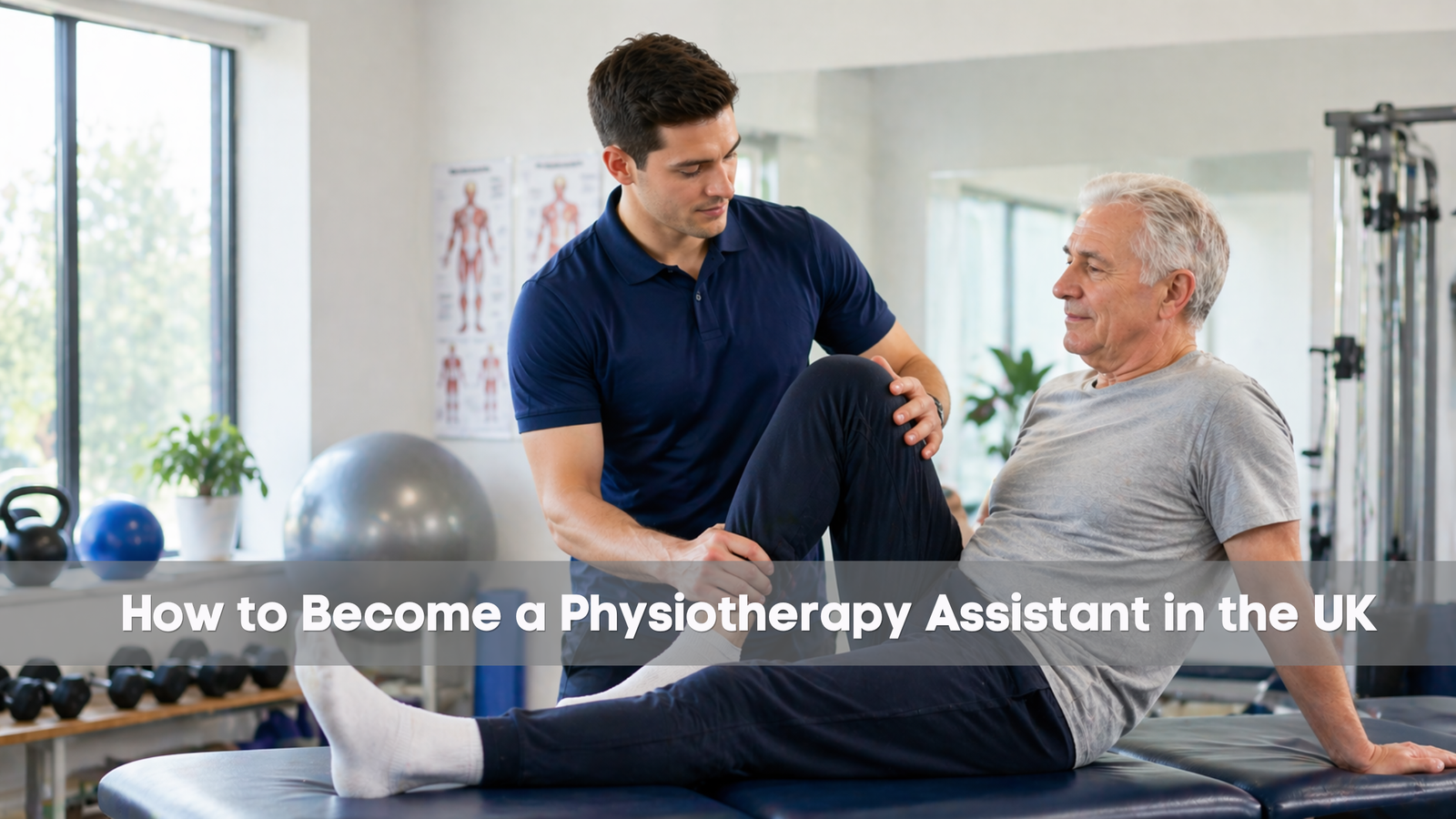

Once a patient’s leg exercise has been done four times already and still is not quite right, the assistant just quietly resets and starts again. No frustration, no rush. That kind of steadiness, repeated across a full shift, is what this role actually demands, and it is rarely what people picture when they first look into it.
Physiotherapy assistants work in NHS wards, community settings, outpatient clinics, and private practices across the UK. People come to this role from all directions. Some have been healthcare assistants for years. Others are just finishing school and want something hands-on from the start.
What most guides miss is what the job actually feels like before you are in it. The entry routes matter, the skills matter, but so does understanding the daily rhythm of the work. This guide covers all of it, honestly and without over-complicating it.
TL;DR / Key Takeaways
Here is a quick overview before we go into the detail:
- No fixed qualifications are legally required
- Employers often expect GCSEs or equivalent
- Apprenticeships offer a structured entry route
- Volunteering builds experience before applying
- Communication and patience matter most
- Roles exist in NHS and private settings
- Progression into senior or practitioner roles is possible
- Further study can lead to physiotherapy
What Does a Physiotherapy Assistant Actually Do Day to Day?
A physiotherapy assistant supports patients with movement, exercises, and mobility tasks under the direct supervision of a qualified physiotherapist. That is the core of it.
The work varies by setting but the rhythm stays similar. Guiding someone through a prescribed exercise, helping them practise walking, observing how a patient is moving and feeding that back to the physiotherapist. In practice this often looks like quiet, patient-facing work done consistently and carefully across a full shift.
You are not diagnosing or making clinical decisions. That sits entirely with the physiotherapist. Your role is to carry out what has been planned, do it safely, and report back on what you notice.
Do You Need Qualifications to Become a Physiotherapy Assistant in the UK?
There is no legal requirement for qualifications to become a physiotherapy assistant in the UK. Employers set their own expectations, and those vary quite a bit.
Some NHS trusts ask for GCSEs in English and Maths. Others are more interested in care experience than certificates. A Level 2 or Level 3 in health and social care can strengthen an application, but it rarely appears as a strict requirement. What tends to matter more is evidence that you understand care environments.
Apprenticeships are worth considering seriously. They offer a paid route into the role while building recognised skills alongside real workplace experience, which employers often value more than qualifications alone.
Common Ways People Start in This Role
Most people do not walk straight into a physiotherapy assistant post with nothing behind them. The route is usually gradual, and that is not a bad thing.
Some start as healthcare assistants or care workers and move across once they have a feel for clinical environments. Others volunteer with the NHS or a community health organisation first, building familiarity before applying for paid roles. Direct applications do happen, particularly for those who have recently completed a health and social care qualification.
Apprenticeships offer a more structured path. You earn while you learn, gain supervised experience, and come out with something employers recognise. Over time this route has become more common, particularly for younger applicants entering healthcare for the first time.
Skills That Matter More Than Qualifications
A patient is mid-exercise and starting to disengage. They are not saying anything, but you can tell. Knowing how to read that moment and respond to it calmly is the kind of skill that makes a real difference here. Communication, patience, and the ability to stay steady when someone is frustrated or frightened matter far more than what is on your CV.
Physical stamina, attention to detail, and working closely within a team are just as important. This is not independent work. You are always following a plan set by the physiotherapist, and that requires consistency and reliability more than anything else.
What the First Few Months Often Feel Like
Most new starters spend the first weeks watching more than doing. You follow the physiotherapist closely, learn the routines, and get familiar with how different patients respond to the same exercise. It can feel slow at first, but that observation period is where a lot of the real learning happens.
Over time the uncertainty settles. You start to anticipate what is needed before being asked, build quiet confidence with patients, and find your rhythm within the team. That gradual shift, from following instructions carefully to feeling genuinely useful, is something most assistants look back on as the most valuable part of their early experience.
Law, Regulation, and What Is Actually Required
Physiotherapy assistant roles are not regulated by law in the same way that qualified physiotherapist roles are. There is no statutory requirement to hold a specific qualification before starting work. Employers set their own standards, and those vary depending on the setting and the organisation.
What is consistent across most roles is the expectation of a DBS check. Working with patients, particularly vulnerable adults or children, requires this as standard. It is not a qualification but a safeguarding requirement, and it is worth arranging early in your job search.
How This Role Can Lead to Other Careers
Over time, many assistants find that the role opens doors they did not expect when they first started. Confidence builds, experience accumulates, and a clearer sense of direction tends to follow naturally.
Some move into senior support or assistant practitioner roles within the same organisation. Others use the experience as a foundation for further study, including the degree-level training required to become a qualified physiotherapist. That path takes commitment and time, but working as an assistant first gives you a realistic understanding of the profession before making that investment.
Common Misconceptions About Becoming a Physiotherapy Assistant
One of the most common assumptions is that you need a degree or a formal healthcare qualification before applying. In practice this often holds people back from roles they are already suited for. Employers are looking for the right attitude and some grounding in care, not a specific certificate.
Another misconception is that the work is purely gym or sports based. Most assistants spend the majority of their time in clinical or community settings, supporting recovery and rehabilitation rather than fitness. And assistants do not treat patients independently. Every intervention is planned and overseen by a qualified physiotherapist.
NHS vs Private: What to Expect from Each Setting
NHS roles tend to move quickly. Wards are busy, caseloads are higher, and you are often working across a team with multiple patients in a single shift. That pace can feel overwhelming at first, but it builds confidence quickly and exposes you to a wide range of conditions and patient needs early on.
Private settings are usually quieter and more structured. Sessions are often one-to-one, the environment is calmer, and there is frequently more time with each patient. In practice this often looks like a closer working relationship with the physiotherapist, which suits people who prefer learning in a slower, more focused setting.
Neither is better. They suit different personalities and different points in a career. Over time, many assistants work across both and find that each one sharpens a different part of their practice.
What to Include When You Apply
Applications for physiotherapy assistant roles do not need to be complicated, but they do need to show the right things. Employers are not scanning for impressive qualifications. They are looking for evidence that you understand care environments and can be relied upon with patients.
Any experience that involves working directly with people matters. A care home placement, a volunteering stint, even a support role in a school or community setting. If you have completed a health and social care qualification, mention the practical elements specifically rather than just listing the course.
What tends to make an application stand out is tone as much as content. Showing that you understand the boundaries of the role, that you are there to support and not to lead, signals exactly the kind of awareness experienced teams are looking for.
Working With Different Patient Groups
The patients you work with will vary far more than most people expect going in. One morning might involve supporting someone recovering from a hip replacement. The next could be working alongside a stroke patient relearning how to walk, or helping an elderly resident in a care home maintain enough mobility to stay independent.
Each group brings its own pace and its own emotional texture. Stroke rehabilitation requires a particular kind of patience, because progress is slow and setbacks are common. Orthopaedic recovery can feel more straightforward, but patients are often in pain and need calm, consistent reassurance as much as physical support.
Over time you develop a feel for reading different situations quickly. That adaptability, knowing when to encourage and when to simply stay quiet and steady, is one of the quieter skills this role builds without you always noticing it happening.
What Good Supervision Looks Like
Most new assistants are not entirely sure what to expect from the physiotherapist they report to. In practice this often looks like a working relationship built gradually through observation, clear instruction, and regular feedback rather than anything formal or structured from the outset.
A good supervisor will brief you before sessions, check in during them, and debrief afterwards when something needs addressing. They will not expect you to act independently or make judgements beyond your role. If something feels unclear, raising it early is always the right move and experienced physiotherapists expect that from new starters.
Over time that relationship becomes more intuitive. You start to anticipate what the physiotherapist needs from you before being asked. That quiet alignment, built through consistency and trust, is often what turns a competent assistant into an invaluable one.
Summary: A Practical Starting Point Into Healthcare
Physiotherapy assistant roles are more accessible than most people realise, and more meaningful than the job title sometimes suggests. The work is hands-on, patient-facing, and built on consistency rather than qualifications. If you have the right attitude and a genuine interest in supporting recovery, the entry barriers are lower than you might expect.
The clearest next step is to start building familiarity with care environments, whether through volunteering, an apprenticeship, or a support role in a related setting. From there, the experience tends to speak for itself.
Do you need qualifications to become a physiotherapy assistant in the UK?
No formal qualifications are legally required. Employers set their own expectations, which often include GCSEs or relevant care experience, but there is no single mandatory requirement across the board.
Can you become a physiotherapy assistant with no experience?
It is possible, but most employers look for some grounding in care environments. Volunteering or a related support role can bridge that gap before applying.
What GCSEs do you need for a physiotherapy assistant role?
There is no fixed requirement, but many NHS employers ask for English and Maths at grade 4 or above. Private employers vary considerably.
Is a physiotherapy assistant the same as a physiotherapist?
No. A physiotherapist is a regulated healthcare professional who assesses, diagnoses, and plans treatment. An assistant supports that plan under supervision and does not work independently.
Where do physiotherapy assistants usually work?
NHS wards, outpatient departments, community rehabilitation teams, private clinics, and care homes are all common settings across the UK.
Do physiotherapy assistants need a DBS check?
Yes, in most roles. Working with patients, particularly vulnerable adults or children, requires a Disclosure and Barring Service check as a standard safeguarding requirement.
Can you progress to become a physiotherapist?
Yes, with further study. Becoming a qualified physiotherapist requires a degree-level qualification. Working as an assistant first gives you valuable experience before making that commitment.
What skills do employers look for most?
Communication, patience, physical stamina, and the ability to work reliably within a team. Practical attitude consistently matters more than academic background.
Are apprenticeships available for this role?
Yes. Healthcare support worker apprenticeships offer a structured, paid route into the role and are increasingly common for those entering the sector for the first time.
What does a typical day look like?
Most shifts involve guiding patients through prescribed exercises, assisting with mobility, setting up equipment, and reporting observations back to the physiotherapist. The work is repetitive, patient-facing, and requires steady concentration throughout.
How do I find physiotherapy assistant jobs in the UK?
NHS Jobs is the most reliable starting point for NHS roles. Indeed, Totaljobs, and local trust websites also advertise positions regularly. Searching for therapy assistant or rehabilitation assistant alongside your location often returns broader results.
Is the role physically demanding?
Yes, to a degree. You will be on your feet for most of a shift, assisting with mobility, setting up equipment, and supporting patients with movement. Building physical stamina early makes a noticeable difference to how you manage longer shifts.
Do physiotherapy assistants work weekends?
In NHS settings, particularly inpatient wards, weekend working is common. Community and outpatient roles vary. It is worth checking the rota expectations before accepting a position, as patterns differ significantly between employers.
Can I work as a physiotherapy assistant part time?
Part-time roles do exist, particularly in community and private settings. NHS band 2 and band 3 posts sometimes offer flexible hours, though availability depends on the trust and the team’s needs at the time.
What band is a physiotherapy assistant on the NHS pay scale?
Most physiotherapy assistant roles sit at band 2 or band 3 on the NHS Agenda for Change pay scale. Band 3 roles typically involve more responsibility or a wider range of duties than entry-level band 2 positions.
Will I need to do any training once I start?
Yes. Most employers provide induction training, manual handling instruction, and basic life support as a minimum. Some offer ongoing development through in-house programmes or access to further qualifications over time.
Is there a difference between a physiotherapy assistant and a rehabilitation assistant?
The titles are often used interchangeably, but rehabilitation assistant roles can sometimes cover a broader range of therapy support, including occupational therapy. Always read the job description carefully to understand what each role actually involves.
Can I specialise in a particular area as an assistant?
Over time, yes. Some assistants develop experience in specific areas such as stroke rehabilitation, musculoskeletal physiotherapy, or paediatrics. Specialisation usually happens gradually through the setting you work in rather than a formal training route.
What should I wear to an interview for this role?
Smart, practical clothing works best. You do not need to arrive in scrubs, but overly formal attire can feel out of place. Showing that you understand the practical nature of the role through how you present yourself is a small but noticed detail.
How long does it take to feel confident in the role?
Most assistants start to feel genuinely settled somewhere between three and six months in. The first few weeks are about observation and routine. Confidence builds quietly through repetition, and most people find it arrives before they expect it to.