

GET ANY COURSE FOR £10.99 ONLY !
BIG LEARNING. BIGGER SAVINGS.
Offer Ends In!
01Hours
49Minutes
21Seconds
Copy Your Coupon
Teaching Assistant Roles in the UK What Each One Involves and How to Progress

Teaching Assistant Roles in the UK: What Each One Involves and How to Progress

Teaching assistant roles in UK schools are not all the same. A general classroom TA, an SEN assistant, and a Higher Level Teaching Assistant carry different responsibilities, work with different pupils, and require different levels of training. This guide explains what each role actually involves and what career progression looks like in practice.

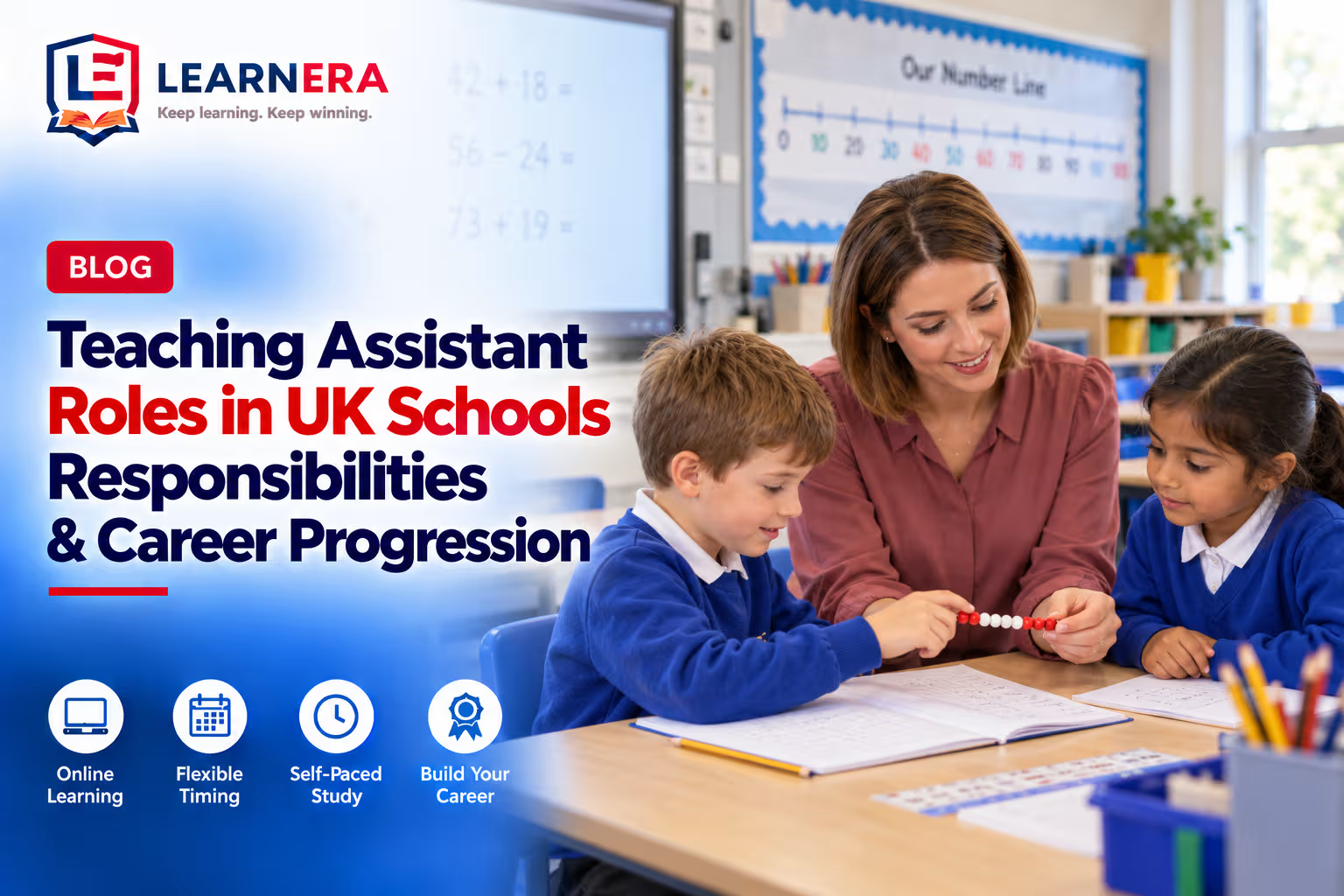
A teaching assistant works at a table with three pupils while the class teacher leads the rest of the lesson. She adapts her explanation for each child, uses a visual prompt for one, checks understanding quietly for another, and redirects a third who has drifted off task. She does all of this without drawing attention. That kind of focused, responsive support is what teaching assistant work looks like in practice.

There are over 280,000 teaching assistants currently employed in schools across England, according to the Department for Education. The roles they fill are not all the same. From general classroom support to specialist SEN provision and Higher Level Teaching Assistant positions, each carries different responsibilities, different training requirements, and different career implications.

For those looking to prepare for any of these roles through structured online study, Learnera’s Teaching Assistant Level 1, 2 & 3 + Early Years, SEN, Primary Teaching & Child Care covers classroom support, SEN principles, safeguarding, and communication skills through flexible, self-paced CPD-accredited learning.

Key Points

  • Teaching assistant roles range from general classroom support to SEN, early years, HLTA, and subject-specific positions
  • The National Careers Service reports typical salaries of £18,000 to £25,000, with SEN specialists and HLTAs often earning above this range
  • No single national qualification is a legal requirement for entry-level TA roles, though Level 2 or Level 3 training significantly strengthens applications
  • HLTA status is formally assessed and brings greater responsibility than a standard TA role
  • CPD-accredited online courses build foundational knowledge and are honest preparation for the classroom rather than substitutes for regulated qualifications

What Does a General Classroom Teaching Assistant Do?

The general classroom teaching assistant is the most common TA role in UK schools. The primary responsibility is supporting the class teacher in delivering lessons and ensuring pupils can access and engage with the learning.

Day-to-day tasks include helping with lesson preparation, supporting pupils with literacy and numeracy, supervising small group work, and assisting with classroom behaviour management. This role is the most common entry point for new TAs and is well-suited to candidates with good communication skills, patience, and a genuine interest in supporting children’s learning.

What Does an SEN Teaching Assistant Do?

An SEN teaching assistant works specifically with pupils who have additional learning or support needs. This includes children with autism spectrum conditions, ADHD, dyslexia, and emotional or behavioural difficulties, among others.

The role involves delivering targeted support, helping pupils access the curriculum through adapted approaches, working closely with the school’s SENCO to implement individual learning plans, and using assistive strategies and resources tailored to each pupil’s needs. SEN-trained TAs are among the most sought-after support staff in UK schools, and roles in this area tend to attract higher salaries within the TA pay range.

What Is a Higher Level Teaching Assistant and How Does the Role Differ?

A Higher Level Teaching Assistant holds a specific accredited status that carries more responsibility than a standard TA role. HLTAs can lead small group lessons, cover classes when a teacher is absent, support pupil assessment and progress monitoring, and contribute to learning activity planning.

HLTA status requires formal assessment and typically follows relevant classroom experience alongside further training. It is not simply a promotion from TA; it involves a recognised assessment process. Many HLTAs use the role as a stepping stone toward teacher training or a SENCO position, and pay is typically higher than standard TA grades.

What Does an Early Years Teaching Assistant Do?

An Early Years teaching assistant works with children from birth to five, typically in nursery and reception settings. The focus is on supporting early literacy and numeracy, encouraging play-based learning, and monitoring developmental milestones.

Safeguarding and child wellbeing are central to the role. Every adult working in an early years setting carries a clear responsibility to notice changes in a child’s behaviour and report concerns through the correct procedures. Patience, creativity, and a sound understanding of early childhood development are the qualities that underpin effective early years TA practice.

What Are Subject-Specific Teaching Assistant Roles?

Some secondary schools employ TAs with knowledge in particular subjects such as science, mathematics, or ICT. These roles involve supporting pupils within subject lessons, assisting teachers with practical tasks such as laboratory preparation, and helping pupils build understanding ahead of examinations.

Subject-specific TA roles suit people who have relevant knowledge in a particular discipline and want to use it in a classroom context without taking on the full responsibilities of a qualified teacher. They are less common than general classroom or SEN roles, but they are a genuine option for those with a subject background and an interest in working in education.

What Does Career Progression Look Like for Teaching Assistants?

Teaching assistants can progress in several directions depending on their interests and the experience they build. The most straightforward path moves from classroom TA toward HLTA status, which brings greater responsibility and typically higher pay.

From there, some TAs move into SENCO roles after gaining relevant qualifications and experience in SEN support. Teacher training through a school-based or university route is also an option for those who want to qualify as a teacher. Continuous professional development matters throughout all of these pathways, and schools tend to invest in staff who demonstrate commitment and take initiative in their own development.

What Salary Can Teaching Assistants Expect in the UK?

The National Careers Service reports typical salaries of £18,000 to £25,000 per year for teaching assistants in the UK. SEN specialists and Higher Level Teaching Assistants can earn above this range. Pay varies between local authorities, school types, and the specific responsibilities attached to a role.

It is worth checking the pay scale for any advertised position directly with the school or employer rather than relying on averages, as figures differ considerably across regions and settings. Experience and relevant qualifications both influence pay, particularly for SEN-focused or HLTA positions.

How Can Training Help You Access These Roles?

Schools prefer candidates who can demonstrate some foundational knowledge before they start, particularly for SEN-focused and HLTA roles. A Level 2 or Level 3 teaching assistant qualification is widely listed as desirable on job advertisements, even where it is not formally required.

Learnera’s Teaching Assistant Level 3 Diploma covers the areas schools look for, including communication strategies, safeguarding principles, SEN awareness, and classroom support, through self-paced online study. It is CPD-accredited preparation for the role. Where a school specifies a regulated qualification, candidates should look for an Ofqual-regulated awarding organisation and confirm the qualification status on the Ofqual Register before enrolling.

Recent Blogs

How to Become a Teaching Assistant in the UK A Step-by-Step Guide

How to Become a Teaching Assistant in the UK: A Step-by-Step Guide

Becoming a teaching assistant in the UK does not require a degree, and entry into the role is more straightforward than most people expect. This guide covers the practical steps from understanding the role to applying for jobs, including what qualifications help, why experience matters, and how to build a career once you are in the classroom.


Read More
How to Become a Physiotherapy Assistant in the UK Without Experience

How to Become a Physiotherapy Assistant in the UK Without Experience

Starting out as a physiotherapy assistant in the UK without prior experience is more achievable than most people expect. Employers value attitude, transferable skills, and a genuine interest in patient care alongside formal qualifications. This guide explains the realistic steps to getting started and building a career in this growing field.

Read More