
What to do: Divide large quantities into smaller, shallow portions so heat can escape more quickly
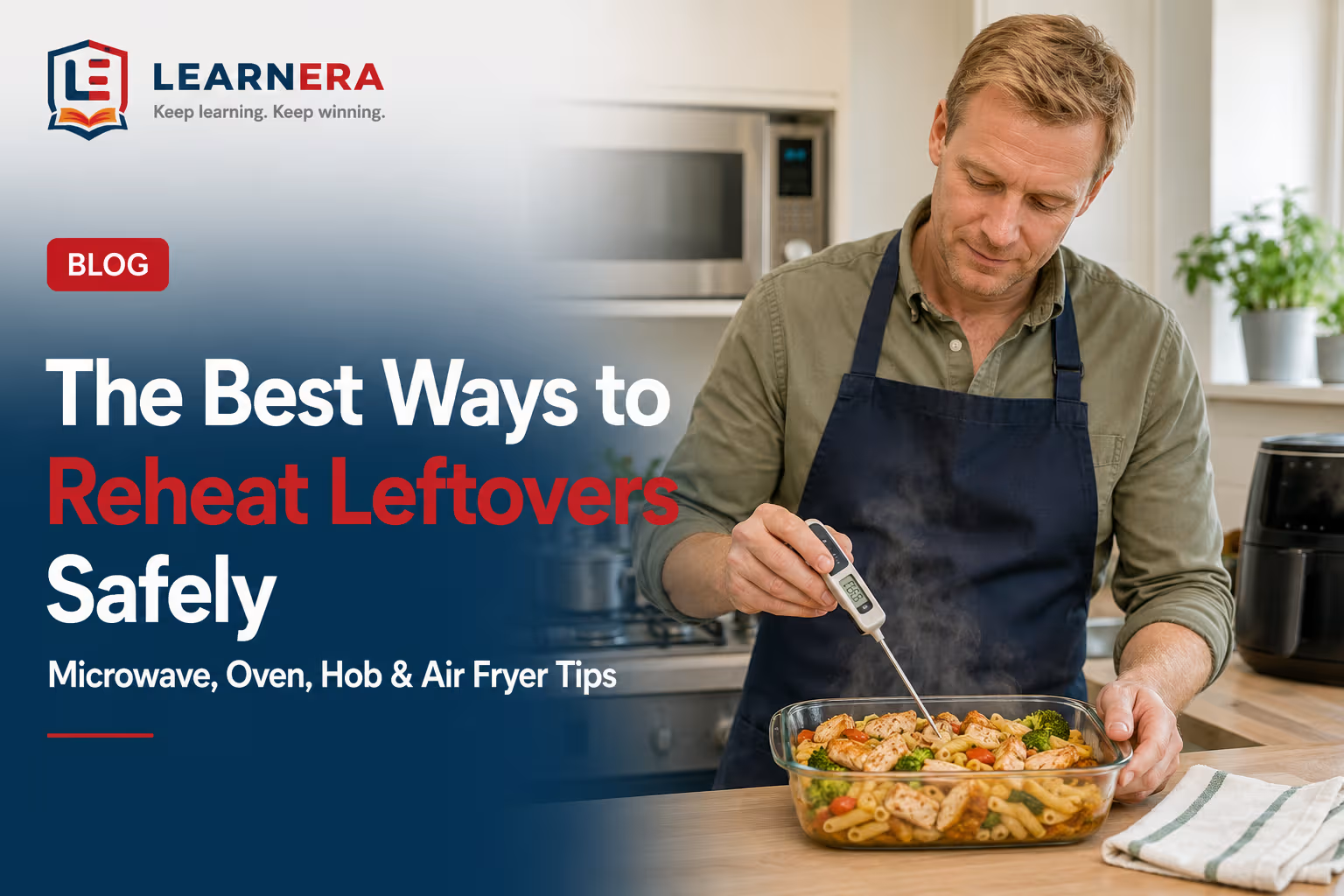
The Best Ways to Reheat Leftovers Safely
Discover how to choose the best reheating method for leftovers without sacrificing safety or texture. This UK guide compares microwaves, ovens, hobs and air fryers, explains cooling and storage limits and clarifies when rice, frozen food and takeaway leftovers need extra care.
Most leftovers can be reheated safely if they were cooled and stored correctly, have not already been reheated and are heated until steaming hot throughout. The best method depends on the food: use a microwave for speed, a hob for moist dishes and an oven or air fryer when you want to restore a crisp texture. Current Food Standards Agency guidance advises reheating leftovers only once and checking that the complete portion is steaming hot, not merely warm.
Before choosing an appliance, consider the food’s history. Reheating cannot make food safe if it was left out too long, kept beyond the recommended period or stored under uncertain conditions.
These principles also matter wherever people prepare or serve food at work. Learnera’s Diploma in Food Hygiene and Safety Level 3 provides structured food hygiene learning around preparation, storage and handling. It should support, not replace, workplace induction, an employer’s food safety procedures or role-specific supervision.
TL;DR: What Should You Know?
The best reheating method is the one that heats the entire portion safely while preserving the food’s texture.
- Check that the leftovers were cooled and refrigerated promptly.
- Reheat only the amount you need and do it only once.
- Use a microwave for convenience, a hob for moist dishes, and an oven or air fryer for crisp foods.
- Stir, turn or divide food to prevent cold centres.
- Treat rice and takeaway rice with additional care.

How Can You Tell Whether Leftovers Are Safe to Reheat?
Leftovers are suitable for reheating only when their cooling and storage history is known, they remain within the recommended storage period and they have not already been reheated. Check these points before deciding which appliance to use.
✅
Usually suitable for reheating
- 🧊Cooled and refrigerated promptly
- ⏳Still within the recommended storage time
- 🔁Not previously reheated
- 🛡️Stored covered and protected from contamination
- 📦Handled according to relevant packet instructions
VS
⛔
Do not reheat
- 🌡️Left at room temperature for an extended or unknown period
- 📅Kept beyond that period
- 🔂Already reheated once
- ☣️Known or suspected contamination, including contact with raw food
- ❓Storage or reheating history cannot be confirmed
The FSA’s chilling, freezing and defrosting guidance advises eating ordinary refrigerated leftovers within 48 hours or freezing them if that will not be possible. A use-by date may impose an earlier limit for packaged food.
Do not use smell as the deciding safety test. The FSA Home Food Fact Checker explains that the organisms responsible for food poisoning cannot reliably be detected by smelling food carrying a use-by date. Appearance and taste cannot confirm a safe storage history either.
For example, a refrigerated portion of soup with a known preparation date may be eligible for reheating. A similar container found in a shared fridge with no label or known history should not be made “safe” by boiling it.
Which Reheating Method Works Best for Different Leftovers?
Microwaves work well for quick reheating, hobs offer control over moist dishes, and ovens or air fryers are generally better for food that should remain crisp. The method affects texture and evenness, but every method must still heat the food until steaming hot throughout.
Microwave
🍽️ Often suitable for
Soup, stew, saucy pasta, cooked vegetables and small portions
👍 Main advantage
Fast and convenient
⚠️ Point to watch
May create hot edges and cold centres
Hob
🍽️ Often suitable for
Soup, curry, sauce, chilli, stir-fry, rice and pasta
👍 Main advantage
Easy to stir and control moisture
⚠️ Point to watch
Food may stick or scorch if left unattended
Oven
🍽️ Often suitable for
Lasagne, casseroles, roasted food, baked dishes and several pizza slices
👍 Main advantage
Even dry heat and good texture
⚠️ Point to watch
Slower and may dry exposed food
Air fryer
🍽️ Often suitable for
Pizza, chips, breaded food, pastries and small roasted portions
👍 Main advantage
Restores crispness quickly
⚠️ Point to watch
Poor choice for liquids; overcrowding restricts airflow
Food characteristics matter more than a rigid list. A wet curry benefits from gentle heat and regular stirring. Pizza needs heat beneath or around the crust. A dense slice of lasagne may require a smaller portion so its centre becomes hot before the edges dry out.
When a meal contains several components, reheat them separately if their densities or textures require different treatment, then serve them together.
Treat suggested appliance temperatures and timings as starting points, not safety guarantees. Portion size, starting temperature, container, appliance power and food density all affect the result. Follow packaging and appliance instructions where they are available.
How Can You Reheat Leftovers Evenly in a Microwave?
Reheat leftovers evenly in a microwave by using a suitable container, spreading or dividing the food, covering it appropriately, and stirring or turning it during heating. These actions help heat reach cooler areas instead of overcooking the edges.
1
📦
Transfer the portion to a microwave-safe container unless the original packaging says it can be heated as supplied.
2
🥣
Break up dense clumps and arrange the food in a shallow, even layer where possible.
3
🛡️
Cover it with a vented microwave-safe lid or follow the packet instructions. Covering may help retain moisture, but steam must be able to escape safely.
4
🥄
Pause to stir soups, sauces, rice and pasta. Turn or reposition food that cannot be stirred.
5
⏱️
Allow any instructed standing time, then check the centre and thickest parts for cold spots.
Standing, stirring and continuing to heat are parts of the same reheating process. They do not count as cooling the food and reheating it on a later occasion. If a plate contains foods with very different densities, heating them separately can prevent one item drying out before another is hot.
There is no single reliable microwave time for every leftover. Wattage, quantity and shape vary too widely, so the final check matters more than copying a universal number of minutes.
How Should You Use an Oven, Hob or Air Fryer to Reheat Leftovers?
Use a hob for wet or saucy food, an oven for larger or baked dishes, and an air fryer for smaller items that benefit from circulating dry heat. Whichever method you choose, heat the complete portion until it is steaming hot throughout.
Using the hob
Place soups, stews, curries and sauces in a suitable pan and heat them while stirring regularly. Use controlled heat so the outside does not catch before the centre is hot. A small amount of water, stock or sauce can restore moisture to rice or pasta, but it only improves quality. It does not correct unsafe storage.
For pizza, a covered frying pan can warm the topping while helping the base regain some crispness. Check that the topping and centre are thoroughly heated rather than judging the food only by the crust.
Using the oven
An oven suits casseroles, lasagne, roasted vegetables, cooked meat and larger quantities. Divide dense dishes into manageable portions. Cover food that is likely to dry out, then uncover it near the end only if the surface needs to crisp. Separate pieces on the tray so heat can circulate.
Avoid relying on the oven setting alone. A hot oven does not prove that the middle of a thick portion has reached a safe condition.
Using an air fryer
An air fryer is most useful for pizza, chips, breaded food, pastries and small roasted portions. Arrange items in a single layer where practical and leave enough space for air to circulate. Turn or shake suitable foods during heating.
Air fryers differ in size, power and available modes. Follow the appliance instructions and check the food frequently instead of applying one universal setting. Do not use an air fryer for soup, stew or another loose liquid unless the manufacturer explicitly provides a safe method and suitable container.
How Hot Should Reheated Leftovers Be?
Reheated leftovers should be steaming hot throughout, including at the centre and in the thickest parts. Warm edges, melted cheese or a bubbling surface do not prove that the complete portion is ready.
Cut into dense food such as lasagne and look for steam from the middle. Stir liquid and mixed dishes so cooler areas are redistributed. A clean food thermometer can provide an additional check when visual assessment is difficult.
The FSA publishes 70°C for two minutes as one general cooking time and temperature combination, with alternatives such as 75°C for 30 seconds. These are time and temperature combinations, not a reason to describe 74°C or 165°F as a universal UK household law. The familiar 165°F figure is commonly taken from US guidance.
Do not confuse reheating with hot holding. In food-business guidance, 63°C relates to keeping already-hot food hot before service. It is not the target for bringing chilled leftovers back to a safely reheated condition.
Reheat food only once. Taking a dish out briefly to stir or turn it and then continuing immediately is one process. Cooling the unused food again for another later reheating is different and should be avoided.
How Should Leftovers Be Cooled, Stored, Frozen and Defrosted?
Cool cooked food promptly, place it in a fridge within one to two hours, keep the fridge between 0°C and 5°C, and use ordinary leftovers within 48 hours or freeze them. Safe reheating begins with these earlier controls.
What to do: Cover the food, keep it separate from raw food and record or remember when it was prepared
What to do: Freeze promptly in portions and label the contents and date
What to do: Defrost in the fridge in a suitable container, or use a microwave immediately before reheating
What to do: Once fully defrosted, use the food within 24 hours and follow any product instructions
A freezer acts as a pause button because most bacteria cannot grow while food remains frozen. It should not be used to preserve food that has already been kept too long or handled unsafely.
Some commercially prepared food can be cooked or reheated directly from frozen, while other products must be fully defrosted first. Follow the instructions for that product. Partially defrosted food may heat unevenly, leaving colder areas in the middle.
Which Leftovers Need Extra Care When Reheating?
Rice, takeaway food with an uncertain history, dense mixed dishes and packaged meals need additional checks or specific instructions. This does not mean that they are always unsafe or belong on a sensational list of foods that should “never” be reheated.
Situation | Appropriate action |
Home-cooked rice | Cool as quickly as possible, ideally within one hour; refrigerate for no more than 24 hours; reheat once until steaming hot |
Takeaway rice | Check how it was prepared and handled; do not reheat it if you cannot establish whether it was reheated before service |
Dense dishes | Divide lasagne, pie or a thick casserole into smaller portions and check the centre |
Mixed dishes | Stir or turn the food and confirm that meat, egg, vegetables, rice and sauce are all thoroughly heated |
Ready meals | Follow the manufacturer’s storage, container, stirring, standing and reheating instructions |
Rice requires particular care because uncooked grains can contain spores of Bacillus cereus that survive cooking. If cooked rice remains warm for too long, bacteria may multiply and toxins may form. The main control is therefore rapid cooling and short refrigerated storage, not simply applying more heat later.
Food Standards Scotland notes that takeaway rice may already have been cooked and reheated before it reaches the customer. If the business cannot confirm its handling process, reheating it again is not a dependable choice. Learnera’s separate rice guide covers this decision in greater detail.
Cooked chicken, meat, fish and seafood can generally be reheated when they were cooked and stored correctly. Their tendency to dry out is a quality problem, while achieving a steaming-hot centre is the safety requirement.
Do Reheating Rules Differ at Home and at Work?
Yes. Householders follow official consumer guidance, while food businesses must comply with food law, operate HACCP-based food safety procedures and follow the controls set for their workplace.
Household vs Food Business vs Workplace — At a Glance
Tap a card to see the status of the requirement
🏠 Guidance
➜
⚖️ Legal duty
➜
💼 Employer rules
🏠
Household
Tap to reveal
Status
FSA or FSS consumer guidance and best practice
⚖️
Food business
Tap to reveal
Status
Legal safe-food duties, HACCP procedures and verified critical limits
💼
Workplace
Tap to reveal
Status
Employer instructions may be more detailed or stricter than domestic guidance
The FSA covers England, Wales and Northern Ireland, while Food Standards Scotland is responsible for Scottish guidance. Scottish law includes an 82°C requirement for certain commercially reheated food intended for immediate service or sale. It also provides a defence where reaching that temperature would damage the food’s qualities. Food Standards Scotland’s CookSafe guidance explains that an appropriate time and temperature combination may be used in that situation.
Food handlers must receive supervision, instruction or training suitable for their work. A formal food hygiene certificate is not universally required by law, although an employer may require one. CPD training can support knowledge, but it does not replace workplace procedures or become a regulated qualification simply because a course title contains a level.
Take the Next Step in Your Food Safety Learning
Safe reheating is part of a wider approach to food hygiene. Correct cooling, storage and handling all help reduce avoidable risks before food reaches the plate. To explore these principles in more detail, consider Learnera’s Diploma in Food Hygiene and Safety Level 3. The course can support further learning but does not replace workplace training, employer procedures or role-specific supervision.
?
Common Questions About Reheating Leftovers
🍽️ Are there any foods you should never reheat?
A
Blanket lists are usually misleading. The more important questions are how the food was cooked, cooled and stored, whether it has already been reheated, and whether the packaging provides specific instructions. Rice needs shorter storage controls, while some foods are unsuitable for particular appliances even though they can be reheated another way.
❄️ Can properly stored leftovers be eaten cold?
A
Some leftovers can be eaten cold if they were cooked properly, cooled promptly, refrigerated within the recommended time and kept protected from contamination. They must still be eaten within the relevant storage period. Follow the label for prepared products, and do not eat food cold if its handling history is uncertain.
🍗 Can cooked chicken, fish or seafood be reheated safely?
A
Yes, provided it was originally cooked properly, cooled and stored safely, remains within the recommended period and has not already been reheated. Choose a method that limits drying, but do not stop at merely warm to protect texture. The centre and thickest parts should be steaming hot.
🩺 What should you do if you feel ill after eating leftovers?
A
Follow current NHS food-poisoning advice. Rest and drink fluids if you can, and check when NHS 111 or urgent medical help is recommended. Seek emergency assistance for a medical emergency. Do not rely on a food article to diagnose the cause or severity of symptoms.
Recent Blogs

Can You Freeze Cooked Rice? UK Food Safety and Storage Guide
September 4, 2026
Freezing cooked rice can be safe when it has been cooled quickly, stored correctly and reheated properly. This UK guide explains how to freeze leftover rice, avoid common mistakes, understand food safety risks and make safer decisions when storing and reheating cooked rice.

Can You Reheat Chicken Safely? Storage, Reheating and Food Safety Tips
September 2, 2026
Reheating chicken can be safe when it has been stored correctly and heated thoroughly. Learn UK food safety guidance on leftover chicken, including storage checks, reheating once, avoiding cold spots and choosing the right method for different dishes.

What Are The Main Differences Between SMSTS And SSSTS Courses?
August 31, 2026
Compare SMSTS and SSSTS courses in the UK. Learn how they differ by role, responsibility, course length and training depth and where CPD learning fits alongside official CITB Site Safety Plus training.






Learnera provides high-quality online courses covering a variety of topics along with certificates issued by top organisations.
- info@learnera.co.uk
- +447478023018
- 01284662050
Explore
Important Links


Payment methods possible


Copyright © 2026 Learnera. All Right Reserved.
Privacy Policy | Terms & Conditions