
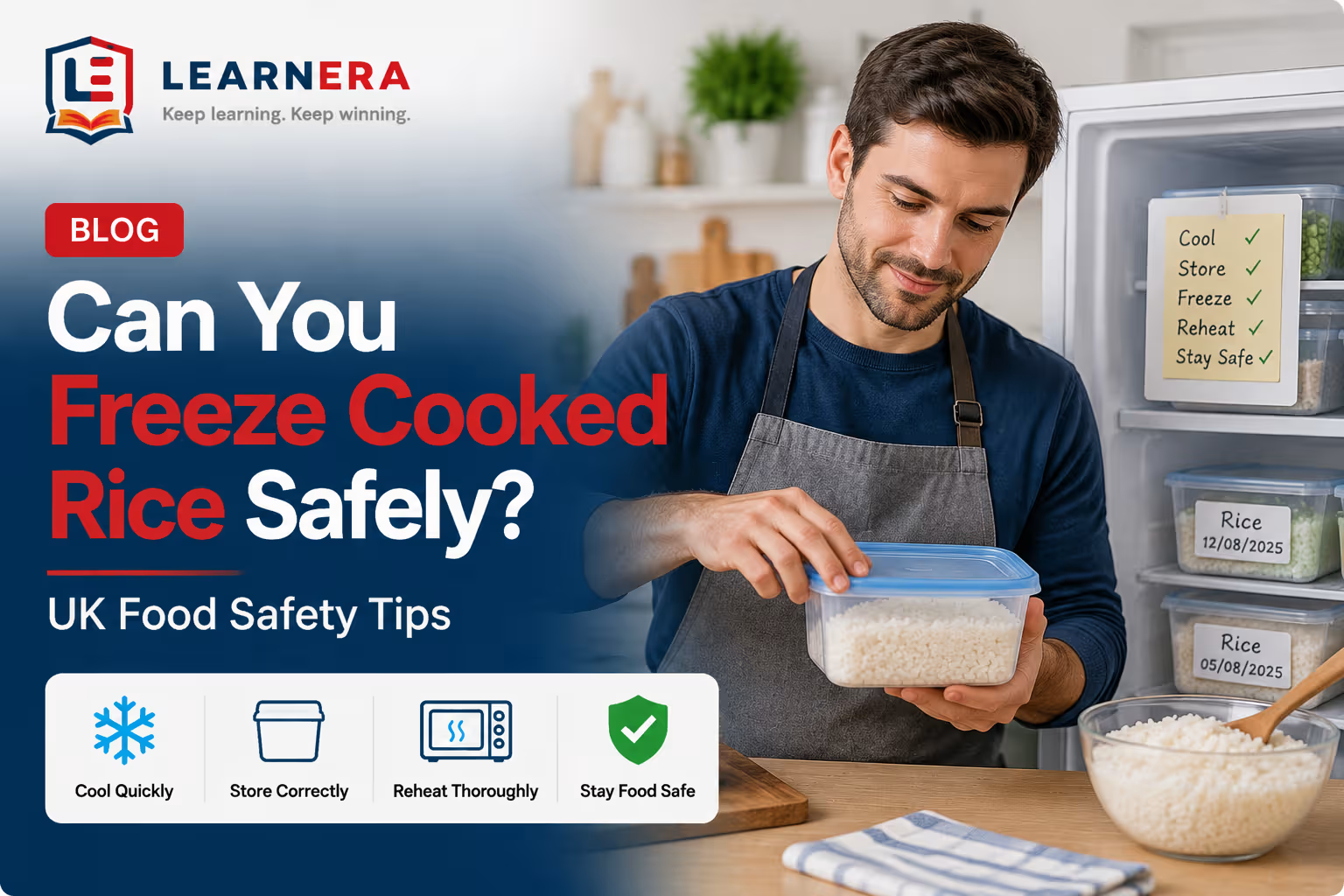

Yes, you can freeze cooked rice safely when it has been cooled quickly, stored correctly and reheated properly before eating. Freezing is a useful way to preserve leftover rice, but it does not make rice safe if it was already stored incorrectly before freezing.
The main food safety concern with cooked rice is not the freezer itself. Problems can occur when rice remains warm for too long, allowing bacteria to multiply before it is stored. Safe handling before freezing is therefore just as important as how the rice is reheated later.
Learnera’s Diploma in Food Hygiene and Safety Level 3 helps learners develop knowledge of food hygiene principles, including safe handling, contamination control, HACCP and food safety management practices. The course is designed for learners who want to build their understanding of food safety in professional and practical settings.
TL;DR: What Should Readers Know?
Cooked rice can be frozen safely when it has been handled correctly.
- Cool rice quickly before freezing it.
- Store portions in suitable freezer-safe containers.
- Defrost and reheat rice thoroughly before eating.
- Freezing does not remove risks caused by unsafe storage.
- If the storage history is unclear, it is safer to discard the rice.
When Is It Safe to Freeze Cooked Rice?
Cooked rice is suitable for freezing when it has been cooled quickly and stored before bacteria have had time to multiply. Freezing helps preserve rice in the condition it was in when frozen, but it cannot correct poor handling before storage.
The Food Standards Agency (FSA) advises cooling cooked rice as quickly as possible, ideally within one hour, before storing it in the fridge or freezer. This helps reduce the time rice spends in conditions where bacteria can grow. More information is available in the FSA’s Home Food Fact Checker guidance on safe food storage and handling.
Before freezing rice, consider:
- Was the rice cooled soon after cooking?
- Was it protected from contamination?
- Was it stored under suitable conditions?
- Do you know how long it has been kept?
If the answer to these questions is unclear, freezing the rice for later use may not be the safest choice.
Freezing cooked rice can be a practical way to reduce food waste, especially when meals are prepared in larger quantities. However, safety should always come before saving leftovers.
How Should You Prepare Cooked Rice Before Freezing?
Cooked rice should be prepared carefully before freezing to help maintain safety and quality. The aim is to cool the rice quickly and store it in a way that protects it during freezer storage.
Large amounts of rice should not be left sitting in a warm pan, rice cooker or deep container for extended periods. Dividing rice into smaller portions allows it to cool more effectively and makes later use easier.
🧊 Preparing Cooked Rice Before Freezing
Tap or hover each card to see why it matters
How Should Frozen Rice Be Defrosted and Reheated?
Frozen rice should be defrosted safely and reheated until it is steaming hot throughout before eating. The method you choose may depend on the type of rice, portion size and storage method.
For frozen homemade rice, you can:
- Defrost it in the fridge before reheating.
- Follow suitable instructions if reheating directly from frozen.
- Heat it evenly and check for cold spots.
When reheating frozen rice:
- Remove only the portion you plan to eat.
- Break apart large frozen sections.
- Heat until steaming hot throughout.
- Stir during microwave reheating where possible.
- Avoid reheating the same portion again.
The Food Standards Agency advises that reheated food should be steaming hot throughout to help ensure it is safe to eat. Its cooking food safely guidance provides further information on safe preparation, cooking and reheating practices.
There is no universal microwave time because heating depends on:
- portion size;
- microwave power;
- container type;
- starting temperature.
Adding water or covering rice during reheating may improve texture, but these steps do not make incorrectly stored rice safe.
Why Does Cooked Rice Need Careful Handling?
Cooked rice needs careful handling because bacteria can multiply if it is kept in unsuitable conditions after cooking. One bacterium associated with rice is Bacillus cereus, which can form spores that may survive normal cooking processes.
If cooked rice remains warm for too long, these spores may allow bacteria to grow and some strains may produce toxins. Reheating can reduce some bacteria, but it does not guarantee that unsafe storage problems have been corrected.
This is why food safety depends on the complete handling process, not just the final reheating stage.
The UK Health Security Agency provides microbiological guidance relating to foodborne hazards, including organisms such as Bacillus cereus. Food should be assessed based on how it has been handled rather than relying only on smell or appearance.
When Should Frozen or Leftover Rice Be Discarded?
Cooked rice should be discarded when its storage history cannot be confirmed or when it has been handled in a way that increases food safety risks.
⚖️ Discard or Use? Rice Storage Decisions
Match the situation to the safer decision
Do Food Safety Rules Differ Between Home Cooking and Food Businesses?
Yes, household food safety guidance and food business responsibilities are different. Home cooks should follow safe handling guidance, while food businesses must meet legal food hygiene duties and operate suitable food safety management procedures.
Food businesses commonly use HACCP principles to identify hazards and control risks during food preparation, storage and service. These systems may include documented procedures for cooling, storage, reheating and monitoring.
The Food Standards Agency provides guidance for food businesses on food safety management systems and HACCP principles: Food Standards Agency: Food safety management systems and HACCP
A workplace may also have its own policies that are more detailed than general household guidance. Employees should follow their employer’s procedures when handling food professionally.
Food hygiene training can support knowledge of safe food handling practices, but a CPD course is not automatically a regulated qualification or a legal requirement for every food-related role.
Take the Next Step in Your Food Safety Learning
Freezing cooked rice safely depends on understanding how food is handled before and after storage. Cooling quickly, storing correctly and reheating thoroughly are important parts of reducing food safety risks.
For learners who want to develop broader knowledge of food hygiene, contamination prevention and safe food handling practices, Learnera’s Diploma in Food Hygiene and Safety Level 3 provides structured online learning focused on key food safety principles.
❓ Common Questions About Freezing Cooked Rice
Tap a question to reveal the answer