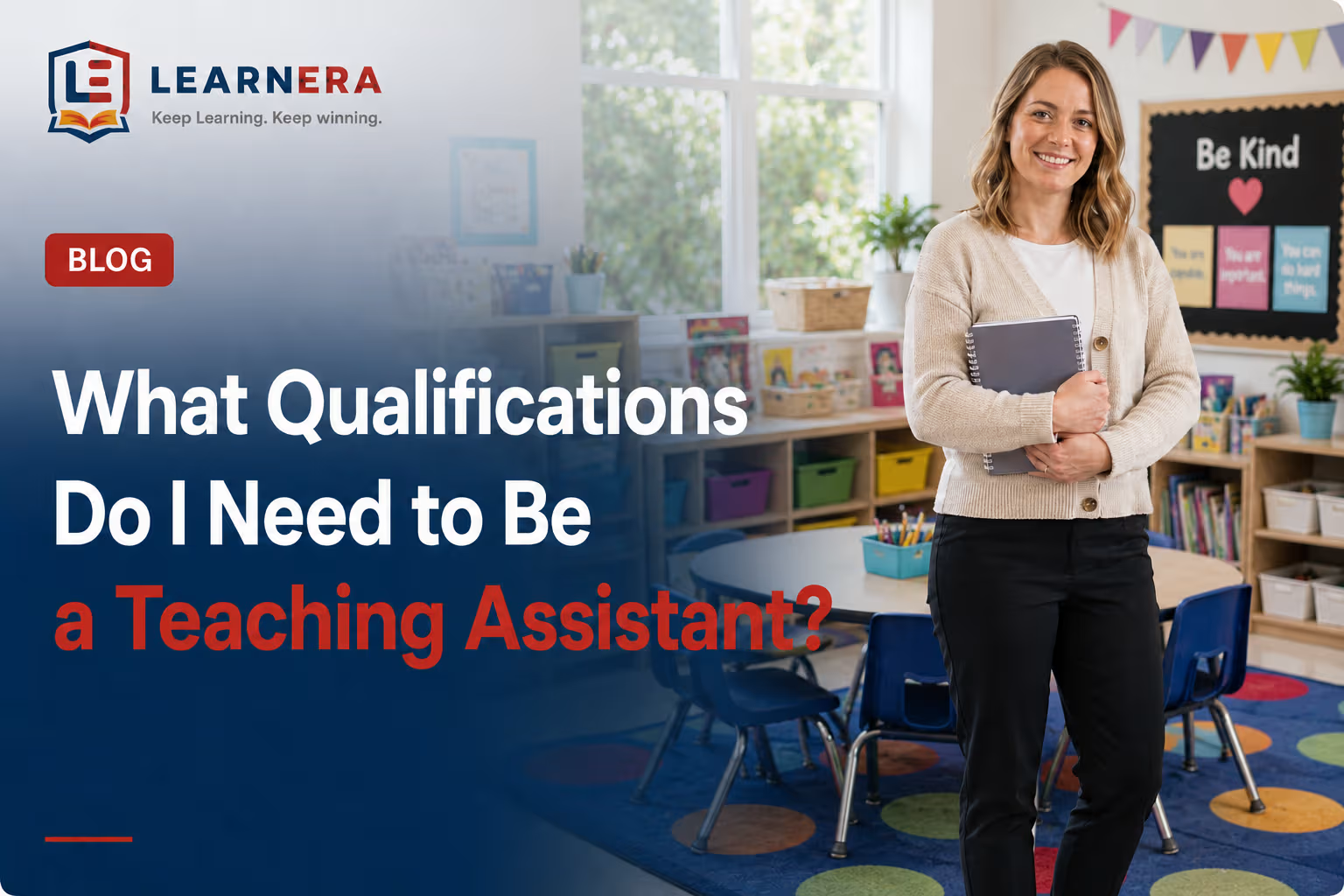
There is no single qualification that every teaching assistant must hold. Each school sets its own entry requirements. Schools often look for GCSE English and maths at grades 9 to 4 or equivalent. Relevant training and experience with children can also strengthen an application.
A good starting point is to build knowledge of what teaching assistants do in real school settings. Learnera’s Teaching Assistant Level 1, 2 & 3 + Early Years, SEN, Primary Teaching & Child Care course explores classroom support, safeguarding, SEN, behaviour and child development. It supports professional development through CPD learning but is not a substitute for a regulated qualification.
Key Points
- There is no single national qualification requirement for all teaching assistant jobs.
- Schools often ask for GCSE English and maths at grade 4/C or above or an equivalent.
- Training, school experience and safeguarding knowledge can help when applying for teaching assistant roles.
Do you need a qualification to be a teaching assistant?
Not always. The National Careers Service states that each school sets its own entry requirements. This means one school may ask for a Level 2 or Level 3 qualification while another may focus more on skills and relevant experience. A degree is not normally required for a standard teaching assistant role.
Some employers may ask for a regulated qualification in supporting teaching and learning. Others may accept childcare, playwork or youth work qualifications. Always read the person specification before applying. It tells you which requirements are essential and which are only desirable.
Do teaching assistants need GCSE English and maths?
Schools usually look for GCSEs at grades 9 to 4 (A to C) in English and maths. The National Careers Service lists these as common entry expectations.
However, this does not create one fixed rule for every teaching assistant job. Some employers accept equivalent qualifications or consider relevant experience.
Current Level 3 teaching assistant apprenticeship vacancies also often ask for grade 4 GCSE English and maths. Some apprenticeship routes may include Functional Skills where required.
Do Teaching Assistants Need GCSE English and Maths?
Schools commonly look for English and maths qualifications, but the exact entry requirements can vary between employers.
GCSE English
English is commonly listed as an entry expectation for teaching assistant roles.
GCSE Maths
Maths is also commonly requested by schools and some training routes.
Common Expectation
Schools often look for GCSE English and maths at grades 9 to 4 or an equivalent qualification.
Not One Fixed Rule
Entry requirements vary. Some employers may accept equivalent qualifications or consider relevant experience.
What About a Level 3 Teaching Assistant Apprenticeship?
Key takeaway: GCSE English and maths are common entry expectations, but they are not one universal rule for every teaching assistant job. Always check the requirements of the school, employer or training route.
Do you need a DBS check to work as a teaching assistant?
Schools carry out safeguarding checks before staff begin eligible work with children. Teaching assistant duties can fall within regulated activity because they often involve teaching, supervising or caring for children.
These roles can require an Enhanced DBS check and may include a Children’s Barred List check when the work meets regulated activity rules. The exact check depends on the activities involved in the role.
The school or employer normally explains the required checks during recruitment. A DBS certificate is a safeguarding check. It is not a teaching assistant qualification.
Can you become a teaching assistant with no experience?
Yes. Previous classroom experience is not always essential.
Schools may value experience from:
- Childcare
- Youth work
- Sports coaching
- Volunteering
- Caring roles
- Community activities
Volunteering in a school can help you understand classroom routines and show that you work well with children. The National Careers Service also notes that volunteering may give applicants an advantage.
Personal skills matter too. Teaching assistants need patience, communication skills and the ability to work well with teachers, pupils and parents.
Can You Become a Teaching Assistant With No Experience?
Yes. Previous classroom experience is not always essential. Experience from other settings and strong personal skills can still support your application.
You do not always need previous classroom experience to start exploring teaching assistant roles.
Your Existing Experience May Still Count
Schools may value experience that shows you can support children, communicate well and work responsibly with others.
School Volunteering Can Build the Bridge
Volunteering can help you understand classroom routines and show that you are comfortable working with children and school staff.
What Can Matter as Much as Experience?
From No Classroom Experience to Applying for TA Roles
Recognise useful experience from childcare, caring, coaching or community work.
Consider volunteering to understand classroom routines and expectations.
Read each school's entry requirements before applying.
Key takeaway: No classroom experience does not always stop you from becoming a teaching assistant. Transferable experience, volunteering and strong personal skills can all help you prepare for suitable roles.
What training routes can you take?
Your route depends on your current experience and the jobs you want to apply for.
You may choose:
- A Level 2 supporting teaching and learning programme
- A Level 3 supporting teaching and learning programme
- A Level 3 Teaching Assistant Apprenticeship
- CPD training for extra knowledge
- School-based volunteering or work experience
A Level 3 Teaching Assistant Apprenticeship combines employment with structured learning. Current GOV.UK apprenticeship listings show that entry requirements can differ between employers.
CPD courses work differently. They support knowledge development but should not be presented as replacements for regulated qualifications or apprenticeship requirements.
What should you check before applying?
Read each teaching assistant vacancy carefully. Check the qualifications, experience and safeguarding requirements listed in the person specification.
Look for:
- English and maths requirements
- Required Level 2 or Level 3 training
- SEN experience
- Safeguarding knowledge
- Classroom experience
- DBS requirements
Requirements can change between schools. Checking the individual vacancy gives you the clearest answer. The National Careers Service teaching assistant guidance also explains common entry routes and requirements.