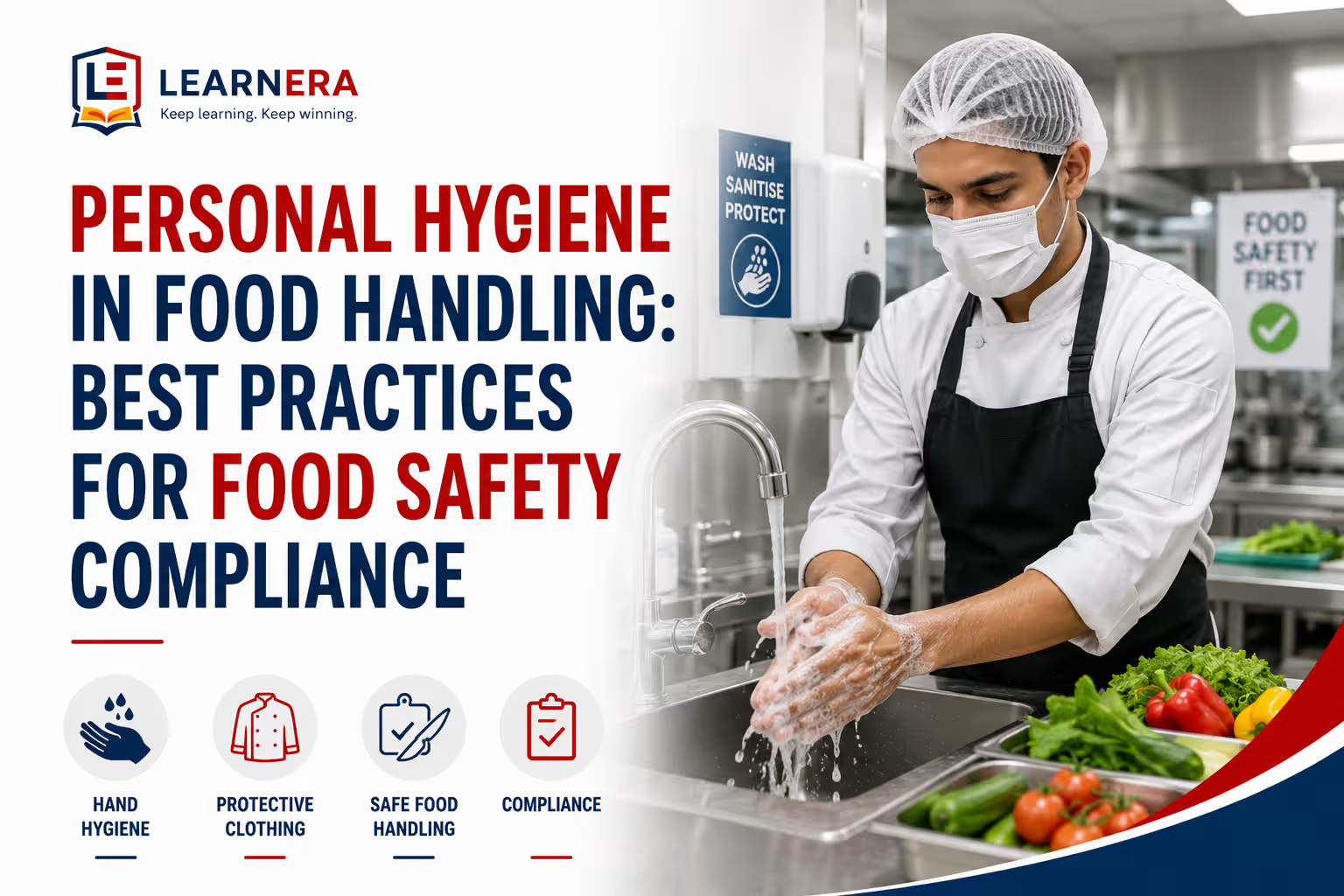
Personal Hygiene in Food Handling Best Practices for Food Safety Compliance Blog Feature Image

Personal Hygiene in Food Handling: Best Practices for Food Safety Compliance

Personal hygiene in food handling is one of those topics where the rules are clear but the explanations rarely are. This guide covers what the law actually requires, what counts as best practice, and why the difference between the two matters more than most people realise.

Personal hygiene is one of those topics that gets mentioned in almost every food safety training session, yet it is rarely explained as clearly as it deserves to be. Most people working in food handling know the basics. What is less clear is where the rules come from, which ones are legally binding, and which ones are simply workplace habit passed down from one shift to the next.

Walk into any food preparation area at the start of a shift and you will see the same small actions playing out. Someone ties their apron. Someone washes their hands at the sink before touching anything. Someone checks their hair is covered. These moments look routine. But behind each of them sits a set of legal obligations that most food handlers have never seen written down in plain language.

Personal hygiene in food handling covers far more than handwashing. It includes what you wear, how you behave in food areas, what you must report when you feel unwell, and when you must stay away entirely. It also includes obligations on the employer that most online guides never mention. This page explains all of it, clearly and accurately, with the law and the guidance kept firmly separate throughout.

TL;DR: Key Takeaways

  • Regulation (EC) 852/2004, retained in UK law post-Brexit, is the primary legal source of personal hygiene obligations for food handlers
  • Every person working in a food-handling area must maintain a high degree of personal cleanliness and wear suitable clean clothing — this is law, not guidance
  • Food handlers have a legal duty to report illness symptoms to their employer, including when someone in their household has diarrhoea or vomiting
  • The standard exclusion period after symptoms stop is 48 hours, though specific infections may require longer
  • No specific food hygiene certificate is legally required — the law requires adequate training and supervision, not a particular certificate
  • Food business operators have a separate legal duty to ensure training, supervision, and adequate handwashing facilities are in place
  • Gloves do not replace handwashing — they are an additional measure, not a substitute

Food Hygiene and Safety Level 3 Diploma

Start Learning From Today!

The Legal Framework: Where These Obligations Actually Come From

Most people working in food handling have heard phrases like “food hygiene law” or “food safety regulations” without ever being told which specific regulation says what. That gap matters, because the legal source of personal hygiene obligations is frequently misquoted, including by training providers and compliance guides that should know better.

The primary legal source is Regulation (EC) 852/2004 on the hygiene of foodstuffs. This regulation was retained in UK law after Brexit and continues to apply across England, Wales, Scotland, and Northern Ireland. You may see it referred to as “assimilated law” in England, Wales, and Scotland. In practical terms, nothing about the hygiene obligations themselves has changed. The rules are the same.

Annex II, Chapter VIII of that regulation deals specifically with personal hygiene. It sets out what every person working in a food-handling area must do. It is not guidance. It is not a recommendation. It is law.

The Food Hygiene (England) Regulations 2006, and equivalent regulations in Scotland, Wales, and Northern Ireland, require food business operators to comply with Regulation 852/2004. They are enforcement mechanisms, not the original source of hygiene obligations. This distinction matters because several competitors and training materials attribute personal hygiene requirements to the 2006 or 2013 regulations directly, which is inaccurate.

The Food Safety Act 1990 sits above all of this as the overarching framework. It establishes the general duty of care and enables the regulations that follow. It does not itself specify personal hygiene obligations in detail.

Law vs Guidance vs Employer Policy

These three things are frequently confused, and the confusion has real consequences.

Law means what Regulation 852/2004 directly requires: personal cleanliness, suitable clothing, the prohibition on working while ill, and the duty to report illness. These are not negotiable. They apply to every food handler in every setting.

Guidance means documents like the FSA’s fitness to work guidance, which explains how to comply with the law in practice. Specific exclusion periods, for example, come from FSA guidance rather than the regulation itself. Guidance does not carry the same legal weight as the regulation, but it reflects how Environmental Health Officers expect businesses to behave.

Employer policy means specific rules that individual businesses put in place: particular uniform requirements, jewellery restrictions, beard covering rules. These are employer-led. They are not specified in law, but they flow from the legal duty to prevent contamination. An employer has discretion in how they implement that duty. They do not have discretion about whether to implement it.

Food hygiene law made clearer

The Legal Framework: Where These Obligations Actually Come From

Food hygiene rules are often repeated in training, but the legal source is not always explained clearly. This visual separates the actual law from guidance and workplace policy.

⚖️
The key point

Regulation (EC) 852/2004 is the primary legal source for personal hygiene obligations in food handling. Annex II, Chapter VIII is the part that deals directly with personal hygiene.

How the legal structure fits together

1

Food Safety Act 1990

This sits above the food hygiene regulations as the wider framework. It establishes the general duty of care, but it does not set out personal hygiene obligations in detail.

Think of it as: the broad legal foundation.
2

Regulation (EC) 852/2004

This is the main legal source for hygiene of foodstuffs. It was retained in UK law after Brexit and continues to apply across the UK.

Important: the hygiene obligations themselves have not changed just because of the post-Brexit legal wording.
3

Annex II, Chapter VIII

This section deals specifically with personal hygiene. It explains what every person working in a food-handling area must do.

Status: this is law, not guidance and not a recommendation.
4

Food Hygiene Regulations

The Food Hygiene Regulations in England and equivalent regulations in Scotland, Wales, and Northern Ireland require food business operators to comply with Regulation 852/2004.

Common mistake: these are enforcement mechanisms, not the original source of the personal hygiene obligations.

Law vs Guidance vs Employer Policy

These three often overlap in practice, but they do not carry the same meaning.

Legal requirement

Law

Law means what Regulation 852/2004 directly requires. These duties apply to food handlers in food-handling areas and are not optional.

Personal cleanliness: food handlers must maintain a high degree of personal cleanliness.
Suitable clothing: clean and protective clothing must be worn where necessary.
Illness control: people must not work in food areas where contamination risk exists.
Reporting duty: relevant illness or symptoms must be reported immediately.
💡
Quick takeaway

The law sets the duty, guidance explains practical compliance, and employer policy turns that duty into workplace rules such as uniform, jewellery, hair covering, or beard-covering requirements.

What Food Handlers Are Legally Required to Do

Understanding the legal framework is useful. Understanding what it actually requires of you on a daily basis is what matters in practice.

Regulation 852/2004 Annex II Chapter VIII sets out the individual food handler’s obligations in plain terms. Every person working in a food-handling area must maintain a high degree of personal cleanliness and wear suitable, clean, and where necessary protective clothing. That phrase covers a lot of ground: your hands, your uniform, your appearance, and your behaviour throughout the shift.

The regulation also prohibits anyone suffering from, or carrying, a disease likely to be transmitted through food from handling food or entering a food-handling area if there is any likelihood of contamination. This includes infected wounds, skin infections, sores, and diarrhoea. It is not a suggestion. A food handler who works through these symptoms is in breach of the law, not just their employer’s policy.

There is also a legal duty to report. Any person affected by illness or symptoms covered by the regulation must report immediately to the food business operator. Over time this duty gets lost in the general advice to “tell your manager if you feel unwell.” That framing undersells it. Reporting illness is a legal obligation under the regulation, not just a good habit.

The Illness Reporting Duty: What You Must Report and When

The symptoms that trigger the reporting duty are: diarrhoea or vomiting; stomach pain, nausea, fever, or jaundice; infected skin, nose or throat; and cuts or wounds that are infected. Most food handlers are aware of these.

What far fewer people know is the household contact trigger. If someone you live with has diarrhoea or vomiting, you must report this to your manager before handling food, even if you feel completely well yourself. This point appears in FSA fitness to work guidance and is one of the most consistently missed obligations in food hygiene training.

After reporting, the food business operator assesses fitness to work. The standard FSA guidance for most gastrointestinal illnesses is an exclusion period of 48 hours after symptoms stop. Some specific infections, including certain strains of E. coli and Hepatitis A, require longer exclusion periods. The FSA fitness to work guidance covers these in detail and should be the reference point for any manager making that decision.

Wound Covering: Why the Colour of the Plaster Matters

A cut during a shift needs to be covered before food handling continues. Most food handlers know this. Fewer know why the plaster should be brightly coloured, typically blue.

The reasoning is straightforward. Food does not naturally contain blue-coloured material. If a plaster falls into food during preparation, a brightly coloured one can be spotted and the food discarded. A skin-coloured plaster in the same situation is far harder to detect. This is FSA guidance rather than a specific legal requirement for the colour, but it is the clear and widely adopted standard across UK food businesses.

Where a wound is on the hand, a waterproof plaster should be worn under a disposable glove for additional protection.

Daily legal duties for food handlers

What Food Handlers Are Legally Required to Do

The legal framework matters, but the practical question is simpler: what must a food handler actually do before and during a shift?

🧼

Maintain personal cleanliness

Every person working in a food-handling area must maintain a high degree of personal cleanliness. This covers hands, appearance, clothing, and behaviour during the shift.

Required by Regulation 852/2004
🥼

Wear suitable clean clothing

Food handlers must wear suitable, clean, and where necessary protective clothing. The exact clothing may vary, but the duty to prevent contamination does not.

Applies in food-handling areas
🚫

Do not work while infectious

Anyone suffering from, or carrying, a disease likely to be transmitted through food must not handle food or enter food-handling areas if contamination is likely.

Not just employer policy
📣

Report illness immediately

Reporting relevant illness or symptoms to the food business operator is a legal duty. It is stronger than simply “telling your manager if you feel unwell.”

Legal reporting duty

Tap a duty to understand it

This section turns the legal wording into practical daily actions that food handlers can understand quickly.

Daily hygiene duty

Personal cleanliness

Personal cleanliness is not limited to handwashing. It includes the way a food handler manages hygiene, appearance, and behaviour throughout the whole shift.

Hands: kept clean and washed at the right times.

Appearance: hair, nails, and personal presentation managed to reduce contamination risk.

Behaviour: avoiding actions that transfer contamination into food areas.

🤒

The Illness Reporting Duty

Some symptoms must be reported before handling food. The household contact trigger is especially easy to miss.

Diarrhoea or vomiting Stomach pain or nausea Fever Jaundice Infected skin, nose or throat Infected cuts or wounds Household member with diarrhoea or vomiting
1 Symptoms or contact You are unwell, or someone at home has diarrhoea or vomiting.
2 Report first Tell the food business operator before handling food.
3 Fitness assessed The business assesses whether it is safe for you to work.
4 Return safely Most stomach illnesses follow the 48-hour guidance after symptoms stop.

Why blue plasters matter

A cut during a shift must be covered before food handling continues. Blue waterproof plasters are widely used because food does not naturally contain blue material, making them easier to spot if one falls into food.


If the wound is on the hand, a waterproof plaster should be worn under a disposable glove for extra protection.

🩹
Skin-coloured plaster Harder to detect if it falls into food.
🔵
Blue waterproof plaster Easier to spot and remove from food areas.
💡
Quick takeaway

Food handlers must stay clean, wear suitable clothing, avoid food handling when illness could contaminate food, and report relevant symptoms immediately. These are legal duties, not just workplace habits.

Handwashing: The Practice That Matters Most, Done Properly

Handwashing is the most talked-about food hygiene practice and also the most inconsistently applied. Not because people do not care, but because most food handlers learned the habit without the reasoning behind it. When you understand what hands actually pick up during a shift and how easily that transfers to food, the habit stops feeling like a rule and starts feeling like common sense.

The trigger points matter as much as the technique. Hands must be washed before starting food work, after using the toilet, after handling raw food, after touching the face or hair, after coughing or sneezing, after handling waste, and after every break. In a busy service, these moments get compressed. That is exactly when contamination risk is highest.

Technique covers all surfaces: palms, backs of hands, between fingers, thumbs, and under nails. Drying completely matters too. Damp hands transfer bacteria more readily than dry ones. Disposable paper towels or an air dryer are the appropriate options. A tea towel or apron is not.

Alcohol Gel Is Not a Substitute

Alcohol-based hand sanitiser has a limited role in food handling settings, and it is worth being clear about what that role is. Gel does not remove dirt, grease, or food residue. It is also not reliably effective against all pathogens relevant to food safety, including norovirus.

In practice this often looks like a food handler using gel between tasks because a sink is not immediately nearby. That is understandable under pressure, but it does not satisfy the handwashing requirement. Soap and water remains the required method before handling food.

Gel may have a supplementary role in some settings, for example as an additional step after handwashing when moving between clinical and food areas in healthcare environments. It does not replace the wash.

The Employer Must Provide the Right Facilities

Handwashing compliance depends on having the right facilities in place. This is not just good practice. It is a legal obligation on the food business operator under Regulation 852/2004.

The regulation requires dedicated handwashing basins, separate from food preparation sinks and dishwashing sinks, with hot and cold running water, soap, and appropriate drying facilities. If the handwash basin is blocked, used for storage, or simply not stocked with soap, the control measure fails regardless of how willing staff are to comply.

Environmental Health Officers check this during inspections. A missing soap dispenser or an inaccessible basin is not a minor oversight. It is evidence that the hygiene system has a gap.

Food hygiene handwashing

Handwashing: The Practice That Matters Most, Done Properly

Handwashing is not just a routine rule. It is the main barrier between contamination picked up during a shift and the food customers eventually eat.

🚿

Technique + timing both matter

Washing only works when it happens at the right trigger points and covers all hand surfaces properly.

What “done properly” means

🫧
Use soap and water Soap and running water remove dirt, food residue, grease, and contamination from the hands.
🙌
Cover all surfaces Palms, backs of hands, between fingers, thumbs, and under nails all need attention.
📄
Dry completely Damp hands transfer bacteria more easily than dry hands.
🚫
Do not use an apron or tea towel Disposable paper towels or an air dryer are the appropriate drying options.

When hands must be washed

In a busy service, these trigger points are easy to rush. That is exactly when contamination risk becomes highest.

▶️ Before starting food work Start the shift with clean hands before touching food or food-contact surfaces.
🚽 After using the toilet This is one of the most important hygiene trigger points.
🥩 After handling raw food Raw food can transfer harmful bacteria to hands and surfaces.
After touching face or hair Hands can pick up contamination from ordinary personal contact.
🤧 After coughing or sneezing Respiratory droplets can transfer pathogens onto hands.
🗑️ After handling waste Waste handling should always be followed by proper handwashing.
After every break Breaks involve phones, cups, doors, bags, and other high-touch surfaces.
🔄 Between risky tasks Task changes can move contamination from one area to another.
🧴

Alcohol gel is not a substitute

Hand sanitiser does not remove dirt, grease, or food residue. It is also not reliably effective against all food safety pathogens, including norovirus.

Gel may feel convenient under pressure, but it does not satisfy the handwashing requirement before handling food.
🚰

Soap and water remain the standard

Soap and water physically remove contamination from the hands. Gel may have a supplementary role in some settings, but it does not replace washing.

Simple rule: wash first. Gel can only support hygiene; it cannot replace the wash.
🏢

The employer must provide the right facilities

Handwashing compliance depends on more than staff willingness. Food business operators must provide proper facilities so staff can actually follow the rules.

🚰 Dedicated handwash basin Separate from food preparation and dishwashing sinks.
🌡️ Hot and cold running water Accessible and suitable for handwashing during work.
🫧 Soap available A missing or empty soap dispenser creates a hygiene system gap.
📄 Drying facilities Paper towels or air drying, not aprons or tea towels.
💡
Quick takeaway

Proper handwashing means washing at the right moments, using soap and water, covering all hand surfaces, drying fully, and having the right facilities available.

Clothing, Appearance, and Behaviour in Food Areas

New food handlers sometimes question the appearance standards they are given on their first day. No jewellery. Hair fully covered. Short nails. No nail varnish. The rules can feel arbitrary until the reasoning behind each one is explained, and the reasoning is almost always simpler than people expect.

Regulation 852/2004 requires suitable, clean, and where necessary protective clothing. The specifics of how employers implement that obligation vary, but the contamination logic behind each standard is consistent. Rings and watches trap bacteria and interfere with thorough handwashing. Hair falling into food is a physical contamination risk. Touching hair during a task and then continuing to handle food is a cross-contamination risk. False nails and nail varnish create surfaces where bacteria accumulate and are harder to remove.

Behaviour in food areas follows the same logic. Eating, drinking, or chewing gum introduces saliva into the food environment. Mobile phone use means hands touch a heavily contaminated surface and then return to food. Coughing or sneezing near food or food-contact surfaces transfers pathogens directly. None of these are arbitrary restrictions. Each one has a direct contamination pathway behind it.

The Food Business Operator’s Legal Duties

Most food hygiene content focuses entirely on what individual food handlers must do. That focus misses half of the legal picture. The food business operator carries a set of legal obligations that are just as grounded in Regulation 852/2004 as the individual handler’s duties, and they are almost entirely absent from the SERP for this topic.

A food business operator is the person or business legally responsible for food safety compliance in a food business. Under Regulation 852/2004, they must ensure that food handlers are supervised and instructed and/or trained in food hygiene matters appropriate to their work activities. The obligation is on the business, not just on the individual. A food handler who has never been trained is not the one in breach of the training duty. The operator is.

Training does not have to take any specific form. No particular certificate is legally mandated. What the law requires is that staff have the knowledge and skills appropriate to their role. In practice, a Level 2 food hygiene award is the widely recognised standard for most food-handling roles and is what Environmental Health Officers expect to see evidenced during an inspection.

No Specific Certificate Is Legally Required

The Food Standards Agency states this explicitly: food handlers do not have to hold a food hygiene certificate to prepare or sell food. This is one of the most commercially suppressed facts in food hygiene training, because training providers have a financial interest in implying otherwise.

What the law does require is adequate training or supervision. That obligation is real and legally grounded. Doing nothing is not an option. But the form that training takes is flexible, and no specific qualification is mandated by law.

A Level 2 food hygiene award remains the practical benchmark. It covers the content an Environmental Health Officer expects food handlers to know, and it creates a training record the food business operator can produce as evidence of compliance.

Food area hygiene standards

Clothing, Appearance, Behaviour and Business Responsibilities

Appearance standards are not arbitrary. Each rule is linked to a contamination pathway, and the business has legal duties too.

🧑‍🍳
The simple logic behind the rules

Food hygiene standards control how contamination enters food areas through clothing, hands, hair, jewellery, behaviour, training gaps and poor supervision.

Tap the worker checklist

Each appearance rule has a direct contamination reason behind it.

🥼
Physical contamination

Hair fully covered

Hair falling into food is a physical contamination risk. Touching hair during a task can also transfer contamination from hands to food.

1
What happens Hair or hand contact introduces contamination risk.
2
Why it matters The risk can move directly into food or onto food-contact surfaces.
3
Control Hair covering and handwashing after touching hair reduce the risk.

Behaviour rules in food areas

These restrictions are about saliva, contaminated surfaces, and direct transfer of pathogens.

🍔 No eating Eating introduces saliva and food debris into the food environment.
🥤 No drinking Drinks can create saliva transfer and spill risks around preparation areas.
📱 No mobile phone use Phones are high-touch surfaces. Hands then return to food work.
🤧 Control coughing or sneezing Pathogens can transfer directly to hands, food, or food-contact surfaces.
🏢

The Food Business Operator’s Legal Duties

Food hygiene compliance is not only about what individual handlers do. The business has its own legal duties under Regulation 852/2004.

📚 Training

The operator must ensure food handlers are trained or instructed in food hygiene matters appropriate to their work.

👀 Supervision

Staff must be supervised properly. The duty sits with the business, not only with the individual worker.

📋 Evidence of compliance

Training records, procedures and visible controls help show that the business has met its obligations.

No specific certificate is legally required

Food handlers do not legally have to hold one particular food hygiene certificate before preparing or selling food.

Important distinction: no specific certificate is mandated, but adequate training or supervision is still legally required.

Level 2 remains the practical benchmark

A Level 2 food hygiene award is widely recognised for most food-handling roles and gives the business a clear training record.

Practical value: it helps evidence that staff have the knowledge Environmental Health Officers expect to see.
💡
Quick takeaway

Food hygiene rules about appearance and behaviour are there to block contamination pathways. Businesses must also provide training, instruction and supervision, even though no specific certificate is legally required.

Fitness to Work: When Food Handlers Must Stay Away

Illness reporting is one of the most inconsistently applied personal hygiene obligations in food handling. Not because people are careless, but because the rules are rarely explained clearly enough for anyone to act on them with confidence. Most food handlers have been told to stay home if they feel unwell. Far fewer have been told what that means legally, or what specifically triggers the obligation.

The legal basis is Regulation 852/2004. It prohibits anyone suffering from a disease likely to be transmitted through food from handling food or entering a food-handling area. That prohibition is not limited to people who feel dramatically ill. Diarrhoea, vomiting, infected skin, sores, and jaundice all trigger it. So does having a household member with diarrhoea or vomiting, even if the food handler themselves feels completely well.

That household contact trigger is the point most consistently missed in food hygiene training. In practice this often looks like a food handler arriving for a shift having not made the connection between their housemate’s illness and their own reporting obligation. The FSA fitness to work guidance covers this clearly. It needs to be part of every illness reporting procedure.

Exclusion Periods and Returning to Work

The standard FSA guidance for most gastrointestinal illnesses is an exclusion period of 48 hours after symptoms have stopped. That means 48 hours after the last episode of diarrhoea or vomiting, not 48 hours after the person starts feeling better.

Some specific infections require longer exclusion. Certain strains of E. coli, Hepatitis A, and a small number of other conditions have different requirements set out in FSA fitness to work guidance. Managers making return-to-work decisions should use that guidance as their reference point rather than applying the 48-hour rule universally.

The food business operator also has a responsibility here. Workplace cultures that create pressure to attend while unwell, or that make reporting feel uncomfortable, directly undermine the legal framework. Statutory sick pay is available in many cases. Clear, supportive reporting procedures make compliance more likely and protect the business as well as the people it serves.

Fitness to work

When Food Handlers Must Stay Away

Food handlers must report certain symptoms before handling food. The aim is simple: stop illness from reaching food areas.

🤒

You have symptoms

Diarrhoea, vomiting, infected skin, sores or jaundice can make food handling unsafe.

Report before food work
🏠

Someone at home is unwell

Household diarrhoea or vomiting must be reported, even if the food handler feels well.

Commonly missed trigger
⏱️

Returning to work

For most stomach illness, the usual return point is 48 hours after symptoms have stopped.

Count from last symptom
1 Notice the risk Symptoms or household illness
2 Report first Tell the responsible person
3 Return safely Follow the correct guidance
💡
Quick takeaway

Do not rely on guesswork. Symptoms, household illness and return-to-work timing should be reported and managed before food handling starts.

Common Misconceptions Worth Clearing Up

A lot of the information circulating online about personal hygiene in food handling is inaccurate. Some of it is outdated. Some of it has drifted in from other countries’ regulatory systems. Some of it is commercially motivated. The result is that food handlers and employers are regularly making decisions based on things that are simply not true.

The most persistent misconception is that a food hygiene certificate is legally required before a person can handle food. It is not. The Food Standards Agency states this explicitly. The law requires adequate training and supervision. No specific certificate is mandated. A Level 2 food hygiene award is the widely recognised practical standard, but it is not a legal requirement.

The second is that gloves replace handwashing. They do not. Gloves are an additional protective measure. They can tear, leak, or become contaminated just as hands can. Hands must be washed before gloves go on, between task changes, and after gloves are removed. Wearing the same gloves across multiple tasks increases contamination risk rather than reducing it.

Three More Misconceptions That Come Up Regularly

The 20-second handwashing rule is not a UK food hygiene legal requirement. That figure originated in COVID-19 public health messaging and has been repeated so widely that many food handlers now believe it is specified in food safety law. It is not. Neither UK food hygiene law nor FSA food handler guidance specifies a duration. Thorough technique and complete drying matter more than timing.

Personal hygiene obligations do not apply only to people who directly touch food. Regulation 852/2004 applies to every person working in a food-handling area, regardless of whether they handle food directly. Cleaning staff, delivery personnel, and supervisors present in the area are all covered.

Finally, the personal hygiene legal obligations do not derive from the Food Hygiene (England) Regulations 2013. Those regulations are enforcement mechanisms. The obligations themselves derive from Regulation 852/2004 Annex II Chapter VIII. Getting this right matters for anyone writing compliance documentation, completing an assignment, or trying to understand why the rules exist.

Food Hygiene and Safety Level 3 Certificate

Don't Miss This Chance!

Summary

Good personal hygiene in food handling is not complicated, but it does require more than habit. It requires understanding which obligations are legally grounded, which are guidance, and which are employer policy. Over time that understanding changes how the habits feel. They stop being arbitrary rules and start being protections for real people, including the food handler themselves.

The legal framework is clear. Regulation 852/2004 requires personal cleanliness, suitable clothing, illness reporting, and exclusion when necessary. Food business operators must ensure training, supervision, and adequate facilities. These obligations apply across every food-handling setting in the UK, from hospital catering kitchens to care home dining rooms to high street cafés.

What makes compliance work in practice is not just individual knowledge. It is systems: clear illness reporting procedures, accessible handwashing facilities, consistent supervision, and a workplace culture where doing the right thing is straightforward rather than effortful. When those systems are in place, the everyday habits of personal hygiene become exactly what they should be second nature.

Frequently Asked Questions

Is a food hygiene certificate legally required before I can handle food in the UK?

No. The Food Standards Agency states this explicitly. The law requires adequate training and supervision appropriate to the role, not a specific certificate. A Level 2 food hygiene award is the widely recognised practical standard and is what Environmental Health Officers expect to see evidenced, but no particular qualification is mandated by law.

Annex II Chapter VIII requires every person working in a food-handling area to maintain a high degree of personal cleanliness and wear suitable, clean clothing. It also prohibits working while ill with a condition likely to contaminate food and creates a legal duty to report illness immediately to the food business operator. It is retained in UK law post-Brexit and continues to apply across England, Wales, Scotland, and Northern Ireland.

No. That figure is not specified in UK food hygiene law or FSA food handler guidance. It originated in COVID-19 public health messaging and has been repeated widely enough to feel like a legal requirement. In a food hygiene context, thorough technique covering all hand surfaces and complete drying matters more than a specific duration.

No. Alcohol gel does not remove dirt, grease, or food residue and is not reliably effective against all pathogens relevant to food safety, including norovirus. It has a limited supplementary role in some settings but does not replace soap and water handwashing in food-handling areas. The required method before handling food remains soap and water.

The symptoms that trigger the legal reporting duty are diarrhoea or vomiting, stomach pain, nausea, fever, jaundice, and infected skin, nose, or throat. Crucially, household contact with someone who has diarrhoea or vomiting must also be reported, even if you feel completely well yourself. This household contact trigger is one of the most commonly missed obligations in food hygiene training.

FSA guidance states the standard exclusion period is 48 hours after symptoms have completely stopped, not 48 hours after you start feeling better. Some specific infections, including certain strains of E. coli and Hepatitis A, require longer exclusion periods. The FSA fitness to work guidance covers these in detail and should be the reference point for any manager making a return-to-work decision.

Because food does not naturally contain blue-coloured material. If a plaster falls into food during preparation, a brightly coloured one can be spotted and the food discarded. A skin-coloured plaster in the same situation is far harder to detect. This is FSA guidance rather than a specific legal requirement for the colour, but it is the clear and widely adopted standard across UK food businesses.

No. Gloves are an additional protective measure, not a substitute for handwashing. They can tear, leak, or become contaminated just as hands can. Hands must be washed before gloves are put on, gloves must be changed between tasks, and hands must be washed after gloves are removed. Wearing the same gloves across multiple tasks increases contamination risk rather than reducing it.

Food business operators have a legal duty under Regulation 852/2004 to ensure food handlers are supervised and instructed and/or trained in food hygiene appropriate to their work. They must also provide dedicated handwashing facilities, including hot and cold running water, soap, and drying facilities, and must have a clear illness reporting procedure in place. Failure to meet these obligations is a legal breach, not just poor practice.

No. Regulation 852/2004 applies to every person working in a food-handling area, regardless of whether they handle food directly. Cleaning staff, delivery personnel, and supervisors present in the food-handling area are all covered by the same legal obligations as those preparing or serving food.

Recent Blogs

8 Change Management Certification Options to Consider

8 Change Management Certification Options to Consider

Change management certifications can feel like a maze of acronyms and price tags. This guide walks through 8 UK options in plain English — what each one teaches, who it suits, what it costs, and how to avoid the confusion that trips most people up before they’ve even started comparing.

Read More