What Is a Nursing Assistant? UK Role Explained

What Is a Nursing Assistant? UK Role Explained

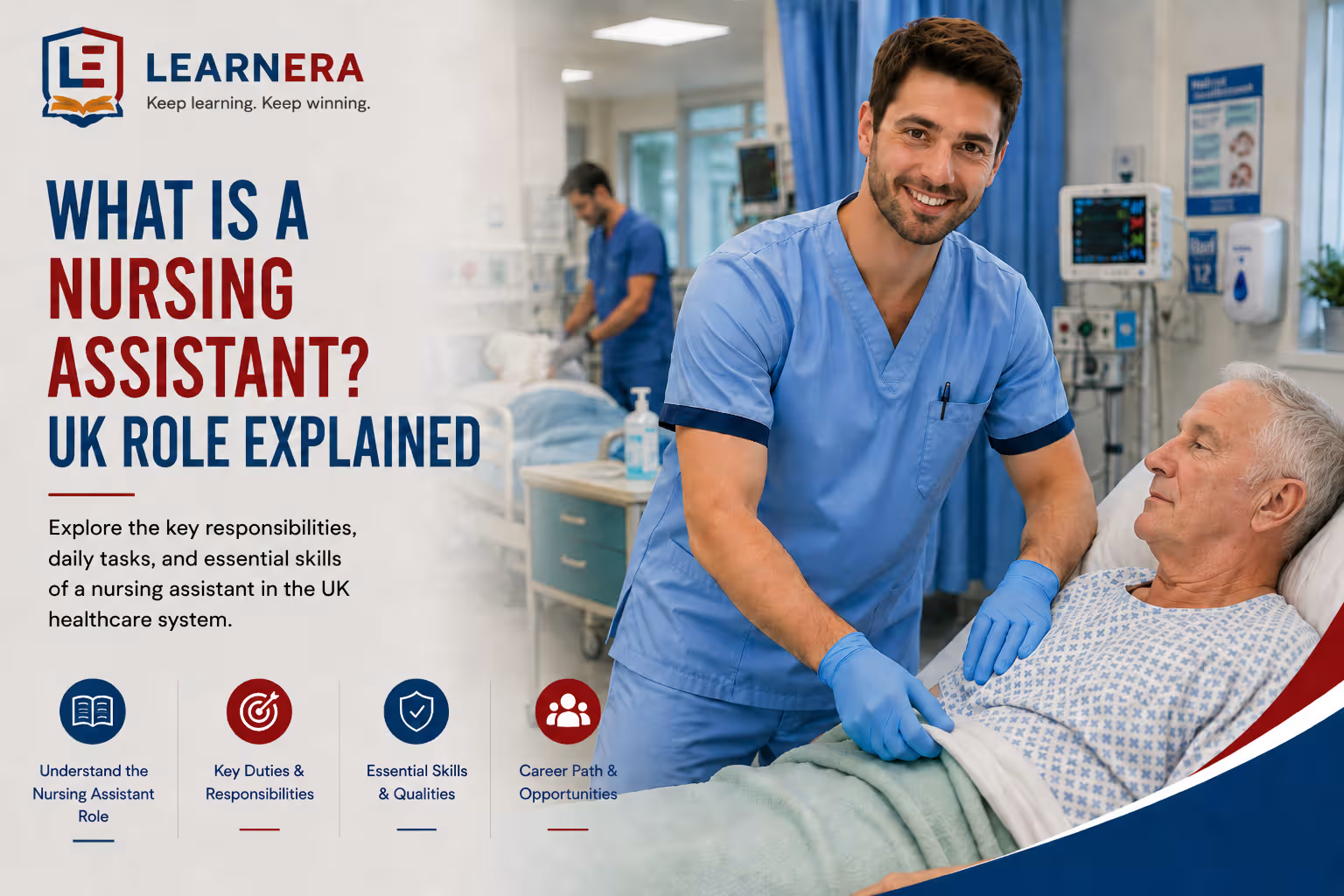
A nursing assistant supports patients with personal care, comfort, mobility and basic observations. This guide explains the role, common duties, training expectations and career options in the UK.

A nursing assistant supports people who need help because of illness, injury, age or disability. They work alongside nurses and other healthcare professionals, helping patients feel safe, comfortable and respected. In the UK, employers may also use titles such as Healthcare Assistant, Healthcare Support Worker or nursing auxiliary.

Thinking about entering this caring profession can feel exciting, but you may also wonder whether you have the right knowledge or experience. Learnera’s Nursing Assistant Level 3 Diploma offers flexible CPD learning in patient care, safeguarding, communication and infection prevention. It can help you understand the role, but it does not replace workplace induction, practical training or an employer’s competence assessment.

Key Points:

  • Nursing assistants help patients with personal care, comfort, movement and basic observations.
  • They usually work under the guidance of nurses or other senior healthcare staff.
  • Duties and training requirements depend on the employer, workplace and individual job description.

What Does A Nursing Assistant Do?

A nursing assistant helps people through daily tasks that may have become difficult. This often includes supporting someone with washing, dressing, toileting, eating, drinking or moving safely.

They may also make beds, prepare care areas and offer reassurance to patients who feel frightened, lonely or unwell. These tasks may sound simple, but they can make a huge difference to someone’s comfort and dignity.

Observation is another important part of the role. A patient may appear more confused than usual, lose their appetite or struggle to breathe. A nursing assistant does not diagnose the problem. Instead, they record what they notice and report it promptly to a nurse or senior colleague.

Some roles may include taking a patient’s temperature, pulse, blood pressure or breathing rate. However, staff should only carry out these tasks after receiving suitable training and being assessed as competent.

Where Do Nursing Assistants Work?

Healthcare workplaces

Where Do Nursing Assistants Work?

Nursing assistants work in hospitals, care services, community teams and patients’ homes. Their routine changes according to the setting and the people they support.

🏥
Selected setting
Typical daily routine

NHS and Private Hospitals

On a hospital ward, a nursing assistant may support patients with meals, mobility, personal hygiene, comfort and basic observations.

Supporting meals and drinks
Helping patients move safely
Assisting with personal hygiene
Recording and reporting observations
Hospital ward

Often involves meals, mobility, hygiene, comfort and patient observations.

Care home

Often focuses on daily routines, dignity and encouraging residents’ independence.

Community care

May involve home visits and working more independently within clear procedures.

💡
The setting shapes the routine

The core purpose remains patient support, but the exact duties, level of independence and daily environment vary between workplaces.

Is A Nursing Assistant The Same As An HCA or CNA?

In the UK, Nursing Assistant and Healthcare Assistant often describe similar or overlapping roles. The National Careers Service lists nursing assistant as an alternative title for healthcare assistant.

There is no fixed national rule stating that every nursing assistant performs more clinical work than every HCA. Employers choose job titles based on their service, so it is important to read each job description carefully.

CNA means Certified Nursing Assistant. It is mainly a US term linked to American training and certification systems. It is not a standard UK licence or protected professional title.

A nursing associate is different. Nursing associates in England are regulated by the Nursing and Midwifery Council. Nursing assistants are unregistered support workers.

What Qualifications Does A Nursing Assistant Need?

There is no single qualification required for every nursing assistant job. Employers may look for good English and maths skills, a caring attitude, relevant experience or a vocational health and social care qualification.

Experience can come from paid work, volunteering or caring for another person. Some employers recruit people with little formal experience and provide training after they start.

Many new health and care workers complete the Care Certificate during workplace induction. It covers areas such as duty of care, dignity, safeguarding, communication and infection prevention. Employers must still observe and assess how workers apply their knowledge in practice.

Skills and safe practice

Nursing Assistant Skills and Role Boundaries

Nursing assistants need strong people skills as well as practical knowledge. They must also understand what they can do, what they cannot do and when to ask for guidance.

🤝

More Than Practical Knowledge

Patients may feel anxious, unwell or vulnerable, so nursing assistants need compassion, patience, clear communication and dependable professional behaviour.

💙

Compassion

Treating patients with kindness, dignity and understanding.

Patience

Giving people time when they feel worried, confused or unwell.

💬

Communication

Speaking clearly, listening carefully and sharing information.

👁️

Observation

Noticing changes in a patient and reporting concerns promptly.

👥

Teamwork

Working closely with nurses and other healthcare colleagues.

Reliability

Following agreed duties and completing tasks responsibly.

🔒

Privacy

Respecting confidential information and personal dignity.

📝

Record Keeping

Keeping accurate records and reporting concerns without delay.

💡
Good care depends on both skill and behaviour

Practical ability matters, but compassion, observation, communication and reliability are equally important.

🛡️

Stay Within Training and Competence

Nursing assistants should only perform tasks that fit their role and for which they have received suitable training, authorisation and competence assessment.

Not Part of the Role

Diagnosing medical conditions
Changing a patient’s treatment plan
Performing unfamiliar clinical procedures
Carrying out tasks without training or authorisation
?

Check Before Carrying Out

Medication support
Wound dressings
Other delegated clinical activities
Any task outside normal daily duties
1
Check the role Confirm that the activity fits the job description.
2
Receive training Learn the correct procedure before carrying it out.
3
Show competence Complete the task only after assessment and authorisation.
!
Delegated tasks are not automatic duties

The employer must decide whether the task belongs within the role and confirm that the worker is trained, competent and authorised.

Can A Nursing Assistant Become A Nurse?

Yes. Working as a nursing assistant can provide valuable care experience and help someone decide whether nursing is right for them.

With further training, a person may progress into senior support work, an apprenticeship, assistant practitioner training or a nursing associate programme. Becoming a registered nurse still requires completion of an approved nursing education route and registration with the Nursing and Midwifery Council.

Recent Blogs