
GET ANY COURSE FOR £10.99 ONLY !
BIG LEARNING. BIGGER SAVINGS.
Offer Ends In!
00Hours
13Minutes
58Seconds
Copy Your Coupon
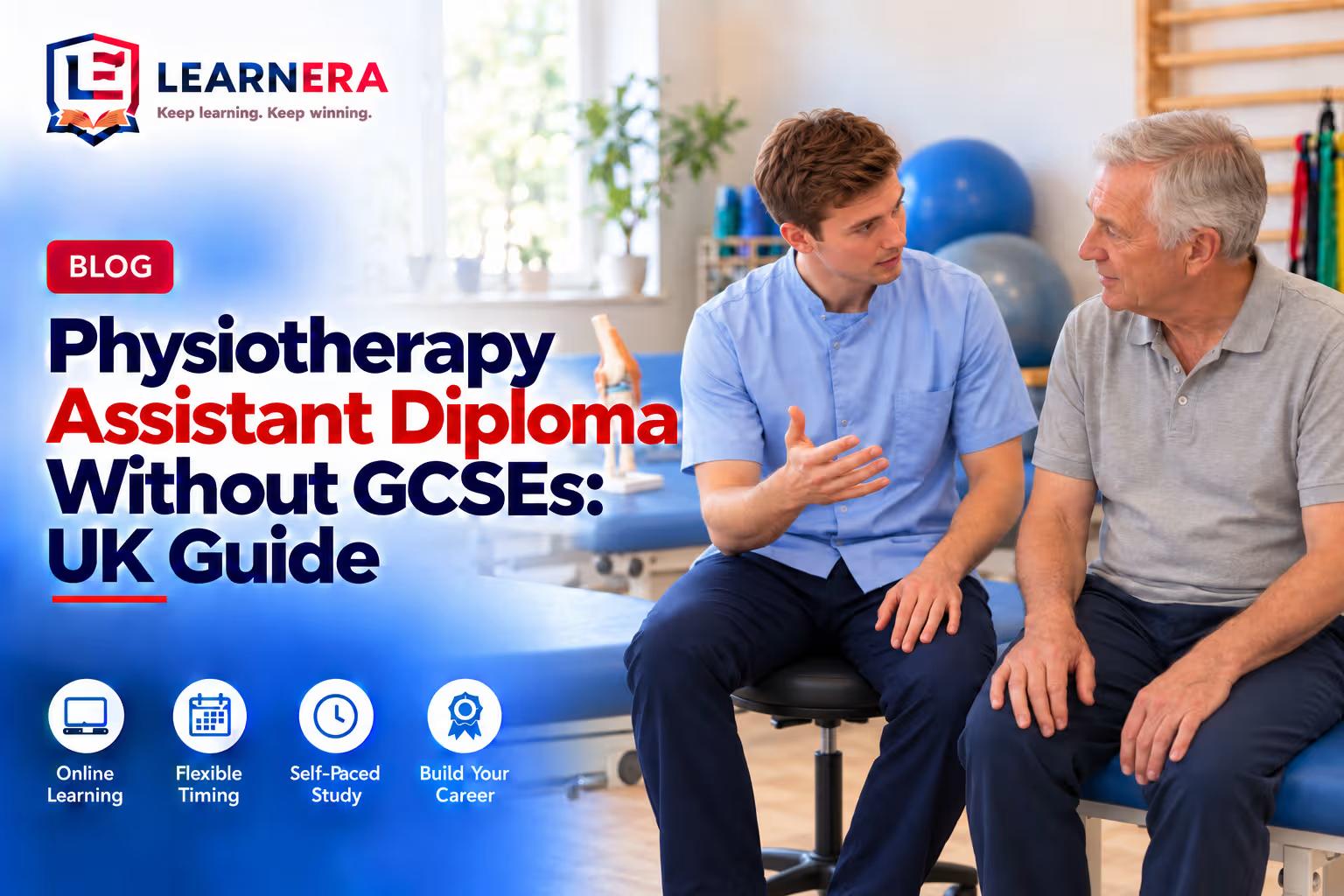
Physiotherapy Assistant Diploma Without GCSEs UK Guide

Physiotherapy Assistant Diploma Without GCSEs: UK Guide

Missing GCSEs can make choosing physiotherapy assistant training feel uncertain. Some online CPD courses accept beginners without formal qualifications. However, college admission and job applications involve separate checks. Understanding these differences helps you choose a suitable starting point. This guide explains course entry, alternative evidence and what to confirm before committing to your studies.

Yes, you can enrol on some physiotherapy assistant CPD diploma courses without GCSEs. However, this does not mean every diploma accepts applicants without formal qualifications. Course admission and the requirements for your intended job need separate checks.

For introductory study, Learnera’s Physiotherapy Assistant Level 3 Diploma accepts beginners without formal qualifications or previous experience. Its CPD learning covers anatomy, rehabilitation support and therapeutic techniques. It supports understanding but does not replace a regulated qualification or supervised workplace training.

Key Points

  • Check the entry criteria for the specific diploma rather than relying on its title.
  • Missing GCSEs makes it useful to ask which alternative qualifications or evidence a provider accepts.
  • Before choosing training for employment, compare its outcome with the qualifications listed in your target vacancy.

What Does A Physiotherapy Assistant Diploma Without GCSEs Include?

An open-entry CPD diploma provides subject learning without requiring GCSE certificates before enrolment. CPD means continuing professional development. For this topic, learning can cover anatomy and how rehabilitation supports movement and everyday activities. The curriculum tells you more about that learning than the diploma title alone.

A useful distinction is how the course checks your understanding. An online knowledge assessment differs from someone observing your work with patients. Reading about mobility aids does not establish that you can support someone safely during a transfer. Practical responsibilities require appropriate training and supervision.

The words “Level 3” also need careful interpretation. Within a CPD course title, they do not automatically establish regulated Level 3 status. Before enrolling, ask what certificate you receive and how the provider describes its purpose. This helps you understand what completing the diploma demonstrates.

Can You Enter A College Course Without GCSEs?

College entry without GCSEs depends on whether the specific programme accepts alternative qualifications or other evidence. The National Careers Service gives typical entry requirements for relevant healthcare and sport courses in England. These are starting points for enquiries rather than one rule covering every college.

For Level 2 courses, it lists two or more GCSEs at grades 9–3 or equivalent. For Level 3 courses, it lists four or five GCSEs at grades 9–4 or equivalent. The phrase “or equivalent” matters when you hold qualifications other than GCSEs.

Contact admissions with the exact titles and grades of any certificates you already hold. Ask which alternatives satisfy that programme’s requirements and whether a preparatory course is available. Do not assume experience replaces an English or maths requirement unless admissions confirms this. Keep their written response before making your application.

Can You Start A Healthcare Apprenticeship Without GCSEs?

Potentially, yes but the employer’s entry criteria still determine whether you can secure an apprenticeship place. Healthcare support apprenticeships offer a work-based route relevant to physiotherapy assistance. However, England’s English and maths completion rules differ according to your age when training starts.

The current GOV.UK guidance on apprenticeship English and maths requirements distinguishes two groups.

Apprenticeship English and Maths Requirements

Adult flexibility does not require employers to accept every applicant without GCSEs. Before applying, ask whether the vacancy requires certificates at entry or allows learning alongside employment. Also confirm which healthcare support apprenticeship the role includes. These England-specific arrangements should not be assumed to apply throughout the UK.

Can You Get A Physiotherapy Assistant Job Without GCSEs?

You can apply for some physiotherapy assistant jobs without GCSEs where the employer accepts your existing evidence. NHS Health Careers states that there are no set entry requirements for the role. Employers still expect good literacy and numeracy alongside relevant experience or qualifications. Some ask specifically for English and maths GCSEs.

Read the person specification to distinguish essential requirements from desirable ones. When an advert accepts equivalent qualifications, ask recruitment which certificates count. Relevant care experience does not automatically replace an essential academic requirement. Where the wording is unclear, resolve that question before preparing your application.

Use examples that demonstrate the skills the employer requests. These could come from paid care work or volunteering where relevant to the criteria. Explain your responsibilities and what you learned rather than simply listing attendance. This gives the recruiter clearer evidence of your suitability.

What Should You Check Before Enrolling Without GCSEs?

Confirm that you meet the published entry criteria and can manage the study format before paying. Open entry removes a certificate requirement but does not tell you how demanding the materials are. Ask to view a sample lesson so you can judge the language and explanations.

Request written answers where the course page leaves these details unclear. For example, someone returning to study might need help understanding anatomical terms before attempting an assessment. Knowing how that help works makes it easier to judge whether the course suits their starting point.

Choose Your Next Step Around The Evidence You Need

Write down the specific gap you want your next step to address. That might be understanding rehabilitation terminology or meeting an advertised English requirement. These needs call for different choices, even when both relate to physiotherapy assistant work.

Choose one course or vacancy and check the requirement you cannot yet demonstrate. Then contact the relevant admissions or recruitment team with a focused question. Their answer gives you a practical basis for deciding whether to study now or address that gap first.

Recent Blogs

Accredited Physiotherapy Assistant Diploma Courses UK

Accredited Physiotherapy Assistant Diploma Courses UK

Finding an accredited physiotherapy assistant diploma starts with understanding what the accreditation actually covers. Similar course titles can describe different learning outcomes and assessment methods. Your choice depends on whether you want introductory knowledge or a specific workplace qualification. This guide explains the differences and the checks worth making before you commit to studying.

Read More
Best Nursing Assistant Level 3 Diploma Providers UK

Best Nursing Assistant Level 3 Diploma Providers UK

Similar nursing assistant diploma titles can make choosing an online provider feel confusing. A useful comparison starts with your learning goals and the certificate each course offers. Look beyond promotional claims to understand the study experience and assessment. This guide explains how to compare providers and choose learning that suits your needs, available time and budget.

Read More
Compare Level 3 Nursing Assistant Diplomas In The UK

Compare Level 3 Nursing Assistant Diplomas In The UK

Similar nursing assistant diploma titles can make different programmes look interchangeable. Looking beyond the name helps you understand what each course actually offers. Some focus on online knowledge while others involve assessed workplace learning. Explore how to compare course status, content, assessment and costs before choosing a programme that suits your next learning step.

Read More