🌞 Summer Sale! GET ANY COURSE FOR ONLY £10.99!
Offer ends soon! 00 : 00 : 00
Use Coupon Code 👇
LEARN10
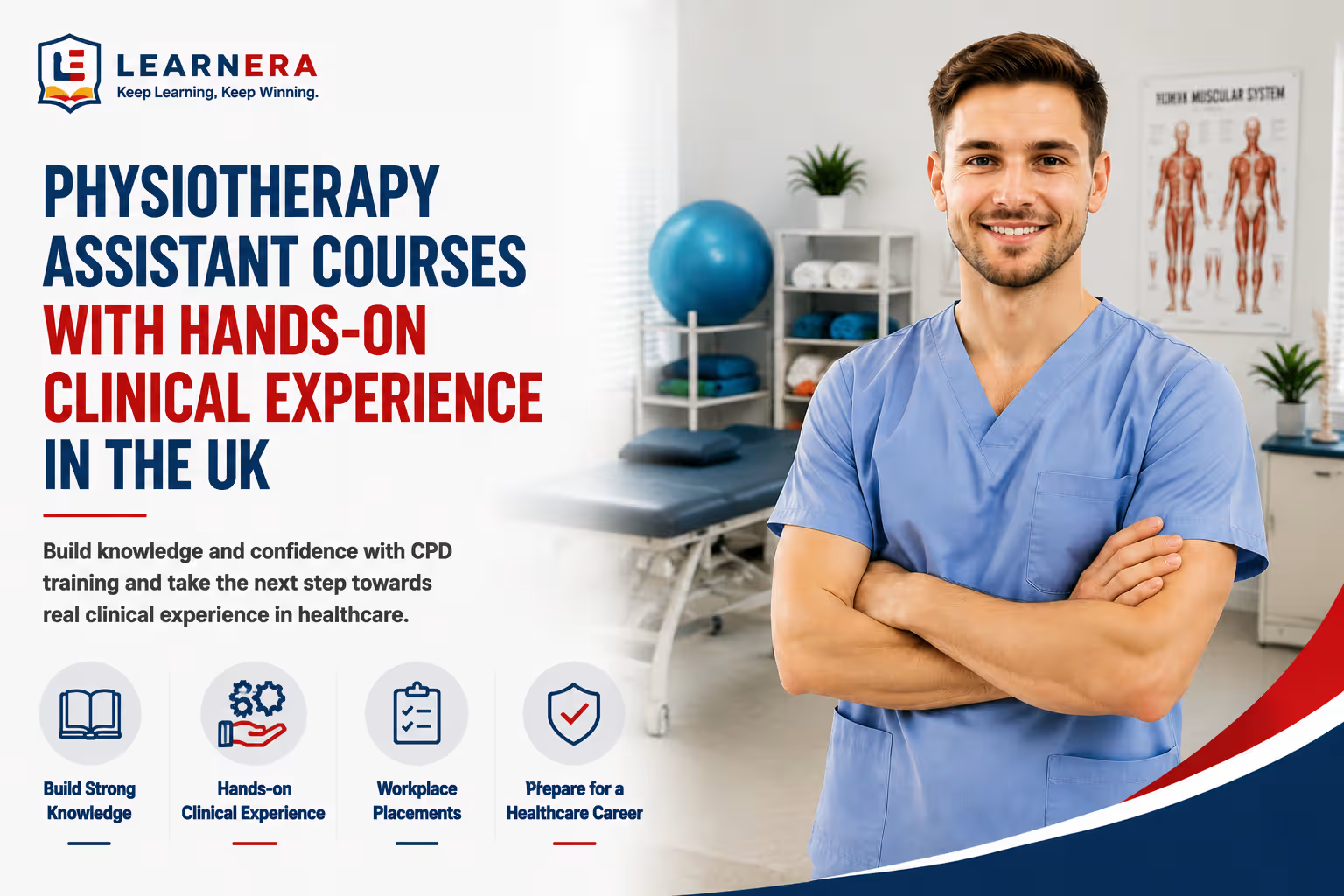
Physiotherapy Assistant Courses With Hands-on Clinical Experience in the UK Blog Feature Image

Physiotherapy Assistant Courses With Hands-on Clinical Experience in the UK

Some physiotherapy assistant courses include hands-on clinical experience, but it depends on the route. Online CPD courses usually build knowledge, while placements, apprenticeships, volunteering and employer training provide practical experience.

Yes, some physiotherapy assistant courses and training routes do provide hands-on clinical experience, but not every course includes it. In the UK, real clinical experience usually comes through work placements, apprenticeships, volunteering, NHS or private healthcare roles, or employer-led training.

Online CPD courses are different. They are useful for building knowledge and confidence, but they normally do not replace supervised practice in a real healthcare setting. Learners who want flexible preparation can explore Learnera’s Physiotherapy Assistant Level 3 Diploma as CPD learning before applying for placements, volunteering or support roles.

Key Points

  • Online CPD courses usually build theory, awareness and confidence.
  • Hands-on experience usually comes through placements, apprenticeships or employment.
  • Employers decide what training and practical sign-off are suitable for each role.

Do physiotherapy assistant courses include hands-on clinical experience?

Some do, but it depends on the type of course. A college-based health and social care course may include a work placement. An apprenticeship usually includes workplace learning because you are employed while training. A university physiotherapy degree includes formal clinical placements, but that route is for people training to become registered physiotherapists.

Many online physiotherapy assistant courses do not include a clinical placement. They may still cover practical topics such as patient mobility, rehabilitation support, therapeutic exercises, anatomy, communication and safe working. However, learning about these topics online is not the same as working with patients under supervision.

Which routes are most likely to provide practical experience?

🩺
Practical experience usually comes through real settings

The most hands-on routes involve placements, employment, volunteering or supervised workplace training rather than online theory alone.

Select a practical route

🏥
Work-based route

NHS or Private Support Roles

Working in a healthcare support role can give learners direct exposure to physiotherapy teams, workplace procedures and supervised patient support.

Experience depends on the role, employer, department and the tasks you are authorised and trained to perform.

What learners may see or support

👀 Observe therapy sessions
🧰 Prepare equipment
🚶 Support mobility work
🩼 Help with walking aids
📝 Update appropriate records
🏃 Assist with basic rehabilitation activities
Practical experience should be supervised

Learners should follow workplace instructions, professional boundaries and the guidance of trained staff when supporting patients.

Real setting + supervision

Do online physiotherapy assistant courses include placements?

Most online CPD physiotherapy assistant courses do not include placements. This is not always a bad thing. Many learners choose online CPD first because they want to understand the role before applying for jobs, volunteering or longer training routes.

A good online course can help you learn the language of the role. It can also help you feel more confident when discussing patient support, rehabilitation, mobility, manual handling awareness and teamwork in healthcare. But you should still check the course page carefully. If you need guaranteed hands-on experience, look for the words “placement”, “work experience”, “clinical practice”, “supervised training” or “workplace assessment”.

What counts as hands-on clinical experience?

Hands-on clinical experience means learning in a real or supervised care environment. This could be a hospital, physiotherapy department, private clinic, care home, community rehabilitation team or sports therapy setting.

It may include helping patients prepare for treatment, supporting exercises, setting up equipment, observing mobility work, communicating with patients and following workplace procedures. It should involve supervision from trained staff. It should also follow employer policy, health and safety rules, safeguarding procedures and patient confidentiality requirements.

📚

CPD Learning First

A CPD course can help beginners understand the support role and prepare for later workplace exposure.

Understand what physiotherapy assistants do
Learn what safe support may involve
Understand why supervision matters
Prepare for interviews or volunteering
Preparation before practice
🏥

Hands-On Training Later

Real patient-facing skills are normally developed through supervised placements, employment or workplace training.

Workplace induction
Supervised patient support
Practical competency checks
Employer-led guidance
🎓 Not a regulated qualification

CPD supports learning and professional development rather than replacing a formal qualification pathway.

📄 Not a licence to practise

Completing an online course does not provide independent authority to carry out clinical work.

🩺 Not proof of clinical competence

Clinical competence normally requires supervised practice, assessment and workplace sign-off.

Select what you need from the course

📘
Suitable for CPD learning

Knowledge and Confidence

An online CPD course may suit you when your main aim is to understand the role, learn basic terminology and prepare for a future application.

Check the curriculum, study format, assessment, certificate type and learner support before enrolling.
🔍
Check what “practical” really means

Some providers use “practical” to describe useful course content. Confirm whether the course includes real supervised patient-facing experience or only practical knowledge.

Knowledge ≠ placement

What misunderstandings should learners avoid?

The biggest misunderstanding is thinking that every physiotherapy assistant course includes hands-on clinical experience. Many do not.

Another common mistake is confusing a physiotherapy assistant course with physiotherapist training. A physiotherapy assistant supports therapy work under guidance. A physiotherapist is a registered healthcare professional who must complete approved training and registration requirements.

So, are there physiotherapy assistant courses with hands-on clinical experience? Yes, but they are usually placement-based, apprenticeship-based or employer-led. Online CPD courses can still be valuable, but their role is to build knowledge before, alongside or after real supervised experience.

Recent Blogs