Best 10 Online Learning Platforms Comparison, Pricing, Features, and How to Choose

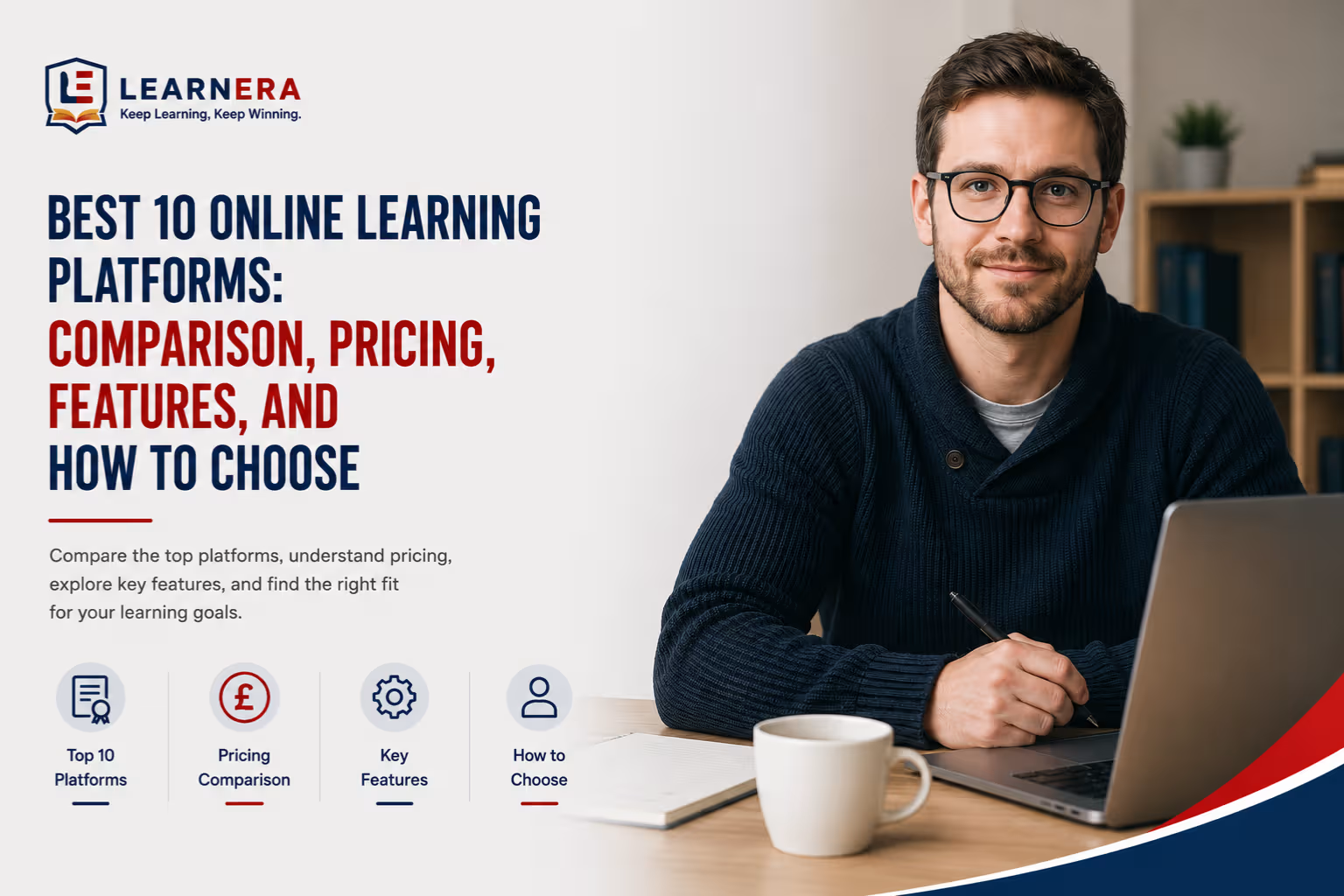
Best 10 Online Learning Platforms: Comparison, Pricing, Features, and How to Choose

A learner wants to move into data, improve job prospects, or gain a stronger qualification without putting work or family life on hold. Another wants shorter lessons, clearer structure, and study that leads to a real outcome. This is why …

A learner wants to move into data, improve job prospects, or gain a stronger qualification without putting work or family life on hold. Another wants shorter lessons, clearer structure, and study that leads to a real outcome. This is why online learning matters so much now.

Online learning has become a major route for gaining skills, improving confidence, and preparing for new roles. The growth is clear, but choice has become harder. There are now thousands of online course platforms, and they do not offer the same value. Some focus on university style study. Some focus on quick skills. Some offer stronger tutor guidance, better structure, or more useful certificate options. Others rely on large course libraries, but leave you to work through them alone.

This matters because your results depend on more than course title alone. Course quality, learning style, support, pricing, and certificate value all shape the experience. A platform with clear lessons, practical learning, and stronger career relevance often gives you a better result than one with a larger catalogue.

This guide compares the best online learning platforms based on features, pricing, certificate value, and learning experience, so you can choose a platform that fits your goals.

 TL;DR

  • Online learning platforms give you flexible education from home, work, or on the move.
  • Platforms differ in course structure, pricing, support, and certificate value.
  • Some focus on university style study and formal progression.
  • Others focus on job skills, creative learning, or practical training.
  • The best platform depends on your goals, budget, and preferred study style.
  • Certificate recognition varies, so you need to check what the course outcome means.
  • Some platforms offer free access, while others use subscriptions or pay per course pricing.
  • Online learning works best when the platform matches your career plans and learning needs.

What Is an Online Learning Platform?

An online learning platform is a digital system that allows learners to access courses, training materials, and educational programs remotely. These platforms typically include video lessons, quizzes, assignments, and certificates designed to help users gain new knowledge or professional skills.

Difference Between Online Learning Platforms and LMS Systems

While the terms online learning platforms and LMS (Learning Management Systems) are often used interchangeably, there are key differences between the two:

Online Learning Platforms

These platforms primarily focus on delivering courses and content directly to learners. They offer a variety of subjects, certifications, and structured lessons, enabling students to learn remotely. Some platforms, like Udemy and Coursera, allow instructors to create and sell courses, while others, like Khan Academy, offer free access to educational content.

Learning Management Systems (LMS)

LMS platforms are often used by schools, universities, and organisations to manage and track educational activities. They are more focused on the administration side, offering tools for creating, tracking, and evaluating online learning programs. Examples of popular LMS platforms include Moodle and Canvas. While LMS platforms can also offer content, their primary function is to manage the learning experience rather than just delivering it.

Types of Online Learning Platforms

Online learning platforms can be categorized into different types, depending on the focus and purpose of the courses they offer. These include:

Course Marketplaces

These platforms allow a wide variety of instructors to offer courses on numerous topics. They typically provide a marketplace where learners can choose from many different courses.

  • Examples: Udemy, Skillshare

University Course Platforms

These platforms partner with universities and academic institutions to provide courses and degrees. They are great for learners seeking formal education or certifications from well-known universities.

  • Examples: Coursera, edX

Professional Training Platforms

Designed for career development, these platforms focus on providing job-specific skills and certifications that help learners advance in their careers. They may offer micro-certifications or industry-recognised credentials.

  • Examples: LinkedIn Learning, Pluralsight

Features of Online Learning Platforms

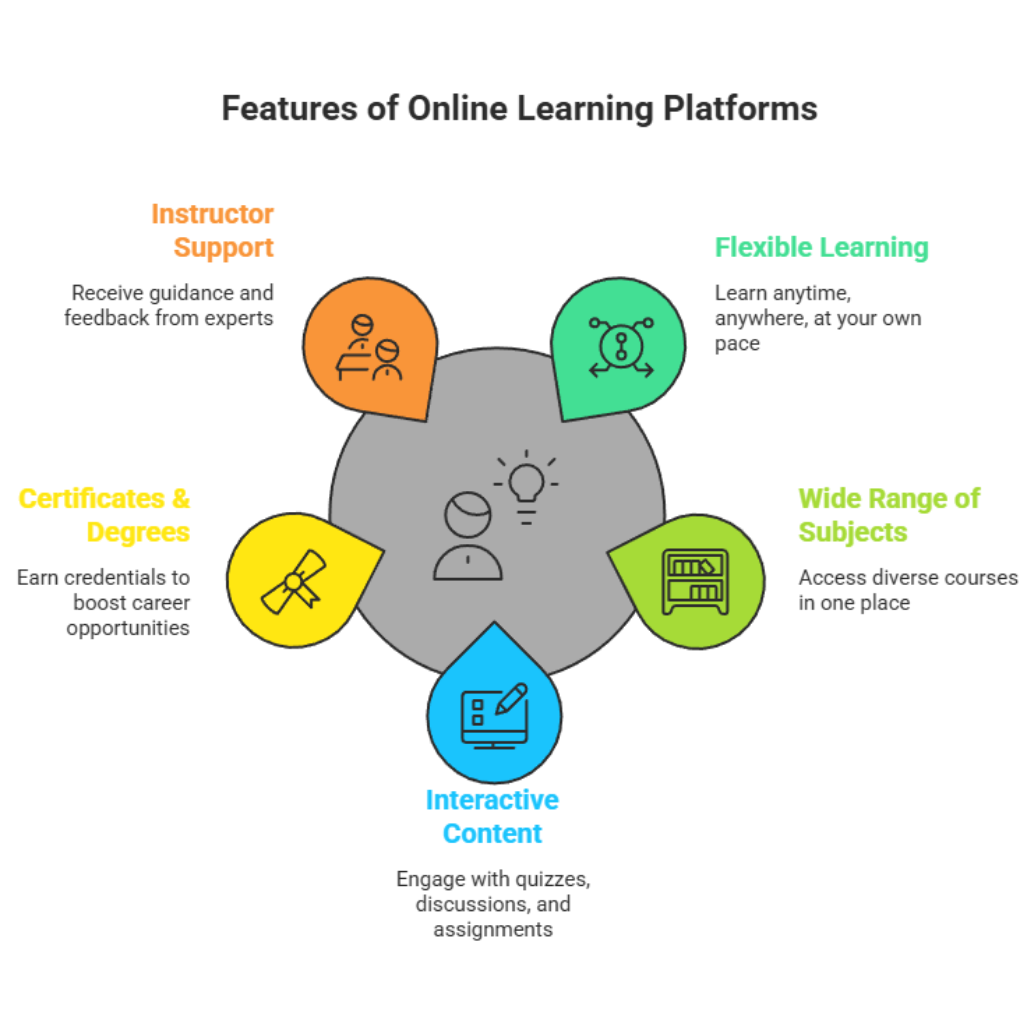
Some key features of online learning platforms include:

  • Flexible Learning: Learn at your own pace, from anywhere in the world, using any device.
  • Wide Range of Subjects: Cover everything from business skills to coding, creative arts, and more.
  • Interactive Content: Engage with quizzes, assignments, and peer discussions to enhance learning.
  • Certificates & Degrees: Earn certificates or degrees that can enhance your career prospects.
  • Instructor Support: Some platforms offer instructor feedback or one-on-one support, ensuring a well-rounded learning experience.
Features of Online Learning Platforms

Why Are Online Learning Platforms So Popular?

Online learning platforms are popular because they allow learners to study from anywhere while gaining practical skills or professional knowledge. Flexible schedules, affordable courses, and access to global instructors make online learning an attractive alternative to traditional education.

Flexible Learning Schedules

Online platforms allow learners to study at their own pace, adjusting their schedules to fit personal and professional commitments. This flexibility helps learners manage their time more effectively, particularly for working professionals or parents.

Lower-Cost Education

Compared to traditional classroom education, online learning is often more affordable. Many platforms offer free or lower-priced courses, making it easier for learners to access high-quality education without breaking the bank. Subscription models and payment plans also make learning more cost-effective.

Career-Focused Courses

Online platforms focus heavily on skills directly related to career advancement. Courses in areas like digital marketing, coding, graphic design, and data analysis are in high demand and can be tailored to specific industries, helping learners stay competitive in the job market.

Global Instructors

Online platforms offer access to instructors from around the world. Learners can benefit from diverse teaching styles, industry expertise, and the latest global trends, all of which enhance the learning experience.

Remote Accessibility

One of the most attractive features of online learning is the ability to study from anywhere. At home, during commutes, or while travelling, students can access materials and lessons on various devices, making it easier to learn in different environments.

The Appeal of Online Learning

How Do You Choose the Best Online Learning Platform?

Choosing the best online learning platform depends on your learning goals, preferred study style, and budget. Important factors include course quality, certification recognition, instructor expertise, pricing models, and  the platform offers structured or self-paced learning.  Key Factors to Consider When Choosing an Online Learning Platform:

Course Quality

  • Experienced Instructors: Look for platforms that offer courses taught by instructors with real-world experience and academic credentials. High-quality instructors provide valuable insights, expert guidance, and a deeper understanding of the subject.
  • Up-to-date Materials: The best platforms offer regularly updated content that reflects the latest trends and developments in the field. This ensures learners are gaining knowledge that is relevant and applicable to current industry standards.
  • Structured Lessons: Some platforms offer courses with clear structures, including modules, quizzes, and assignments that help learners track progress. This is ideal for those who prefer a more organised, step-by-step learning approach.

Certification Value

  • Certificate of Completion: Many platforms offer certificates that acknowledge completion but may not hold much weight with employers. These are suitable for personal development but might not be sufficient for career advancement.
  • Professional Certificate: Some platforms offer professional certificates, which can carry more weight in specific industries. These certificates demonstrate that you have acquired job-relevant skills.
  • Accredited Qualification: Accredited platforms, such as those offering Access to HE Diplomas or university-backed courses, provide qualifications recognised by academic institutions or employers. This type of certification is ideal if you aim to further your studies or pursue a new career.

Pricing Model

  • Free Courses: Some platforms, like Khan Academy, offer free courses, making them a great option for self-learners or those on a budget. However, free courses often lack certification and structured support.
  • Subscription Platforms: Many platforms, such as LinkedIn Learning, operate on a subscription basis. You pay a fixed monthly or yearly fee for access to a vast library of courses. This model works well for learners who want continuous access to a wide variety of content.
  • Pay-Per-Course Platforms: Platforms like Udemy offer individual courses that you can purchase. This model is ideal for learners who want specific skills without a long-term commitment. You pay for only the courses you want.

Learning Style

  • Project-Based Learning: If you learn best by doing, choose platforms that offer project-based learning, like Skillshare, where you can work on practical, real-world tasks that build your portfolio.
  • Interactive Coding: Platforms like Codecademy or FreeCodeCamp offer hands-on coding practice, perfect for learners who want interactive lessons that test and reinforce skills in real time.
  • Lecture-Based Learning: If you prefer traditional lecture-style learning, platforms such as Coursera and edX provide academic-style courses with lectures, assignments, and quizzes that closely mimic a classroom setting.

What Are the Best Online Learning Platforms in 2026?

In 2026, there is a wide range of online learning platforms available that cater to various needs. Whether you’re seeking academic education, professional certifications, creative skill development, or personal growth, these platforms offer unique benefits tailored to different learning goals. If you want a structured academic program or simply wish to learn a new skill for career advancement, you can find an online learning platform that meets your requirements.

Here’s an overview of 10 of the best online learning platforms in 2026, highlighting their strengths and ideal use cases:

  • edX: Partnering with world-renowned universities like MIT and Harvard, edX is a great choice for those looking for academic-level certifications or full degree programs. It’s well-regarded for its rigorous course structure and high academic standards.
  • Coursera: Ideal for those seeking accredited university-level courses and certifications. Coursera offers degrees and specialisations in a wide range of subjects, making it a top choice for academic and professional development.
  • Learnera: Known for its interactive, project-based learning and flexible course offerings. Learnera is ideal for learners focused on career progression and skill-building in emerging industries.
  • FutureLearn: With a focus on UK-based education, FutureLearn excels in offering micro-credentials and degree programs in partnership with top universities. It’s an excellent platform for learners looking to progress in their academic career while gaining practical skills.
  • Udemy: Udemy’s massive course library makes it a go-to platform for affordable, self-paced learning. Ideal for learners seeking skill development in areas like programming, business, and creative fields.
  • LinkedIn Learning: Best for professionals looking to upskill, LinkedIn Learning offers a wide array of short courses, with the added benefit of integration with your LinkedIn profile, showcasing your achievements directly to potential employers.
  • OpenLearn: As a free educational platform from The Open University, OpenLearn is perfect for learners who want to explore new subjects at their own pace without committing financially. It’s a great resource for informal learning and CPD.
  • Skillshare: Known for its creative and artistic course offerings, Skillshare focuses on hands-on learning in fields like design, photography, and writing. It’s ideal for learners looking to develop their creative skills.
  • Codecademy: Codecademy is the go-to platform for coding and programming. Its interactive courses make learning languages like Python, JavaScript, and Ruby both engaging and practical.
  • Alison: With a broad range of free online courses, Alison is ideal for learners looking for foundational knowledge or entry-level certifications. It offers courses in various subjects, including business, technology, and health.
What Are the Best Online Learning Platforms in 2026

Best Online Learning Platforms (Detailed Comparison)

Here’s a detailed comparison of 10 of the best online learning platforms in 2026, highlighting their key features, pricing, and certification value to help you choose the right platform for your learning needs. Each of these platforms has unique strengths. Whether you’re looking to gain university-level qualifications, develop creative skills, or upskill for your career, there’s a platform that fits your learning style and goals.

1. edX

Platform Overview: Founded by MIT and Harvard, edX offers university-level courses and degree programmes. It provides flexible learning options with access to high-quality academic content.

Key Features:

  • Free and paid courses.
  • MicroMasters and MicroBachelors programs.
  • Flexible learning with self-paced options.

Best for: Learners seeking deep, academically rigorous education.
Pricing: Free access to courses, certificates start at £50; MicroMasters cost between £500 and £1,000.
Certification Value: Offers certificates from top universities, recognised by employers and academic institutions.

2. Coursera

Platform Overview: Coursera partners with top universities and companies, offering comprehensive, academically rigorous courses. It’s an ideal platform for gaining formal academic credentials.

Key Features:

  • Degrees, professional certificates, and specialisations.
  • Courses from prestigious universities like Yale, Stanford, and Imperial College London.
  • Self-paced learning with expert instructors.

Best for: Students aiming for accredited degrees and university-level certifications.
Pricing: Free for audits, certificates range from £39 to £30,000 depending on the programme.
Certification Value: Recognised certifications from top universities, useful for advancing academic and career goals.

3. LearnEra

Platform Overview: LearnEra is suited to learners who want practical, career focused study with a clearer structure than many large course marketplaces. It works well for people who want flexible learning, but still want their study to feel purposeful and organised. This makes it a strong option for professionals building job skills, career changers, and learners who want progress they can apply in real settings.

Key Features:

  • Project-based learning for real-world applications.
  • Flexible study schedules.
  • Career-focused certifications.

Best for:Learners who want practical training, flexible study, and stronger career relevance without the heavier feel of a university style platform.

Pricing: Subscription-based, starting at £30 per month.
Certification Value: Earn certificates that boost employability in emerging fields like data science, IT, and digital marketing.

4. FutureLearn

Platform Overview: FutureLearn is a UK-based platform partnered with over 200 universities and organisations. It offers a diverse range of courses that include professional qualifications, short courses, and full degree programmes.

Key Features:

  • Partnerships with UK and global universities.
  • Short courses, microcredentials, and degrees.
  • Interactive, social learning with peer feedback.

Best for: UK learners seeking academic and professional development opportunities.
Pricing: Free for course materials; certification and degrees range from £36/month to £10,000 for full degrees.
Certification Value: Recognised microcredentials and professional qualifications.

5. Udemy

Platform Overview: Udemy is an online course marketplace with courses in virtually every subject. It allows independent instructors to create and sell courses.

Key Features:

  • Massive course selection across professional and personal development.
  • Lifetime access to purchased courses.
  • Frequent sales and discounts.

Best for: Learners looking for affordable, self-paced courses.
Pricing: Pay-per-course model, with courses typically priced between £15 and £100 (discounted prices often available).
Certification Value: Certificates of completion for personal development, though not accredited.
6. LinkedIn Learning

Platform Overview: LinkedIn Learning offers a vast library of professional development courses, ideal for learners looking to advance their careers.

Key Features:

  • Courses focused on business, IT, and creative skills.
  • Integrated with LinkedIn profiles, allowing certifications to be showcased.
  • Structured learning paths for career progression.

Best for: Professionals looking to build or improve specific job-related skills.
Pricing: £29.99/month (annual subscription offers savings).
Certification Value: Recognised by employers, especially for soft skills, management, and technical tools.

7. OpenLearn

Platform Overview: OpenLearn offers free courses from The Open University, ideal for anyone looking to explore university-level topics without commitment.

Key Features:

  • Free, self-paced courses.
  • Courses on a wide range of subjects, from business to technology.
  • No deadlines or exams.

Best for: Learners seeking no-cost access to university-level education.
Pricing: Free.
Certification Value: Free Statements of Participation and digital badges, although not formally accredited.

8. Skillshare

Platform Overview: Skillshare is a creative learning platform that offers project-based courses in areas such as design, photography, and writing.

Key Features:

  • Courses focused on creative industries and entrepreneurial skills.
  • Community-driven feedback on projects.
  • Classes in a wide variety of creative and personal development topics.

Best for: Creative professionals or hobbyists looking to expand their skills.
Pricing: £12/month, with a 1-month free trial.
Certification Value: No formal certification, but a valuable addition to portfolios for creative professionals.

9. Codecademy

Platform Overview: Codecademy is a highly interactive platform for learners looking to build programming and technical skills in coding languages such as Python, JavaScript, and Ruby.

Key Features:

  • Interactive coding exercises with real-time feedback.
  • Tracks to guide learners through various coding careers (e.g., web development, data science).
  • Focus on hands-on learning.

Best for: Aspiring coders, web developers, or data scientists.
Pricing: Free for basic access, Pro plan starting at £15/month.
Certification Value: Offers certificates for Pro users, although not accredited.
10. Alison

Platform Overview: Alison offers free courses across a wide range of subjects, from business management to healthcare, with optional paid certifications.

Key Features:

  • Free access to a broad range of subjects.
  • Certificates available for purchase.
  • Courses in professional and vocational fields.

Best for: Learners seeking free courses and certifications in professional fields.
Pricing: Free courses; certificates available for purchase (from £20).
Certification Value: Non-accredited certificates, useful for professional development.

How to choose a learning platform

Comparison Table of the Best Online Learning Platforms

Here’s a comparison table summarising the key features of the best online learning platforms in 2026. This comparison table allows you to easily spot the differences in pricing, skill levels, and certification types across the platforms, helping you decide which is best suited to your needs.

Platform

Best for

Pricing

Certificate Type

Free Courses

Skill Level

LearnEra

Career-focused, hands-on skills

£30/month subscription

Career-focused certification

Limited or plan-based 

Beginner to advanced 

Coursera

University-level education, degrees

Free courses; paid certificates from £39/month

Professional certificates, degrees

Yes (audit only)

Beginner to Advanced

edX

Academic education, MicroMasters, degrees

Free courses; paid certificates from £50

Verified certificates, degrees

Yes (audit only)

Beginner to Advanced

FutureLearn

UK-based, university-linked courses

Free access; Unlimited plan from £36/month

University-backed microcredentials

Yes

Beginner to Intermediate

Udemy

Skill development, personal interests

£15–£100 per course, frequent discounts

Certificate of completion (non-accredited)

Yes (varies by course)

Beginner to Advanced

LinkedIn Learning

Professional development and business

£29.99/month (annual discount available)

Certificate of completion (non-accredited)

Yes (one-month free trial)

Beginner to Advanced

OpenLearn

Free university-level education

Free access

Statements of participation (non-accredited)

Yes

Beginner

Skillshare

Creative fields (art, design, etc.)

£12/month, 1-month free trial

No formal certificate

Yes

Beginner to Intermediate

Codecademy

Coding and programming skills

Free for basic, Pro plan from £15/month

Certificate of completion (non-accredited)

Yes (limited access)

Beginner to Advanced

Alison

Professional skills, vocational training

Free courses; certificates from £20

Non-accredited certificate

Yes

Beginner to Intermediate


Are Online Learning Platforms Worth It?

Online learning platforms offer real value when they combine strong course quality, useful structure, and certificates that fit your goals. Many learners use them to build job skills, prepare for career changes, or improve knowledge in one clear area.

Benefits of Online Learning Platforms

  • Flexible Learning: You choose when and where you study. This suits working adults, parents, students, and anyone balancing other responsibilities.
  • Affordable Education: Many platforms like learnEra offer free access, low-cost subscriptions, or lower prices than traditional study. This reduces the barrier to starting.
  • Professional Development: You can build practical skills in areas such as business, coding, design, healthcare, and project work without joining a full academic programme.
  • Career Advancement: Focused courses help you strengthen your CV, update your knowledge, or prepare for a new role. This is especially useful in fast-moving sectors.

Limitations of Online Learning Platforms

  • Certificate Recognition Varies: A completion certificate does not always carry the same value as an accredited qualification or professional certificate.
  • Course Quality Depends on Platform: Some platforms curate content tightly. Others rely on open marketplaces where quality varies from course to course.
Are Online Learning Platforms Worth It

What Should UK Learners Look for Before Choosing a Platform?

UK learners should check course credibility, certificate recognition, and course structure before choosing an online learning platform UK users can rely on. The difference between accredited training and a simple completion certificate often affects career value.

Four Things That Matter Most

Accreditation vs Completion Certificates

If you want stronger career value, look closely at whether the course is accredited or simply gives a completion record. Online courses UK accredited by recognised bodies usually carry more weight than standard completion certificates.

Tutor Support

Some learners work well alone. Others need tutor input, clear feedback, or help when a topic becomes difficult. If support matters to you, choose training providers UK learners trust for clear communication and structured guidance.

Assessment Quality

Good assessments test understanding throughout the course, not only at the end. Quizzes, assignments, and practical tasks all help turn study into usable knowledge.

Career Relevance

Choose a platform that fits the field you want to move into. A course with direct links to your target sector usually gives you a better return than one with broad but less focused content.

Summary & Key Takeaways for Learners and Practitioners

  • Online learning platforms provide convenient, flexible ways to gain new skills and qualifications.
  • They vary greatly in pricing, certification types, and learning styles, catering to diverse learning goals.
  • UK learners should prioritise accreditation and certification recognition when selecting a platform for career-focused education.
  • Each platform offers unique strengths: from self-paced courses to instructor-led learning and project-based experiences.
  • Pricing models differ widely, with some platforms offering free access and others operating on a subscription or per-course basis.
  • Choosing the right platform involves considering your goals, preferred learning format, and the value of any certifications offered.
  • High-quality support, clear assessment structures, and credible qualifications are essential to ensure a worthwhile learning experience.

FAQs

Is Udemy better than Coursera?

Udemy is better for low cost, targeted skill learning. Coursera is stronger for structured study, university linked courses, and professional certificates. Your best choice depends on whether you want quick skills or a more formal learning path.

FutureLearn and OpenLearn are strong choices for UK learners because they connect closely with recognised UK institutions. If you want a more practical and career focused route, a platform such as LearnEra may suit you better.

edX was founded by Harvard University and MIT in 2012 as a non-profit platform to offer free online education. In 2021, it was acquired by 2U, a major educational technology company, transitioning to a for-profit model.

Learning Management Systems (LMS) are tools used for managing, tracking, and delivering educational courses. The top 10 LMS platforms include Moodle, Canvas, Blackboard, iSpring, and TalentLMS. Unlike online course platforms, LMSs focus on managing the learning process.

No. Udemy and Coursera are separate companies. They also serve different models, with Udemy working as a marketplace and Coursera focusing more on structured academic and professional learning.

Yes, especially where the course comes from a respected university or employer. Their value still depends on your field, the course level, and how relevant the certificate is to the role you want.

Yes. You can list it in a certifications or professional development section. Include the course title and the institution or employer linked to the course.

Yes. Coursera hosts full online degree programmes from partner universities. These degrees are delivered online, but they come from recognised institutions.

The best short course depends on your goal. Project management, coding, digital marketing, data analysis, and business communication are common choices because they link closely to current job demand.

Coursera is one of the strongest choices for academic and professional study. It is not the best fit for every learner, because some people need a more practical, lower-cost, or faster route.

The best online learning platforms include Learnera, Coursera, edX, FutureLearn, Udemy, LinkedIn Learning, OpenLearn, Skillshare, Codecademy, and Alison. The right choice depends on what you want to achieve.

The best platform depends on your goal. If you want academic study, Coursera or edX may fit best. If you want practical skills or flexible career focused study, Learnera or Udemy may suit you more.

There is no single best platform for every learner. Coursera is strong for formal study, FutureLearn works well for UK learners, and LearnEra stands out where practical, career focused learning matters most.

The best online platform for learning depends on the subject and the outcome you want. Coding learners may prefer Codecademy, creative learners may prefer Skillshare, and career focused learners may prefer Learnera or LinkedIn Learning.

The best platform is the one that fits your goal, budget, and preferred learning style. Check course quality, certificate value, support, and subject focus before you decide.

Choose based on course quality, pricing, certificate value, learning style, and support. A platform works best when its structure and outcome match what you want from your study.

Recent Blogs