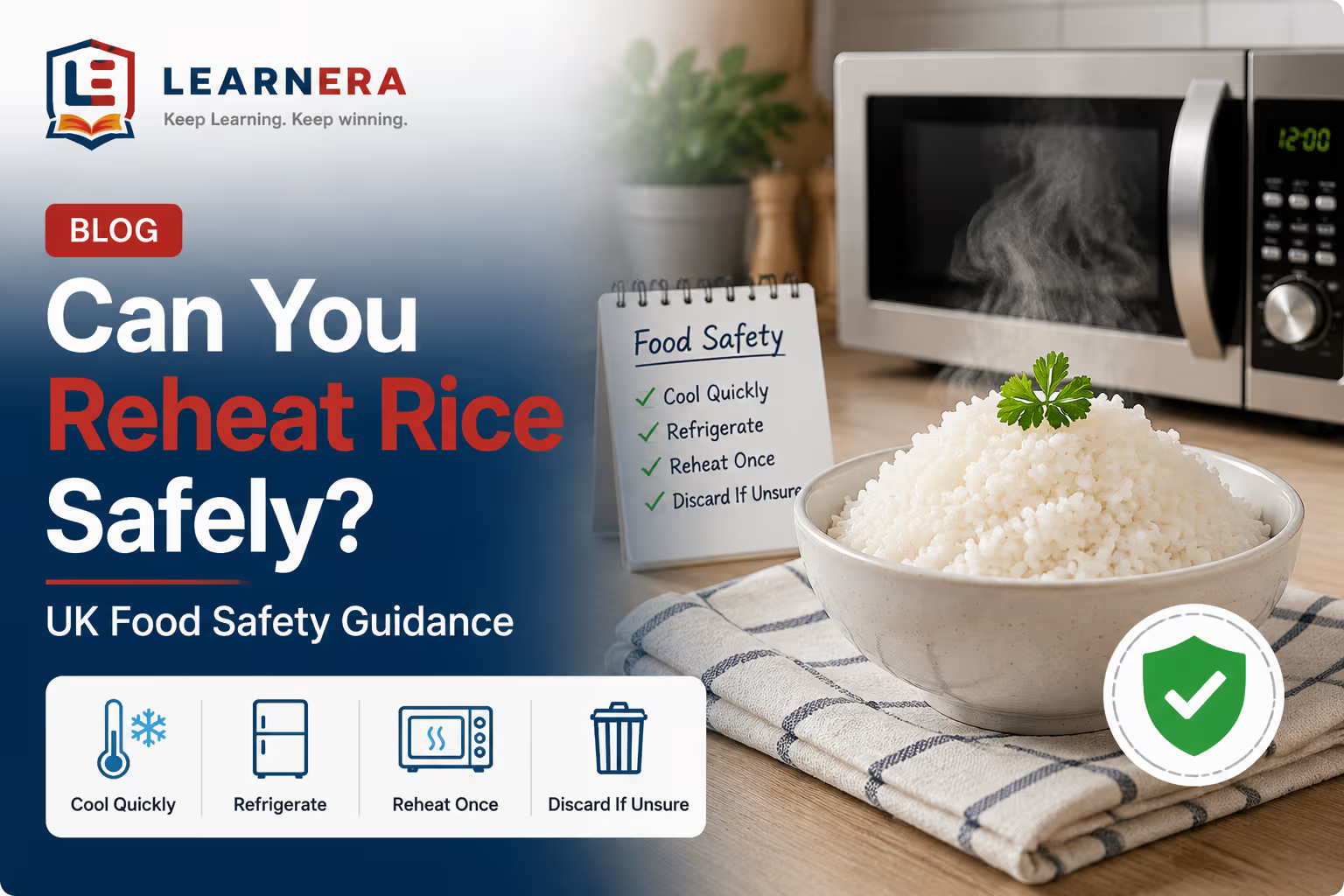
Can You Reheat Rice Safely? UK Food Safety Guidance
Yes, you can reheat rice safely, provided it was cooled quickly, stored correctly and reheated only once. The risk comes primarily from how cooked rice is handled before reheating, rather than from reheating itself.
Cooked rice may contain spores of Bacillus cereus, a bacterium associated with food poisoning. These spores can survive cooking. If rice remains warm or at room temperature for too long, bacteria can multiply and toxins may form.
This guide explains current UK advice on cooling, refrigerating, checking and reheating rice. It also covers cold, frozen and takeaway rice, plus the distinction between household guidance and food-business responsibilities.
Food safety mistakes often happen before food reaches the plate. Whether you are preparing meals at home or working around food in a professional setting, understanding safe handling practices can help reduce unnecessary risks. Learnera’s Diploma in Food Hygiene and Safety Level 3 course helps learners build practical knowledge of food hygiene principles, including safe preparation, storage and handling practices.
TL;DR: What Should Readers Know?
Rice can be reheated safely when its cooling and storage history is known, and it has not already been reheated.
- Cool cooked rice quickly, ideally within one hour.
- Refrigerate it and use it within one day.
- Reheat it only once until steaming hot throughout.
- Serve reheated rice immediately.
- Discard rice left out overnight or with an uncertain storage history.
Heating cannot reliably correct the effects of unsafe storage, so make the decision before putting the rice in the microwave or pan.
Why can reheated rice make people ill?
Rice can cause illness when Bacillus cereus spores survive cooking and unsuitable time or temperature conditions allow bacteria to multiply or toxins to form. Correctly handled reheated rice is not automatically dangerous.
What is Bacillus cereus?
Bacillus cereus is a bacterium found in the environment and in various foods, including rice. It can form spores, which are resistant structures that may survive the temperatures reached during ordinary cooking.
Once cooked rice begins to cool, surviving spores may germinate. If the rice remains warm for an extended period, the bacteria can multiply. Some strains can produce a toxin in the food that causes vomiting. This toxin may remain even after the rice is reheated. “Emetic” means that it causes vomiting.
The UK Health Security Agency’s microbiological guidance explains that this preformed toxin is heat stable. Reheating may kill some bacterial cells, but it does not necessarily destroy toxin that has already formed. This is why reheating is not a way to rescue badly stored rice.
If unsafe handling leads to food poisoning, symptoms can include vomiting, diarrhoea and stomach discomfort. Detailed health advice should come from the NHS food-poisoning guidance, rather than from relying on an online food article for diagnosis.
Safe Rice Preparation — The Key Steps
Control the process from cooking to serving1. Cook
Prepare rice safely before serving.
2. Cool Quickly
Serve immediately or cool rice quickly after cooking.
3. Store Safely
Keep rice under refrigeration before reheating.
4. Reheat Once
Reheat until steaming hot throughout.
Unsafe handling can allow bacteria to multiply or toxins to form. Symptoms may include vomiting, diarrhoea and stomach discomfort. Follow NHS food-poisoning guidance for health advice.
How should cooked rice be cooled and stored safely?
Cooked rice should be cooled as quickly as possible, ideally within one hour, refrigerated promptly and kept for no more than one day before reheating. These controls limit the time available for bacteria to multiply.
How quickly should rice be cooled?
The Food Standards Agency’s Home Food Fact Checker advises cooling rice as quickly as possible, ideally within one hour. Food Standards Scotland gives the same one-hour recommendation.
Practical ways to speed up cooling include:
- dividing a large batch into smaller portions;
- transferring it to clean, shallow containers;
- keeping the rice separate from other hot food where practical;
- refrigerating it promptly instead of leaving it in the cooking pan.
Do not leave rice cooling in a switched-off rice cooker, steamer or warm saucepan. These appliances and containers may retain heat, keeping the rice at a temperature where bacteria can grow.
The one-hour period is official consumer guidance. The one-hour target is food-safety guidance rather than a precise legal cut-off. The safest approach is to cool rice as quickly as possible and refrigerate it promptly. However, the longer cooked rice remains warm, the less dependable its safety becomes.
How long can cooked rice stay in the fridge?
Cooked rice should remain in the fridge for no more than one day before it is reheated. In practical terms, plan to use refrigerated rice within 24 hours of cooling it.
This differs from the three-to-four-day advice sometimes seen on US-focused websites. For UK consumers, the current recommendation is to use refrigerated rice within one day.
Keep the rice covered in a clean container to protect it from contamination. A properly operating fridge remains important, but a cold fridge does not extend the rice-specific one-day recommendation. If you do not expect to use the rice within that period, freezing it promptly may be more appropriate.
When should leftover rice be thrown away?
Leftover rice should be discarded when it has been left out overnight, stored beyond the recommended period, reheated already or kept under conditions that cannot be confirmed. Uncertainty about its storage history is a valid reason not to eat it.
How should rice be reheated safely?
Properly refrigerated rice should be reheated once until it is steaming hot throughout, checked for cooler areas and served immediately. A microwave, hob or wok can all be used when they heat the complete portion evenly.
Only reheat rice if you are confident it was cooled and stored safely and has not already been reheated.
Use the following process:
- Remove only the portion you intend to eat.
- Break up dense clumps so heat can reach the centre.
- Reheat the rice until it is steaming throughout.
- Stir or turn it during heating to distribute heat.
- Check the centre and any remaining clumps for cold spots.
- Serve it immediately and do not reheat it again.
Rice can be reheated evenly in a microwave by breaking up clumps, spreading the portion through a suitable container and stirring it during heating. The rice should be visibly steaming throughout when checked.
Covering the container loosely can retain moisture, but steam must be able to escape safely. Pause and stir the rice rather than assuming the surface temperature represents the centre. After heating, check several areas, especially the middle and any dense sections.
Reheated rice should be steaming hot throughout, rather than specifying 74°C or 165°F as a special rice rule. That figure commonly appears in non-UK guidance and should not be presented as a universal UK requirement.
Gives examples of equivalent time and temperature combinations, including 70°C for two minutes or 75°C for 30 seconds. These examples provide a broader food-safety context. They do not replace the rice-specific instructions to reheat once and ensure it is steaming throughout.
A food thermometer may provide additional reassurance, particularly for large portions. Food businesses should follow their documented food-safety procedures and any required temperature or time limits.
Can cold, frozen or takeaway rice be eaten safely?
Cold and frozen rice can be safe when they have been handled correctly, but takeaway rice requires greater caution because its previous cooking and reheating history may not be known.
Type of rice | When it may be safe | Important action |
Cold refrigerated rice | When cooled quickly and kept refrigerated for no more than one day | Eat it within that period and do not leave it at room temperature |
Frozen cooked rice | When frozen promptly after cooking | Defrost it in the fridge, reheat until steaming and eat immediately |
Takeaway rice | When eaten shortly after purchase | Avoid reheating if you cannot confirm whether it was reheated before service |
Properly stored refrigerated rice can also be eaten cold, provided it remains within the recommended storage period.
Current FSA advice is to freeze cooked rice within one hour. When needed, defrost it in the fridge, reheat it until steaming throughout and eat it immediately. Avoid assuming that every frozen rice dish can be heated directly from frozen. Follow specific packaging instructions for commercially frozen products.
Takeaway rice presents a different problem. A restaurant may have cooked the rice earlier and reheated it before serving. The FSA therefore recommends eating takeaway rice shortly after purchase. If its previous handling is uncertain, storing and reheating it later could result in an additional reheat.
These rules concern safety rather than texture. Whether the rice is white, brown, boiled or fried does not remove the need for prompt cooling and controlled storage.
Do the rules differ at home and in a food business?
Yes, householders follow official consumer guidance, while food businesses have legal food-safety duties and must apply documented workplace controls. Employer procedures may therefore be more detailed or stricter than domestic advice.
For home users, the one-hour cooling, one-day refrigeration and one-reheat rules are official safety guidance. The FSA provides consumer guidance for England, Wales and Northern Ireland, while Food Standards Scotland is responsible for Scottish guidance.
Food businesses must operate food-safety management procedures based on Hazard Analysis and Critical Control Point principles, commonly called HACCP. These procedures identify hazards and establish controls for cooking, cooling, chilled storage, hot holding and reheating. The FSA’s managing food safety guidance explains these business responsibilities.
Scottish businesses may use Food Standards Scotland’s CookSafe guidance. Businesses elsewhere should follow the food-safety system, validated limits and procedures applicable to their operation.
Employer policy is also distinct from law. A workplace may impose stricter time limits, temperature checks, record-keeping rules or disposal procedures. Employees should follow those controls even when household guidance appears less detailed.
This distinction also matters when considering food-hygiene training. Food handlers need suitable supervision, instruction or training for their duties. However, a formal food-hygiene certificate is not universally compulsory, and employers may have their own training requirements. Food handlers need suitable supervision, instruction or training for their duties. However, the FSA’s guidance for starting a food business explains that a formal food-hygiene certificate is not universally compulsory.
A CPD course can support food-safety knowledge, but it is not automatically a regulated qualification and does not replace employer instruction, HACCP procedures or legal responsibilities.

Common Questions About Reheating Rice
After learning the main rules for cooling, storing and reheating rice, you may still have questions about specific situations. This section covers common concerns, including different rice varieties, mixed rice dishes, microwave pouch rice, food poisoning symptoms and workplace food hygiene.
Can you reheat brown, basmati or wholegrain rice?
Yes, brown, basmati and wholegrain rice can be reheated when they were cooled quickly, refrigerated for no more than one day and have not already been reheated. The same food-safety controls apply to cooked rice generally, although texture and reheating time may vary.
Can you reheat fried rice, risotto or paella?
Yes, these dishes may be reheated once when the complete dish was cooled and stored safely. Check that the centre and all added ingredients are steaming hot. Meat, seafood, egg, vegetables or sauces do not remove the need to follow the appropriate controls for the complete dish.
Can you eat microwave pouch rice cold after opening it?
Only eat opened microwave pouch rice cold if the manufacturer’s instructions confirm that it is suitable. Products differ in how they are processed and how long they can be stored after opening. Follow the label’s refrigeration and use-by instructions rather than applying assumptions from ordinary home-cooked rice.
What should you do if you feel ill after eating rice?
Follow NHS food-poisoning advice, rest and drink fluids to reduce the risk of dehydration. If you think you have food poisoning, follow current NHS guidance on self-care and on when to contact NHS 111 or seek emergency help. Call 999 for a medical emergency.
Is a food hygiene certificate legally required to reheat rice at work?
A formal food-hygiene certificate is not universally required, but food handlers must receive supervision, instruction or training appropriate to their duties. Employers may require particular certificates as workplace policy. CPD training should not be described as a regulated qualification unless that status has been independently verified.
Tap a question below for the short answer.
1Can you reheat brown, basmati or wholegrain rice?▾
Safe with care
2Can you reheat fried rice, risotto or paella?▾
Safe with care
3Can you eat microwave pouch rice cold after opening it?▾
Check the label
4What should you do if you feel ill after eating rice?▾
Seek guidance
5Is a food hygiene certificate legally required to reheat rice at work?▾
Know the rule
Take the Next Step in Your Food Safety Learning
Reheating rice safely starts with understanding what happens before the food reaches your plate. Simple practices such as correct cooling, storage and handling can make a significant difference in preventing food safety risks.
Building a stronger understanding of food hygiene can help you make more confident decisions when preparing food at home or working in environments where food is handled. For anyone looking to improve their knowledge, develop practical skills or strengthen their workplace awareness, completing a structured food hygiene course can be a valuable step towards becoming more confident and responsible when handling food.