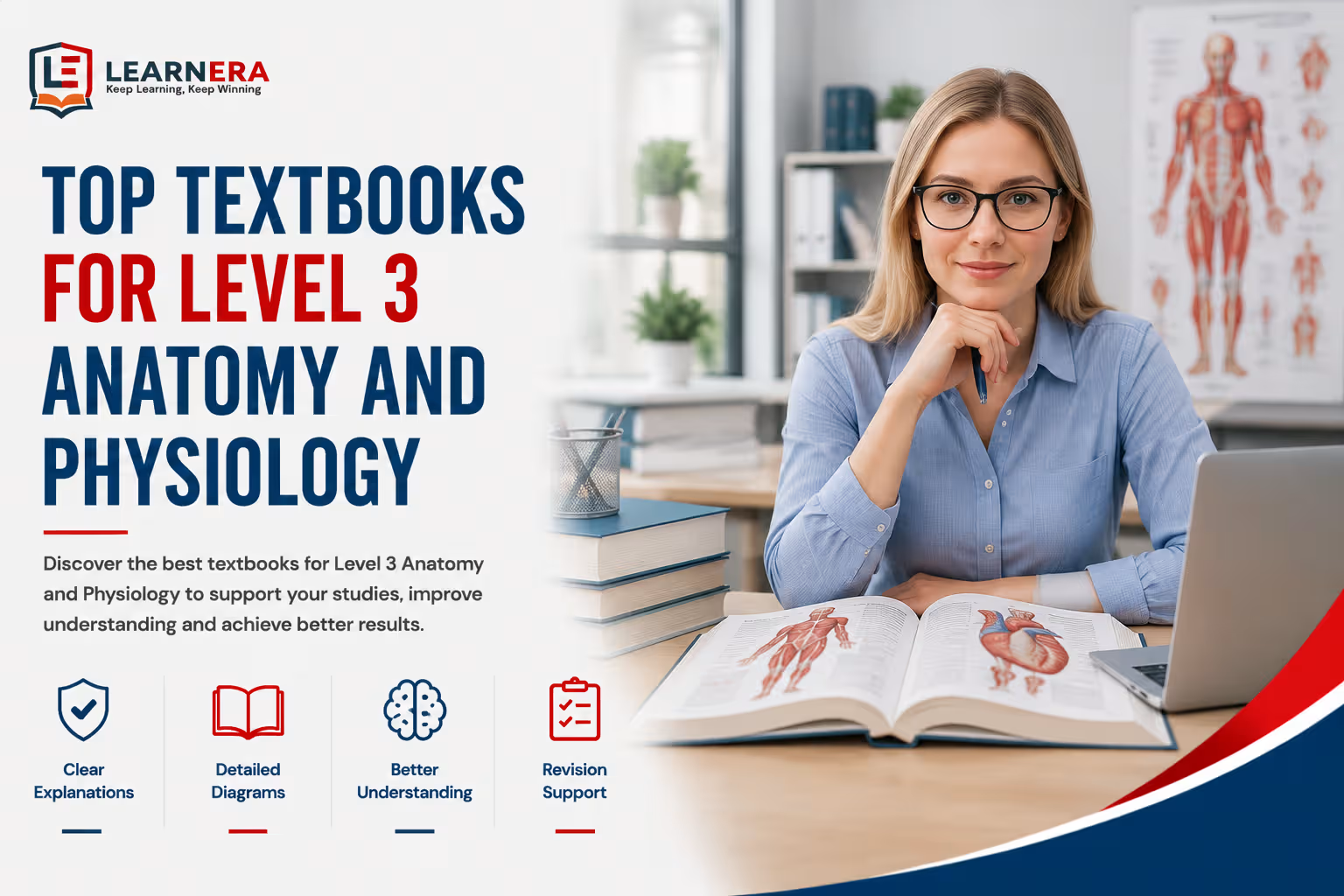

The top textbooks for Level 3 anatomy and physiology students are usually the ones that explain complex body systems in a clear, manageable way. Whether you are studying for healthcare, beauty therapy, sports massage, fitness or general CPD learning, a good textbook should help you understand the body rather than just memorise long scientific words.
Books like Ross & Wilson Anatomy and Physiology in Health and Illness, Anatomy & Physiology by Helen McGuinness, An Introductory Guide to Anatomy & Physiology by Louise Tucker, and Essential Anatomy & Physiology are strong options for different learning styles. If you want a more structured route, Learnera’s Level 3 Diploma in Anatomy and Physiology of Human Body offers flexible CPD learning to support your understanding of key body systems, while still keeping employer or awarding-body requirements separate.
Key points
- The best textbook depends on your course, role and learning style.
- Look for clear diagrams, summaries, body system explanations and revision questions.
- Books work best when used with notes, quizzes, online lessons and regular revision.
What are the best textbooks for Level 3 anatomy and physiology students?
There is no single “best” book for every student. The right choice depends on what you are studying and how much detail you need.
For healthcare and nursing preparation, Ross & Wilson Anatomy and Physiology in Health and Illness is a strong option. It explains the body systems clearly and gives useful links between normal body function and illness.
For beauty therapy, holistic therapy or complementary therapy, Helen McGuinness’s Anatomy & Physiology is often easier to follow because it is written with vocational learners in mind.
For beginners, Louise Tucker’s An Introductory Guide to Anatomy & Physiology is a friendly starting point. It is useful if you want simple explanations before moving into deeper detail.
For revision and self-testing, Essential Anatomy & Physiology can be helpful because it focuses on Level 3-style learning and includes lots of practice questions.
Which textbook should you choose for your course?
Which Anatomy & Physiology Book Fits Your Course?
The best textbook depends on whether you need detailed body system knowledge or a more practical Level 3-friendly approach.
Healthcare & Nursing Route
Choose a book that explains major body systems in enough depth for healthcare-related learning.
Beauty & Therapy Route
A practical textbook can make anatomy easier to understand for vocational learners.
Healthcare learners usually need more system detail
A healthcare-focused textbook should help you understand how body systems work together and connect normal function with health-related topics.
Therapy learners often benefit from practical explanations
A clear and approachable anatomy book may help you understand the body faster without starting with overly medical detail.
The biggest book is not always the best choice. Choose a textbook that matches your course, role and current level of understanding.
Are free anatomy and physiology resources enough?
Free resources can be useful, especially for diagrams, videos and quick explanations. Open online textbooks and anatomy websites can help when you are stuck on a topic.
However, free resources may not always follow your exact Level 3 course structure. They can also be either too basic or too advanced. It is better to use them as extra support, not your only study method.
What should a good Level 3 anatomy and physiology book include?
A good textbook should explain the main human body systems in plain language. It should include labelled diagrams, short summaries, glossary terms and questions to test your memory.
The most useful books help you understand how the body works, not just memorise names. For example, you should be able to explain what the heart does, how breathing works, why muscles move, and how the nervous system sends messages.
How to Study Anatomy & Physiology Without Feeling Overwhelmed
The easiest approach is not learning everything at once. Break the subject into smaller systems and build understanding step by step.
Focus on one body system at a time. Small consistent progress works better than trying to remember everything together.
Choose One System
Start with one chapter or body system.
Make Notes
Rewrite ideas in your own words.
Label Diagrams
Connect names with structures.
Test Yourself
Cover answers and check memory.
Review Again
Return after a few days.
Start with one body system
Choose a short lesson or chapter instead of trying to understand the entire human body at once. A focused approach makes complex topics easier to manage.
Short lessons + personal notes + active recall + regular revision create stronger understanding than simply reading long pages.
Common mistakes when choosing anatomy and physiology textbooks
One common mistake is buying the biggest or most advanced book first. A medical textbook may look impressive, but it can feel confusing if you are new to the subject.
Another mistake is choosing a book without thinking about your course route. A healthcare learner, a beauty therapy learner and a fitness learner may all need anatomy and physiology, but not always in the same depth.
Textbooks are powerful study tools, but they are not magic on their own. The best results usually come from combining a clear book, structured learning, revision questions and steady practice.