🌼Spring Sale! GET ANY COURSE FOR ONLY £10.99!
Offer ends soon! 00 : 00 : 00
Use Coupon Code 👇
LEARN10

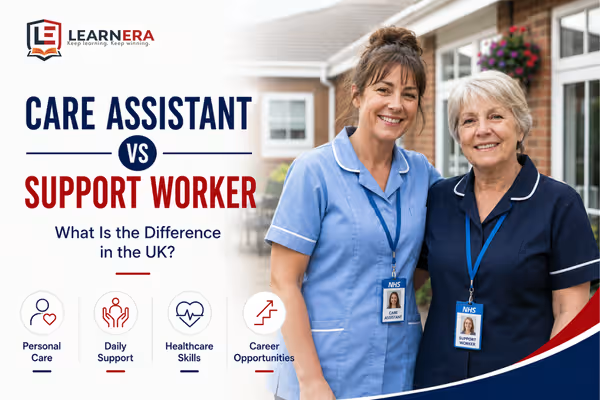
Care Assistant vs Support Worker: What Is the Difference in the UK?

If you have seen both care assistant and support worker advertised and wondered what the difference is, you are not alone. The honest answer is that it depends on the employer. This guide explains where the roles typically differ, what each involves in practice, and how to decide which one is right for you.

Two job adverts, posted on the same website, on the same day. One says care assistant. One says support worker. The duties listed look almost identical. Someone new to the sector reads both, closes the laptop, and decides to search for the difference before applying for either.

That search is a reasonable thing to do. But most guides that come up give a confident, definitive answer that does not quite match what happens in real workplaces. The honest truth is that care assistant and support worker are not standardised job titles in the UK. Some employers use them interchangeably. Others distinguish them clearly. The job description in front of you is always more reliable than the title above it.

Where employers do draw a distinction, a pattern tends to emerge. Care assistant roles typically focus on hands-on personal care, often in residential or domiciliary settings. Support worker roles typically focus on enabling independence, often in community, mental health, or learning disability services. That distinction is real and useful. It just needs the honest caveat attached.

This guide explains both roles in practice, covers what both require before you start, and helps you work out which direction is worth exploring further.

TL;DR: Key Takeaways

Care assistant and support worker are not always different roles. Employer usage varies across the UK care sector.
Where employers do distinguish them: care assistant roles typically focus on hands-on personal care in residential or domiciliary settings; support worker roles typically focus on enabling independence in supported living, mental health, learning disability, or community services.
Both roles are accessible without formal qualifications. Both require an enhanced DBS check arranged by the employer. Both use the Care Certificate as an induction standard.
The Care Certificate has 10 standards since the March 2024 update and is completed on the job during induction.
A support worker is not a social worker. They are completely different roles with different qualifications and registration requirements.
The same qualification framework applies to both roles: Level 2 and Level 3 Health and Social Care Diplomas.
In Scotland, Wales, and Northern Ireland, some care worker roles require registration with the relevant social care council. In England, neither role requires individual registration.

First, the Honest Answer: Are They Actually Different?

A support worker and a care assistant at the same supported living service, working the same shift, doing the same tasks. One has “Support Worker” on her contract. The other has “Care Assistant” on his. Neither of them thinks much about it. Their employer uses both titles and has done for years.

That situation is more common than most comparisons guides acknowledge. There is no regulatory body in the UK that defines what a care assistant or a support worker is. The terms are employer and sector convention, not legal definitions. Some organisations have made a clear internal distinction between the two roles. Others have not.

Where employers do make a distinction, the pattern tends to be consistent. Care assistant roles centre on hands-on personal care, typically in residential or domiciliary settings. Support worker roles centre on enabling independence, typically in community, supported living, or specialist services. That distinction is genuine and worth understanding. It just does not hold universally across every employer or every job advert.

The practical implication is straightforward. When you are comparing roles, the job description is always more reliable than the title. Two care assistant posts at different employers can look completely different from each other. Two support worker posts can overlap significantly with what another employer calls care work. Over time, most people in the sector stop being surprised by this and start reading job descriptions more carefully from the beginning.

What a Care Assistant Typically Does

A care assistant at seven in the morning is already moving. Personal care comes first: helping a resident wash, dress, and get ready for the day in a way that feels dignified rather than rushed. That steadiness and attention to the small details of someone’s morning is what the role is built around.

Most care assistant roles are based in residential care homes, nursing homes, or domiciliary care settings where workers visit clients in their own homes. The work is hands-on and physical. It involves supporting people with washing, dressing, meals, mobility, and observing and reporting any changes in their condition or behaviour.

In the NHS, the equivalent role is typically called Healthcare Support Worker and sits at Band 2 or Band 3 on the Agenda for Change pay framework. In care homes and domiciliary agencies, pay varies by employer and is not set by the AfC framework. Manual handling is a central skill in both settings and most employers provide training during induction.

What a Support Worker Typically Does

A support worker’s morning might look quite different. Walking alongside a young man with a learning disability on his way to college enrolment, helping him find the right room, being there for the conversation on the way home about how it went. That focus on doing things with someone rather than for them sits at the heart of most support worker roles.

Support workers are typically found in supported living services, mental health services, learning disability services, community support, and day centres. The people they support include those with learning disabilities, autism, mental health conditions, acquired brain injuries, and physical disabilities in community settings. Personal care can be part of the role, particularly in supported living, but enabling independence is usually the primary focus.

Pay varies significantly depending on the employer and setting. NHS-employed support workers are typically on Band 3 of the Agenda for Change framework. Independent sector pay varies by organisation and region. In practice this often looks like two support workers doing similar work but on noticeably different contracts depending on whether their employer is an NHS trust or a private care provider.

Where the Roles Overlap

In a supported living service, the morning shift can look almost identical to a care assistant shift in a residential home. Personal care, meal support, medication prompts, recording observations. The worker is called a support worker on her contract. The tasks would fit a care assistant job description just as well.

Both roles require the same core qualities: patience, reliability, empathy, and the ability to communicate clearly with vulnerable people, their families, and colleagues. Both involve safeguarding responsibilities, record keeping, and working as part of a team. The overlap is greatest in supported living and residential settings where service users have both personal care needs and independence goals.

Reading the specific job description carefully is always more reliable than assuming based on the title alone. A comparison table can help as a starting point, but the duties listed in the actual advert will tell you more than any job title ever will.

What Both Roles Require Before You Start

Many people spend time researching qualifications before applying for either role, assuming they need something in place before they can begin. In most cases they do not. What they do need to understand is the DBS check and the Care Certificate, two requirements that apply equally to both roles and are consistently underexplained.

The DBS Check

An enhanced DBS check is required for virtually all care assistant and support worker roles involving regular contact with vulnerable people. The employer arranges this after a job offer is made. Workers do not need to obtain one independently before applying, and they do not pay for it. It is not a qualification. It confirms the absence of disqualifying convictions for working in regulated activity.

The Care Certificate

The Care Certificate is an employer-led induction standard completed on the job during the first weeks and months of employment. It covers 10 standards following the March 2024 update, including safeguarding, person-centred care, communication, and health and safety. It applies to both care assistants and support workers. It is not a legal requirement and not something workers need to complete before applying.

Qualifications: Do You Need Different Ones for Each Role?

No. The same qualification framework applies to both care assistants and support workers. Most entry-level roles in both areas do not require formal qualifications before starting. Employers provide training during induction, and a caring attitude, reliability, and good communication consistently matter more than certificates at the entry stage.

The Level 2 and Level 3 Health and Social Care Diplomas are the current standard qualifications relevant to both roles. Some support worker positions in specialist settings such as mental health or learning disability services may prefer additional training, but this is employer-led rather than a universal requirement. Apprenticeship routes including Adult Care Worker Level 2 and Healthcare Support Worker Level 2 are available for both pathways.

A Point That Needs Clearing Up: Support Worker Is Not Social Worker

No, they are not the same role. A support worker is an entry-level, unregistered care role. A social worker is a registered professional regulated by Social Work England, requiring a degree in social work and formal registration before practising.

Social workers assess risk, make statutory decisions, and manage legal processes involving children and vulnerable adults. Support workers help people with daily living, enable independence, and provide emotional support. The two roles sometimes work alongside each other in the same service, which is likely where the confusion begins. They are not different levels of the same job. They are entirely separate professions.

Which Role Is Right for You?

The answer depends less on job titles and more on which working environment feels like a natural fit. People who feel comfortable with the physical aspects of hands-on personal care, structured routines, and team-based residential environments often find care assistant roles suit them well. People who prefer varied days, community settings, and a focus on enabling someone to build independence often find support work more rewarding.

Setting shapes the experience as much as the title does. A residential shift and a community shift feel genuinely different regardless of what the worker is called. Over time it becomes clear that the people who settle most comfortably into care work are the ones who chose their environment as much as their role.

A Note on Scotland, Wales, and Northern Ireland

In England, neither care assistants nor support workers are required to hold individual professional registration. That position is different in the other UK nations, and it is worth knowing before applying for roles outside England.

In Scotland, the Scottish Social Services Council requires registration for a range of social care worker roles. In Wales, Social Care Wales has similar registration requirements. In Northern Ireland, the Northern Ireland Social Care Council covers certain social care worker roles. Workers in those nations should check the specific registration requirements for the role and setting they are applying for before they start.

Summary

Care assistant and support worker are not always different roles. Where employers do distinguish them, care assistants typically focus on hands-on personal care in residential or domiciliary settings, while support workers typically focus on enabling independence in community, supported living, or specialist services. Both distinctions are real and useful. Neither holds universally across every employer.

Both roles share the same entry requirements: an enhanced DBS check arranged by the employer, a Care Certificate completed during induction, and no formal qualifications needed before starting. The same Level 2 and Level 3 Health and Social Care Diplomas apply to both pathways. A support worker is not a social worker. In Scotland, Wales, and Northern Ireland, some care worker roles require registration that is not required in England.

Frequently Asked Questions

What is the difference between a care assistant and a support worker in the UK?

The terminology is not standardised. Where employers do distinguish the roles, care assistants typically focus on hands-on personal care in residential or domiciliary settings, while support workers typically focus on enabling independence in community, supported living, mental health, or learning disability services.

Sometimes yes, sometimes no. Some employers use both titles for the same role. Others distinguish them clearly. Reading the job description is always more reliable than assuming based on the title alone.

A care assistant supports people with personal care including washing, dressing, and meal support, helps with mobility, monitors and reports changes in condition, and provides companionship. Most care assistants work in residential care homes, nursing homes, or domiciliary care visiting clients in their own homes.

A support worker helps people live more independently by supporting daily living skills, accompanying people to appointments and community activities, providing emotional support, and encouraging social participation. Support workers typically work in supported living, mental health services, learning disability services, or community settings.

No. A support worker is an entry-level unregistered care role. A social worker is a registered professional regulated by Social Work England, requiring a degree in social work. The roles sometimes work alongside each other but are not interchangeable and are not different levels of the same profession.

No. The same qualification framework applies to both. Level 2 and Level 3 Health and Social Care Diplomas are relevant to both roles. Most entry-level positions in both areas do not require formal qualifications before starting, as employers provide training during induction.

Yes. An enhanced DBS check is required for both roles. The employer arranges this after a job offer is made. Workers do not need to obtain one independently before applying and do not pay for it themselves.

Yes, it applies to both. The Care Certificate is an employer-led induction standard covering 10 standards since the March 2024 update. It is completed on the job during induction and is not a pre-employment requirement for either role.

Neither consistently pays more. Pay depends on employer and setting. NHS-employed support workers are typically on Band 3 of the Agenda for Change framework. Independent sector pay for both roles varies by employer and region. Comparing specific job adverts is the most reliable approach.

Yes. Experience transfers well between the roles. The Care Certificate and any Health and Social Care Diplomas are recognised across both settings. Moving from a residential care home to a community or supported living service is a common and straightforward progression.

In England, neither role requires mandatory individual registration. In Scotland, Wales, and Northern Ireland, some care worker roles require registration with the relevant social care council. Workers in those nations should check specific requirements for their role and setting before applying.

Both roles require patience, reliability, empathy, clear communication with vulnerable people and their families, the ability to work as part of a team, and the ability to follow procedures carefully. These qualities matter more than formal qualifications at entry level for both roles.

Recent Blogs

What Employers Want in a Physiotherapy Assistant Candidate

What Employers Want in a Physiotherapy Assistant Candidate

Most physiotherapy assistant job adverts say similar things: good communication, a team player, willing to learn. But what do those phrases actually mean to the people reading your application? This guide breaks down what UK employers genuinely look for, and how to show them you have it.

Read More
Top 10 Skills Every Nursing Assistant Needs to Master

Top 10 Skills Every Nursing Assistant Needs to Master

Being a nursing assistant in the UK takes more than kindness. It takes a specific set of skills built up through training, experience, and quiet daily practice. This guide covers the ten skills that matter most, what each one looks like in a real care setting, and why every one of them matters for safe, compassionate care.

Read More

What is a Training Needs Analysis and Why is it Useful?

A training needs analysis sounds more complicated than it is. At its core it is simply a way of working out what training your team needs, why they need it, and how to provide it. This guide explains the concept clearly, with practical examples from care and healthcare settings, and covers what to do once you have your findings.

Read More