The ward hums quietly as staff move between rooms, checking notes and greeting residents. In practice, medication rounds often begin with brief pauses to confirm details and answer small questions. These tiny routines quietly set the tone for a safe shift and help prevent mistakes before they can happen.
Safe medication administration isn’t only about giving the right dose. Over time, noticing subtle details, reviewing records, and confirming identities becomes second nature. These small, attentive habits prevent errors, build trust, and show how careful practice makes a real difference in daily care.
TL;DR / Key Takeaways
- Medication errors can have serious consequences; careful administration protects residents and staff.
- Preparing medications involves checking MAR/eMAR charts, expiry dates, allergies, and creating a calm, organised environment.
- Safe administration requires confirming right person, right dose, route, timing, and observing reactions, handling refusals respectfully.
- Accurate documentation and reporting near misses builds a culture of safety and helps prevent future errors.
- Common mistakes include misreading charts, skipping double-checks, ignoring expiry dates, and environmental distractions.
- Learning from errors and near misses allows services to identify weaknesses and adjust processes proactively.
- Proper storage, stock control, and a distraction-free environment reduce risk and support safe rounds.
- Patient-centred care includes checking swallowing ability, understanding PRN instructions, and supporting independence where appropriate.
- Following law, guidance, and employer policies ensures actions are safe, compliant, and consistent across UK settings.
- Small, reflective habits—pausing, reviewing, confirming details—make administration safer and build trust over time.
Understanding Law, Guidance, and Employer Policy
A carer glances at the MAR chart, noticing a new instruction from the nurse. In practice, understanding what you must do by law, what guidance recommends, and what your employer expects helps prevent mistakes before you even start a round. Each layer supports safe administration in its own way.
Law sets the boundaries: who can administer certain prescription or controlled medicines and under what conditions. Guidance, such as NICE recommendations, advises on safe routines, reconciliation, and incident learning. Employer policies fill in the practical steps for your workplace, including delegation, training, and supervision. Over time, recognising these layers makes daily decisions clearer and safer.
Preparing for Safe Administration
Preparation is the first step in safe medication administration. Checking MAR or eMAR charts, confirming expiry dates, and reviewing allergies ensures that each medicine is ready before you begin a round. A calm, organised workspace makes it easier to spot errors and reduces the chance of mistakes.
It also helps to review any recent prescription changes or updates in patient records. Small observations, like a resident hesitating with a new tablet, can indicate the need for clarification. Over time, consistent preparation becomes a routine that safeguards both residents and staff.
Administering Medication Safely
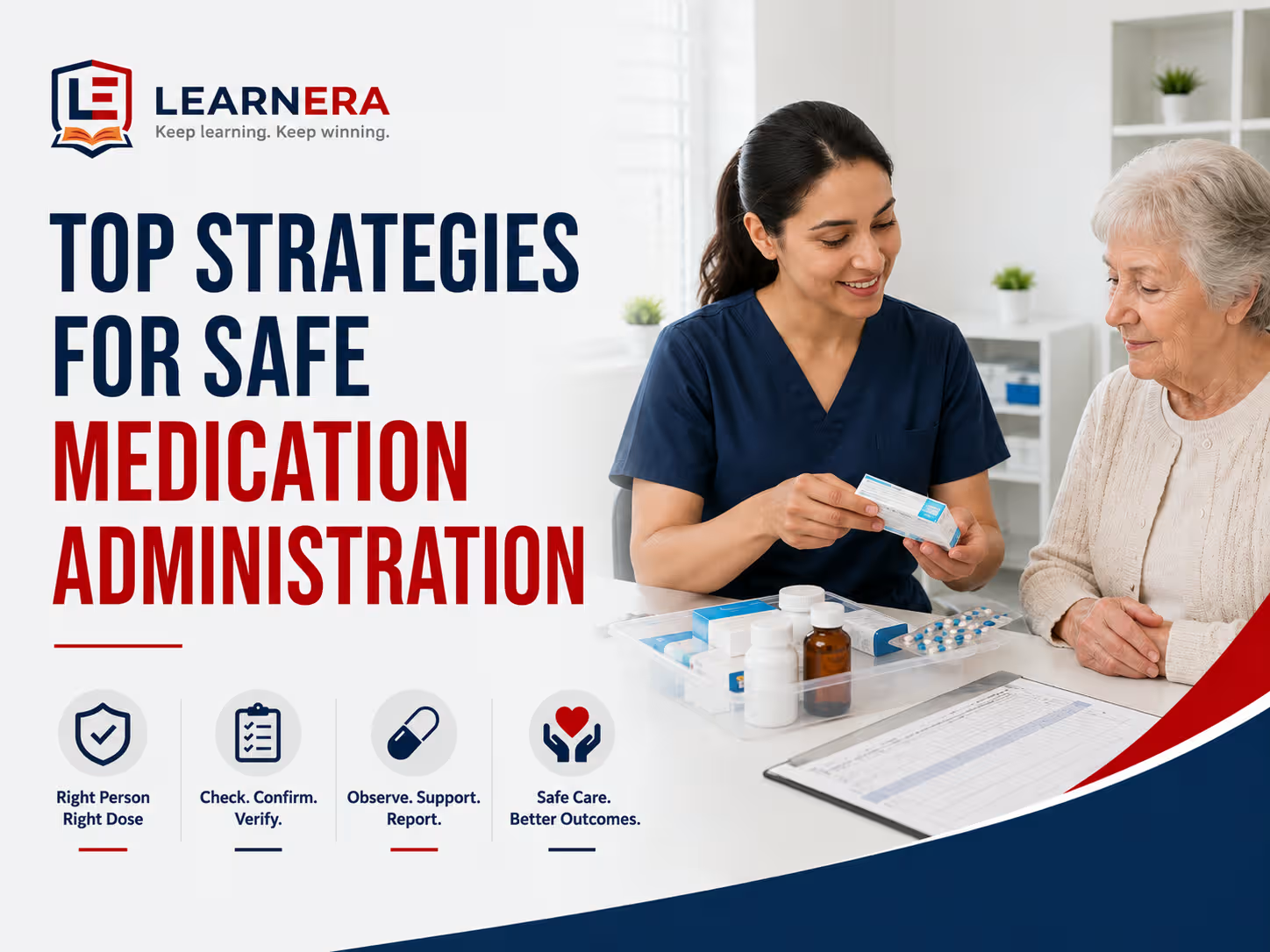
Safe administration starts with verifying the right person, dose, route, and timing. Double-checking the prescription and MAR chart helps prevent errors before they reach the resident. Following these steps consistently ensures medicines are given accurately and confidently, reducing risks in everyday care.
Observing reactions and handling refusals respectfully is part of the process. In practice, a resident pausing before taking a new tablet might indicate uncertainty, requiring a brief explanation or reassurance. Over time, these attentive checks and gentle communication become routine and significantly improve safety and trust.
Administering medication safely
Tick each check as you complete it — clear all five to confirm the round is safe to proceed
Verification checklist
Right person
Confirm name and date of birth against the MAR chart. Use two identifiers. Never assume.
Right medication
Check medicine name against the prescription. Verify expiry date. Check for known allergies.
Right dose
Double-check dose against the MAR chart and prescription. Do not estimate. Query anything unclear before proceeding.
Right time and route
Confirm the scheduled time and correct route — oral, topical, or inhaled. Follow the MAR chart exactly.
Right documentation
Sign the MAR chart immediately after administration. Record any refusals, reactions, or observations accurately.
All five checks complete
Administration is verified. Document immediately and observe for any reactions.
If a resident refuses
Acknowledge and respect the refusal calmly
Document the refusal on the MAR chart immediately
Escalate to the supervising clinician or nurse
If you notice a reaction
Stop and observe the resident closely
Note exactly what you observed and when
Escalate immediately — do not wait until end of shift
Documentation, Reporting, and Learning from Errors
Accurate documentation underpins safe medication administration. Recording each dose, timing, and resident observation ensures the team has a reliable account of care. Clear notes reduce errors, support handovers, and make it easier to spot trends or discrepancies.
Reporting errors and near misses is critical. If a MAR chart entry is unclear or a resident hesitates, noting it and escalating appropriately prevents harm. Recording concerns promptly helps the team address potential risks before they become serious issues.
Over time, this process fosters a culture of learning. Reviewing near misses and minor errors allows staff to adjust routines, clarify policies, and improve systems. Reflective practice and shared insights strengthen safety and build trust among residents and care teams alike.
Common Mistakes and How to Avoid Them
Skipping double-checks or misreading MAR charts is a common issue. In practice, even small lapses, like overlooking an updated instruction or a resident’s allergy note, can have consequences. Regularly reviewing each detail before administering medications helps reduce these risks.
Rushing rounds or working in a chaotic environment also increases errors. Over time, care workers notice that distractions, interruptions, or handling multiple residents at once can lead to missed steps. Slowing down and maintaining focus improves accuracy and resident safety.
Assuming past experience alone guarantees safety is another mistake. Even seasoned staff can make errors if procedures, guidance, or policies change. Keeping up to date, consulting colleagues, and following employer procedures ensures safe and consistent practice for every round.
Real-Life Application and Reflection
Safe medication administration is shaped by everyday routines. Checking records, observing residents, and confirming doses are habits that protect both staff and residents. Over time, these small actions become second nature and reduce the chance of errors.
Different settings require subtle adaptations. In a care home, staff may manage multiple residents at once, while home visits involve one-to-one observation. Adjusting routines to fit the environment ensures medicines are given safely and consistently.
Reflection after each round strengthens practice. Reviewing what went well and noting areas for improvement helps identify trends, refine routines, and build a culture of safety. These reflective moments show how attentive care transforms everyday tasks into reliable and confident practice.

Real-life application and reflection
Select your setting — then explore the reflection cycle
👆 Select a setting above to see how medication administration adapts
The reflection cycle after every round
Click each stage to understand what good reflection looks like in practice
What went well
Review smooth, safe moments
What to improve
Note gaps and near misses honestly
Adjust routines
Change one habit to reduce risk
Share with the team
Turn insights into shared learning
Storage, Stock Control, and Environment
Safe administration begins long before a resident receives their medicines. Organised storage, secure access, and regular checks prevent mistakes. In practice, proper temperature control for fridge items, segregation of stock, and clear labelling help care workers spot errors early and maintain a reliable system.
The environment also shapes safety. Interruptions, noise, poor lighting, or multitasking can lead to missed checks. Over time, keeping a calm, structured workspace and limiting distractions ensures smoother rounds, reduces stress, and allows care workers to focus on each resident’s needs.
High-Risk Medicines and Special Considerations
Some medicines carry higher risks, like PRN or anticoagulants. Staff should follow detailed instructions, double-check doses, and escalate uncertainties. In practice, overlooking these steps can quickly create harm, so careful attention is essential at every stage.
Swallowing difficulties and special formulations require extra care. Staff should not crush tablets or alter capsules routinely. Supporting independence, checking for alternative forms, and following local policy help residents take medicines safely while maintaining their dignity.
Summary
Safe medication administration depends on consistent, careful routines. Checking MAR or eMAR charts, confirming identities, observing reactions, and reviewing records before each dose prevents errors and builds trust between residents and staff. Small attentiveness makes a significant difference in everyday care.
Understanding law, guidance, and employer policy ensures that staff act safely, compliantly, and confidently. Accurate documentation, reporting near misses, and reflecting on practice create a culture of learning, where errors are used to improve systems rather than assigning blame.
Attention to the environment, storage, and high-risk medicines further strengthens safety. Organised, distraction-free spaces, proper stock control, and careful handling of PRN or high-alert medicines reduce harm. Supporting residents’ independence while following policy safeguards dignity and promotes safe, effective administration every day.
Frequently Asked Questions
What is safe medication administration?
Giving or supporting medicines accurately, clearly recorded, person-centred, and carried out by trained and competent staff. It sits within wider medicines management.
Are the “rights” of medication administration enough on their own?
No. They help guide checks, but safe administration also relies on accurate records, observation, communication, and adherence to guidance and local policies.
Who can administer medicines in a care setting?
Staff must follow legal boundaries, employer policies, and their assessed competence. Certain medicines may require registered staff supervision.
What is the difference between medication administration and medicines management?
Administration is the act of giving medicines safely. Management covers storage, stock, policies, and ensuring systems support accurate administration.
Why is accurate documentation so important?
Clear records support handovers, prevent repeated errors, and provide accountability. They form the backbone of safe practice.
What should be recorded on a MAR chart?
Doses given, time, any refusals, observed reactions, and any deviations from instructions or notes from supervising staff.
What is eMAR?
Electronic Medication Administration Record, used to track doses digitally, support accuracy, and provide audit trails alongside traditional MAR charts.
What should staff do if a person refuses medicine?
Respect the refusal, document it, assess risk, and escalate as required according to employer policy.
What is medicines reconciliation?
Comparing a patient’s current medicines with any new prescriptions to ensure correct dosing, avoid duplication, and prevent interactions.
Why are handovers a medication safety risk?
Errors often happen during staff changes. Clear communication, reconciled records, and checking MAR/eMAR prevent mistakes.
What is covert administration?
Giving medicine without a person’s knowledge, which is highly regulated and only done with legal and ethical approval.
Can staff crush tablets if someone struggles to swallow?
Not routinely. Only with guidance, approved alternative formulations, or pharmacist advice to ensure effectiveness and safety.
Why should near misses be reported?
They highlight potential risks, allowing the team to correct processes before actual harm occurs.
How often should medication competence be reviewed?
Regularly, according to employer policy, to ensure staff remain confident, competent, and up to date with safe practice.