🌼Spring Sale! GET ANY COURSE FOR ONLY £10.99!
Offer ends soon! 00 : 00 : 00
Use Coupon Code 👇
LEARN10
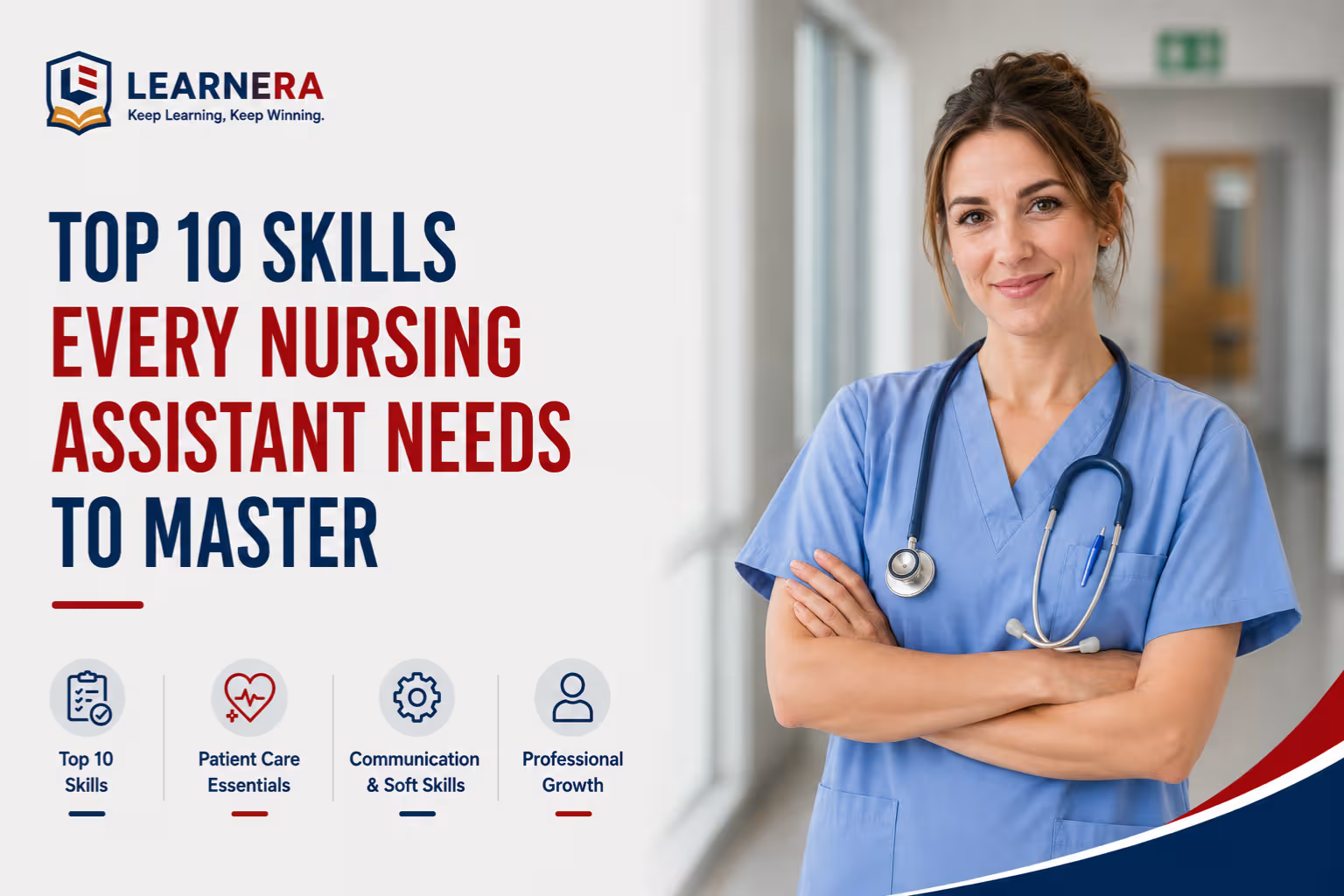
Top 10 Skills Every Nursing Assistant Needs to Master

Top 10 Skills Every Nursing Assistant Needs to Master

Being a nursing assistant in the UK takes more than kindness. It takes a specific set of skills built up through training, experience, and quiet daily practice. This guide covers the ten skills that matter most, what each one looks like in a real care setting, and why every one of them matters for safe, compassionate care.

A healthcare assistant on a morning shift notices a patient has barely touched their breakfast. She mentions it to the nurse at handover. Three words: “She barely ate.” That observation, passed on calmly and at the right moment, leads to an assessment. That is what nursing assistant skills look like in practice. Not dramatic. Just consistent, attentive, and exactly right.

The ten skills in this guide are the ones that show up in moments like that one. Some are clinical. Some are interpersonal. All of them are learnable and all of them matter more than most people realise when they first start out.

TL;DR: Key Takeaways

  • Nursing assistant skills fall into four areas: how you interact with patients, how you keep them safe, how you work professionally, and how you work with others
  • The ten core skills are: communication, dignity and person-centred care, infection prevention and control, observation and escalation, manual handling, safeguarding awareness, documentation and record keeping, working within your scope, empathy and emotional support, and teamwork
  • Working within your scope is not a restriction — it is one of the most important skills a nursing assistant can develop
  • Good observation and accurate escalation are among the most valuable contributions a healthcare support worker makes to patient safety
  • Every skill in this guide can be learned and developed through training, daily practice, and experience
  • The UK role is most commonly called Healthcare Assistant or Healthcare Support Worker in professional contexts


How You Interact With Patients

Three of the ten skills sit here: communication, dignity and person-centred care, and empathy. They are the most visible part of the nursing assistant role and the part patients remember most. Getting them right does not require clinical training. It requires attention, consistency, and genuine care for the person in front of you.

The way a nursing assistant walks into a patient’s room sets the tone before a single word is spoken. A knock at the door, a calm greeting, using the name the patient prefers rather than the one at the top of the chart. These are not small gestures. They are communication, dignity, and trust happening at the same time.

Communication in this role is not just about conversation. It is about accuracy. Passing information clearly to a colleague at handover, knowing when something needs to be said immediately rather than at the end of a shift, and knowing when a patient’s question needs to go to the nurse rather than be answered on the spot. Over time the most effective communicators are rarely the most talkative. They are the most precise.

Dignity and person-centred care mean responding to the individual in front of you rather than following a routine. In practice this often looks like drawing the curtain fully before personal care begins, allowing a patient to move at their own pace, or asking how someone would like to be addressed. Empathy sits underneath all of it. A patient who is anxious does not always need an explanation first. Sometimes they need someone to simply acknowledge how they are feeling before anything else happens.

Skills 1–3 of 10

How you interact with patients

💬
Communication

Communicate with precision

  • Pass information clearly at handover
  • Know when to escalate immediately
  • Redirect clinical questions to the nurse
  • Accuracy matters more than volume
🤝
Dignity and person-centred care

Respond to the individual

  • Use the patient's preferred name
  • Draw curtains fully before personal care
  • Allow the patient to move at their own pace
  • Follow the individual, not the routine
💛
Empathy

Acknowledge before explaining

  • Recognise anxiety before giving information
  • Sit with discomfort rather than filling silence
  • Treat every person as an individual
  • Small gestures build lasting trust

How You Keep Patients Safe

Three more skills live here: infection prevention and control, observation and escalation, and safeguarding awareness. These are the skills that directly protect patients from harm. They are not dramatic or complex but they require consistency, and a lapse in any one of them can have serious consequences.

Infection prevention and control is one of the first things new starters are trained on and one of the last to become truly second nature. In practice this often looks like hand hygiene at the five moments: before patient contact, before a clean procedure, after body fluid exposure, after patient contact, and after touching the patient’s surroundings. It also means wearing the right PPE for the right task, disposing of it correctly, and keeping equipment and work areas clean. Standard precautions apply to every patient, not just those with a known infection.

Observation is a skill that nursing assistants are uniquely placed to develop. They spend more time with patients than almost anyone else in the care team, which means they are often the first to notice that something has changed. A patient who seems quieter than usual, a meal left largely untouched, a change in skin colour or breathing. These observations matter. Knowing how to report them clearly and promptly to the right person is called escalation, and it is one of the most important contributions a healthcare support worker makes to patient safety.

Safeguarding means protecting vulnerable people from harm, abuse, and neglect. The nursing assistant’s role is clear: recognise signs of concern, report them to the appropriate person, and follow the employer’s safeguarding policy. Never investigate independently. Never promise confidentiality to someone who discloses something concerning. The responsibility is to report accurately and promptly, and then to trust the process.

Skills 4–6 of 10

How you keep patients safe

🛡️
Infection prevention

The five moments of hand hygiene

1 Before patient contact
2 Before a clean procedure
3 After body fluid exposure
4 After patient contact
5 After touching surroundings
👁️
Observation and escalation

Notice early, report accurately

  • You spend more time with patients than anyone else on the team
  • Notice: quietness, food left uneaten, changes in breathing or colour
  • Report clearly and promptly to the right person
  • Escalation is one of the most important patient safety contributions you make
⚠️
Safeguarding

Recognise, report, trust the process

  • Recognise signs of concern
  • Report to the appropriate person promptly
  • Never investigate independently
  • Never promise confidentiality to someone who discloses
  • Follow your employer's safeguarding policy

How You Work Professionally

This section covers three skills: manual handling, documentation and record keeping, and working within your scope. They are the skills that define how a nursing assistant operates as a professional rather than simply as a carer. Done well, they protect patients, protect colleagues, and protect the healthcare assistant themselves.

Manual handling is a daily physical reality of the role. Helping a patient move from a bed to a chair, repositioning someone who has been in the same position too long, supporting a person who needs assistance to walk. Every one of these tasks must follow the agreed care plan, use the right equipment, and apply the correct technique. Manual handling training is a legal requirement under the Manual Handling Operations Regulations 1992. Employers are required to provide it and nursing assistants are required to apply it. Never attempt a moving and handling task that falls outside your training or contradicts the agreed plan.

Documentation is not paperwork for its own sake. A clear, accurate, and timely care record entry gives the whole team an honest picture of how a patient is doing. What was done, how the patient responded, and anything that seemed different. Records must be factual, completed on time, and never written before a task is finished. A record that is missing, vague, or inaccurate creates gaps that can directly affect care decisions.

Working within your scope is perhaps the most underestimated skill on this list. It means delivering care within your training, your care plan, and the delegation of the registered professional responsible for the patient. When a patient asks something clinical, the right response is a calm redirect to the nurse. When a task falls outside your competency, the right response is to say so. That takes confidence. Over time it becomes one of the clearest signs of a healthcare assistant who genuinely understands their role.

Skills 7–9 of 10

How you work professionally

🔄
Manual handling

Follow the plan, use the equipment

  • Follow the agreed care plan every time
  • Use the correct equipment for the task
  • Apply the correct technique
  • Never attempt a task outside your training
Legal requirement: Manual Handling Operations Regulations 1992
📋
Documentation

Accurate, timely, factual

  • Record what was done and how the patient responded
  • Note anything that seemed different
  • Complete records on time
  • Never write a record before the task is finished
  • Gaps and inaccuracies affect care decisions
🎯
Working within your scope

The most underestimated skill

  • Deliver care within your training and care plan
  • Redirect clinical questions calmly to the nurse
  • Say so when a task falls outside your competency
Knowing your limits and acting on them is a sign of professional confidence, not weakness.

How You Work With Others

The final skill is teamwork. It sounds straightforward but in a busy care environment it is one of the most actively practised skills on this list.

Good teamwork in healthcare is not built from grand gestures. It is built from small, consistent daily habits. Letting a colleague know that a patient in bay three has been asking for assistance so they can plan accordingly. Checking in with the nurse before a task if something in the care plan is unclear. Being honest about your workload when it becomes unmanageable rather than staying quiet and falling behind. These are the habits that keep a care team functioning safely.

Nursing assistants work within a team that includes registered nurses, healthcare professionals, therapists, and other support staff. Receiving direction from registered colleagues and following it accurately is part of the role. So is asking when something is unclear rather than guessing. A healthcare assistant who communicates openly, supports colleagues where they can, and raises concerns through the right channels is an asset to every team they work in.

Reliability is part of teamwork too. Punctuality, following through on tasks, and being consistent in your standards of care all contribute to a team’s ability to deliver safe, coordinated care. The team depends on every member doing their part. Over time the healthcare assistants who are most trusted by their colleagues are rarely the most qualified. They are the most dependable.

Skill 10 of 10

How you work with others

👥
Teamwork

Built from small, consistent daily habits


💬

Communicate openly

Let colleagues know what patients need. Check in before a task if the care plan is unclear. Raise concerns through the right channels.

Follow direction accurately

Receive direction from registered colleagues and follow it carefully. Ask when something is unclear rather than guessing.

Be dependable

Punctuality, following through on tasks, and consistent standards of care are what the team depends on every shift.

The healthcare assistants most trusted by colleagues are rarely the most qualified. They are the most dependable.

Summary

The ten skills in this guide are not separate qualities that exist independently of each other. They work together. Good communication supports better observation. Dignity shapes every interaction. Knowing your scope protects both patients and the healthcare assistant delivering their care. They build gradually through training, experience, and the kind of daily practice that only comes from actually being in a care setting.

None of these skills require clinical independence. They require consistency, accuracy, and genuine attention to the people you are caring for. They also connect directly to the Care Certificate 2024, the ten-standard induction framework updated in March 2024 that sets the foundation for healthcare support worker practice in England.

The Care Certificate is a starting point, not a ceiling. Learnera’s online courses are designed to support healthcare support workers at every stage of their development, from first day on the job to long-term professional growth.

Frequently Asked Questions

What are the top skills a nursing assistant needs in the UK?

The ten core skills are communication, dignity and person-centred care, infection prevention and control, observation and escalation, manual handling, safeguarding awareness, documentation, working within your scope, empathy and emotional support, and teamwork. These skills show up in everyday moments, are learnable, and essential for safe, effective practice.

The Care Certificate is an employer-led induction standard updated in March 2024 to ten standards. It aligns directly with the skills in this guide and sets the foundation for practice. While not legally required, it is widely adopted by UK employers to train healthcare support workers.

Not automatically. Medication administration requires additional training, delegated authority from a registered professional, and compliance with employer policy. Nursing assistants deliver care within their scope and only administer medication where the employer has provided delegation.

It means delivering care only within your training, assessed competencies, and the delegation of the registered professional. Tasks outside your competency should be escalated to the appropriate colleague rather than attempted independently.

Safeguarding involves recognising signs of harm, abuse, or neglect and reporting concerns promptly to the correct person. Nursing assistants follow employer safeguarding policies, never investigate independently, and do not promise confidentiality to the discloser.

Dignity is a practical skill demonstrated in daily actions, such as respecting privacy, using preferred names, pacing care appropriately, and involving patients in decisions. It is developed through consistent, attentive practice rather than formal training.

It is noticing changes in a patient’s condition, behaviour, appetite, or skin and reporting them accurately and promptly to the registered professional. Effective observation and escalation are critical contributions to patient safety.

Yes. Employers must provide training under the Manual Handling Operations Regulations 1992. Nursing assistants must never perform a task they have not been trained for and must always follow the agreed care plan.

A nursing assistant or healthcare support worker delivers care under supervision and delegation. Registered nurses carry out clinical assessment, treatment planning, and prescribing, which remain outside the assistant’s responsibilities.

Skills develop over time through employer induction, the Care Certificate, on-the-job practice, ongoing CPD, and consistent reflection. Everyday experience and observation in care settings reinforce and enhance competency.

Updated in March 2024, the Care Certificate now contains ten standards instead of the previous fifteen. It remains an employer-led induction standard rather than a legal requirement, reflecting current best practice in UK care settings.

No mandatory pre-employment qualifications are required. Training, including the Care Certificate, is usually provided during induction. Level 2 or Level 3 Health and Social Care diplomas support career progression but are not required to begin.

Recent Blogs

What is a Training Needs Analysis and Why is it Useful?

A training needs analysis sounds more complicated than it is. At its core it is simply a way of working out what training your team needs, why they need it, and how to provide it. This guide explains the concept clearly, with practical examples from care and healthcare settings, and covers what to do once you have your findings.

Read More

Diploma in Car Mechanic and Repair Training UK: The Honest Guide

The Level 3 Diploma in car mechanic and repair training is the qualification UK employers recognise as the benchmark for a fully trained light vehicle technician. But not everything sold as a Level 3 course actually delivers that. This guide explains what the real qualification covers, how to get it, and what to watch out for.

Read More
How to Write a Physiotherapy Assistant CV That Gets Interviews Learnera Blog Image

How to Write a Physiotherapy Assistant CV That Gets Interviews

Most physiotherapy assistant CVs fail for the same reason — they either describe the wrong role or use language lifted from physiotherapist job descriptions. This guide covers what a UK physiotherapy assistant CV should actually include, how to tailor it to a person specification, and comes with a worked example and free downloadable template.

Read More