
- Home
- All Courses
- Electrical Machines for Electrical Engineering
Electrical Machines for Electrical Engineering
Gain confidence and progress your technical skills in electrical machines for engineering. This course builds your understanding aligned with UK sector best practice. Study flexibly online at your own pace, enhancing your value to UK employers through CPD-accredited development.
Exclusive Deal! 94% Off, Today Only!


This course includes:

This Electrical Machines for Electrical Engineering course is a CPD-accredited, fully online programme tailored for UK learners ready to deepen their expertise. It offers flexible study to support your continuous professional development in electrical engineering.
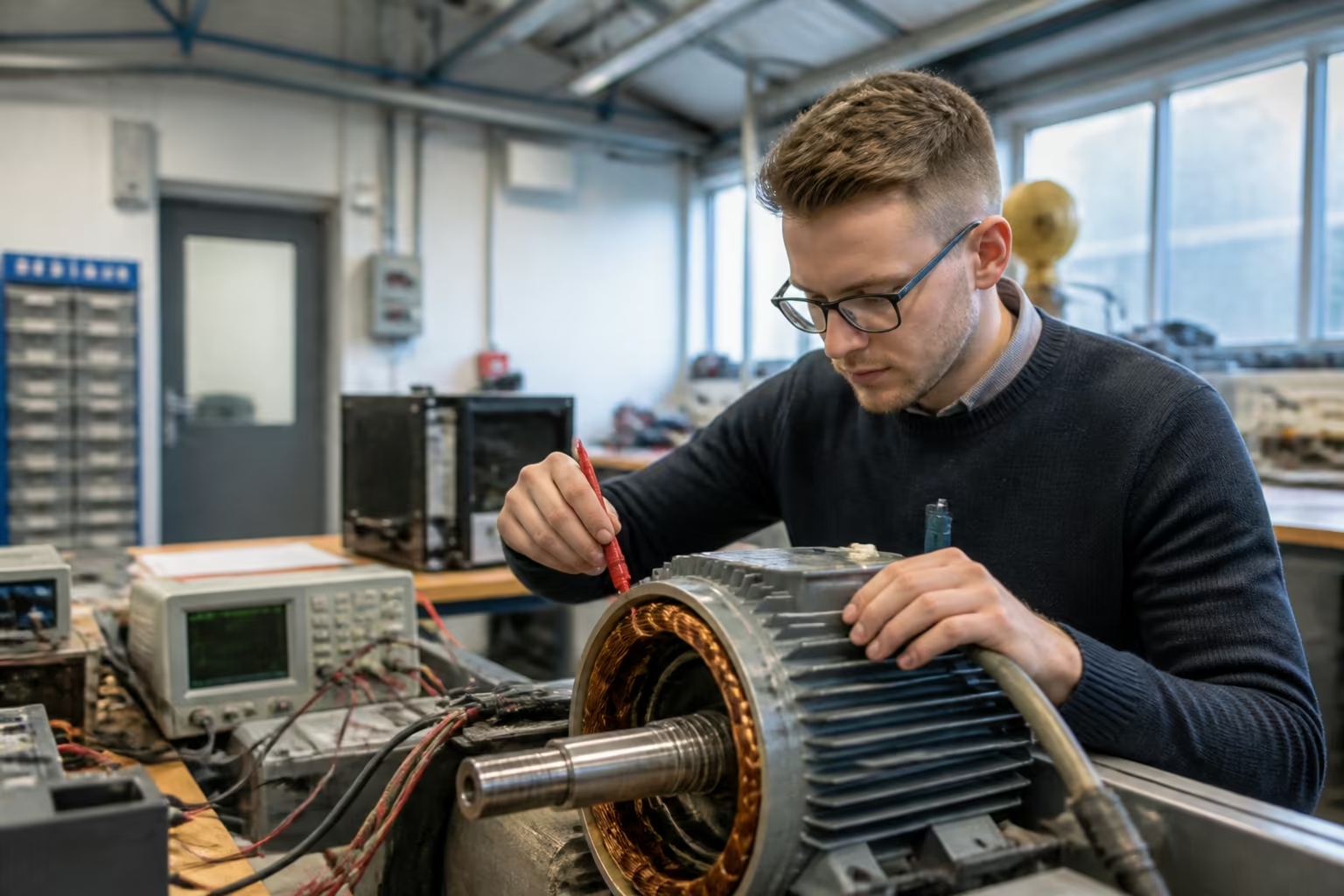
You will gain a stronger grasp of DC machine principles, torque-speed behaviour, and related electrical concepts. The course encourages practical application and ethical decision-making, helping you meet sector expectations for quality and responsibility. Your technical confidence and problem-solving skills will improve through structured learning.
Recognised for skills-based development, this course suits engineers seeking to expand their knowledge and effectiveness. Typical learners include aspiring and practising professionals aiming to enhance their technical leadership. Study is self-paced, supported online, and designed around your schedule.
Key Highlights
- Practical focus on DC machines and electrical engineering concepts
- Flexible, self-paced learning with 12 months’ access
- CPD-accredited for professional skills development
- Real-world examples and problem-solving exercises
- Online multiple-choice assessment with instant results
- Optional reflective portfolio for deeper insight
- Recognised by UK employers for professional growth
What You’ll Learn
- Develop applied understanding of DC machine construction and operation
- Apply armature winding concepts to real-world engineering problems
- Strengthen decision-making using EMF equations and calculations
- Understand torque-speed characteristics for motor control strategies
- Interpret losses and efficiency factors in DC machines confidently
- Analyse starting methods and armature reaction impacts effectively
- Use solved examples to build practical problem-solving skills
- Enhance leadership capability through ethical and quality engineering choices
WHY STUDY WITH Learnera
Learn Era is a trusted CPD-accredited training provider dedicated to helping professionals build confidence, leadership, and compliance in the UK job sector. Our expert-led online courses are designed to fit around your lifestyle, giving you the flexibility to study anywhere, anytime.
CPD-accredited and employer-recognised qualifications trusted across the UK
- Expert tutors with essential real-world experience
- 100% online learning with UK-based learner support
- Affordable, transparent pricing with no hidden fees
- Trusted by thousands of UK learners and global professionals
ACCREDITATION AND RECOGNITION
This Electrical Machines for Electrical Engineering is fully CPD-accredited, ensuring your qualification meets trusted professional standards for relevant fields. It is widely recognised by UK employers as a benchmark for continuing professional development and compliance training. Earn a CPD Accredited certificate to showcase your knowledge and skills
- 100% online, self-paced study with 12 months’ access
- Includes online multiple-choice exam and optional reflective portfolio
- Order a CPD-accredited digital certificate (optional printed version available for GBP 24.99)
- Recognised by UK employers and globally trusted certification
ASSESSMENT AND CERTIFICATION
Your progress in this Electrical Machines for Electrical Engineering is measured through an online multiple-choice assessment with a 60% pass mark and instant results. Learners can retake the exam for free, ensuring full understanding before completion.
Upon passing, you can order a PDF version of the CPD Accredited certificate, verifying your learning achievement and continued professional development aligned with industry knowledge standards. You can also order a hardcopy certificate for GBP 24.99 to boost your credibility and showcase your achievement.
This qualification includes no hidden fees and is recognised by UK employers as evidence of structured learning and professional growth.
WHO IS THIS COURSE FOR?
- Aspiring electrical engineers seeking foundational machine knowledge
- Practising engineers enhancing technical problem-solving skills
- Engineering technicians aiming to deepen DC machine understanding
- Professionals responsible for electrical equipment maintenance
- Individuals pursuing CPD in electrical engineering topics
CAREER OPPORTUNITIES AND PROGRESSION
- Electrical Design Engineer: GBP 28,000 to GBP 42,000 per year
- Maintenance Engineer (Electrical): GBP 25,000 to GBP 38,000 per year
- Electrical Project Engineer: GBP 30,000 to GBP 45,000 per year
- Technical Support Engineer: GBP 22,000 to GBP 35,000 per year
- Controls Engineer: GBP 30,000 to GBP 48,000 per year
KEY SKILLS YOU’LL GAIN
- Confident application of DC machine and motor principles
- Practical problem-solving using electrical engineering formulas
- Analytical skills related to torque-speed and performance factors
- Clear understanding of machine losses and efficiency impact
- Capability to assess starting and control methods effectively
- Improved decision-making aligned with professional standards
- Enhanced technical communication and documentation skills
Enrol today to develop practical skills, confidence, and real-world understanding in Electrical Machines for Electrical Engineering with this CPD-accredited course.
Exclusive Deal! 94% Off, Today Only!

This course includes:










Learnera provides high-quality online courses covering a variety of topics along with certificates issued by top organisations.
- info@learnera.co.uk
- +447478023018
- 01284662050


Payment methods possible


Copyright © 2026 Learnera. All Right Reserved.
Privacy Policy | Terms & Conditions